Segment #756
Interrupting a church service may not be covered under the First Amendment and the Constitution’ however, The Klan Act of 1871 and the Face Act .
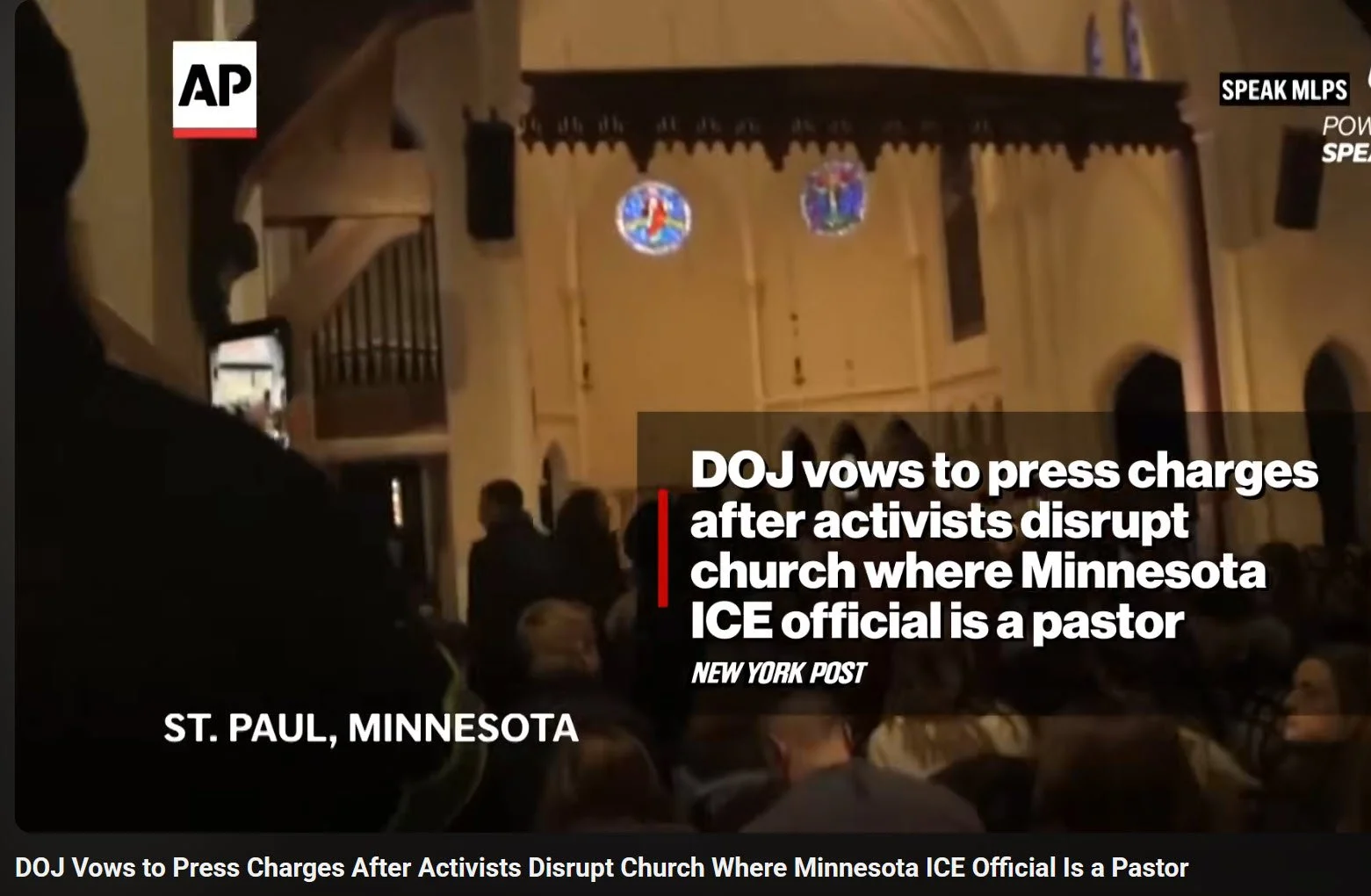
On January 18, 2026, a group of approximately 30 anti-ICE (Immigration and Customs Enforcement) protesters associated with the Racial Justice Network disrupted a Sunday worship service at Cities Church, a non-denominational evangelical church in St. Paul, Minnesota. The protesters stormed into the sanctuary shortly after the service began, chanting slogans such as "Hands up, don't shoot," "ICE out," and "justice for Renee Good" (referencing a recent deportation case), while blowing whistles and accusing one of the church's pastors of having alleged ties to ICE. This interruption frightened attendees, including children, and forced church leaders to cancel the service. Former CNN anchor Don Lemon was present, live-streaming the event and reportedly coordinating with the protesters beforehand, which has drawn scrutiny for his role beyond mere observation. Church leaders and witnesses described it as a "brazen invasion" of a peaceful worship gathering, highlighting the disruption as an act of intimidation. No physical violence was reported, but the event has been condemned by Christian leaders and federal officials as unlawful interference with religious freedom.
Regarding prosecution, Assistant Attorney General for Civil Rights Harmeet Dhillon has announced that the Department of Justice (DOJ) is actively investigating the incident for potential federal violations. Dhillon stated that charges could include those under the Freedom of Access to Clinic Entrances (FACE) Act, which prohibits intentional interference with religious worship through force, threats, or obstruction (typically used in cases involving clinics but applicable to houses of worship). Additionally, she indicated that the Ku Klux Klan Act of 1871 (formally the Enforcement Act, codified as 42 U.S.C. § 1985) may be invoked, particularly for any evidence of conspiracy to deprive individuals of their civil rights, such as the right to freely exercise religion.
This could elevate misdemeanor-level disruptions to felonies, allowing for longer sentences if coordination or planning is proven.
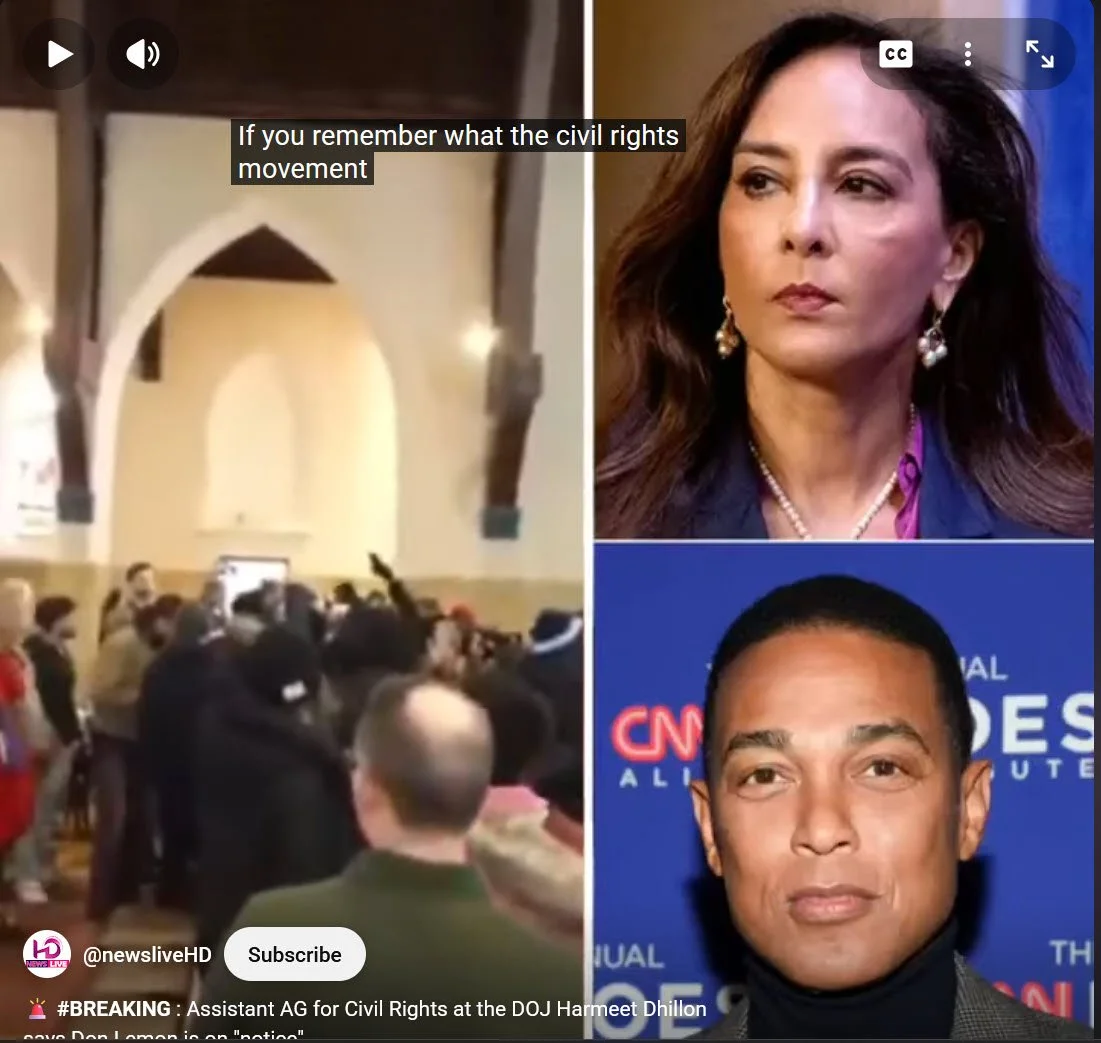
Dhillon emphasized that the DOJ will "come down hard" on participants, coordinators, and funders, explicitly noting Don Lemon's involvement as part of the probe. She described the actions as "evil" and a "big mistake," vowing full accountability under federal civil rights laws. As of January 19, 2026, no formal charges have been filed, but the investigation is ongoing, with potential for both criminal and civil actions.
Face Art Enacted in 1994
The Freedom of Access to Clinic Entrances (FACE) Act (18 U.S.C. § 248), enacted in 1994, is a federal law that prohibits certain conduct interfering with access to reproductive health services or the exercise of religious freedom at places of worship.Key provisions relevant here include making it illegal to use force, threat of force, or physical obstruction to intentionally injure, intimidate, or interfere with (or attempt to do so) any person lawfully exercising or seeking to exercise their First Amendment right of religious freedom at a place of religious worship. It also covers intentional damage to such places. Violations can result in criminal penalties (fines and imprisonment, escalating with repeat offenses or injury) and civil remedies.The law was originally prompted by violence and blockades at abortion clinics but explicitly extends protections to religious worship sites to safeguard First Amendment rights.In the context of the recent incident at Cities Church in St. Paul, Minnesota (January 18, 2026), the FACE Act has been invoked by the U.S. Department of Justice (DOJ) in an ongoing federal investigation.Incident SummaryAnti-ICE (Immigration and Customs Enforcement) protesters entered the church during a Sunday worship service, chanting slogans like "ICE out" and "Justice for Renee Good" (referring to a woman fatally shot by an ICE agent earlier in January 2026 in Minneapolis). The protesters alleged that one of the church's pastors, David Easterwood, is also the acting director of ICE's St. Paul field office (a connection that appears in records but has not been independently confirmed by all sources as linking the same individual to active church leadership during the event). The disruption involved entering the sanctuary, shouting, and interrupting the service, which some reports say forced it to end prematurely. Former CNN anchor Don Lemon was present filming/reporting on the protest.Application of the FACE Act
The DOJ's Civil Rights Division, led by Assistant Attorney General Harmeet Dhillon, quickly announced an investigation into potential FACE Act violations, describing the actions as "desecrating a house of worship and interfering with Christian worshippers."
Attorney General Pam Bondi and other officials (including Alina Habba) emphasized that the law prohibits "force, threats, obstruction, [or] any kind of interference with a religious place of worship."
The Trump administration has framed this as intolerable intimidation and harassment of Christians in sacred spaces, vowing prosecution under federal law (including potential references to the Ku Klux Klan Act for conspiracy to violate civil rights).
White House statements and faith leaders (e.g., from the Minnesota-Wisconsin Baptist Convention, to which Cities Church is affiliated) condemned the disruption as an attack on the sanctity of worship.
As of January 20, 2026, the federal probe is active, with DOJ officials pledging to pursue charges if violations are substantiated. No charges have been filed yet, and the case remains under investigation amid broader tensions over ICE operations in Minnesota. This marks a notable (and politically charged) application of the FACE Act to protect a place of worship from protest disruption rather than its more common use in reproductive health contexts.
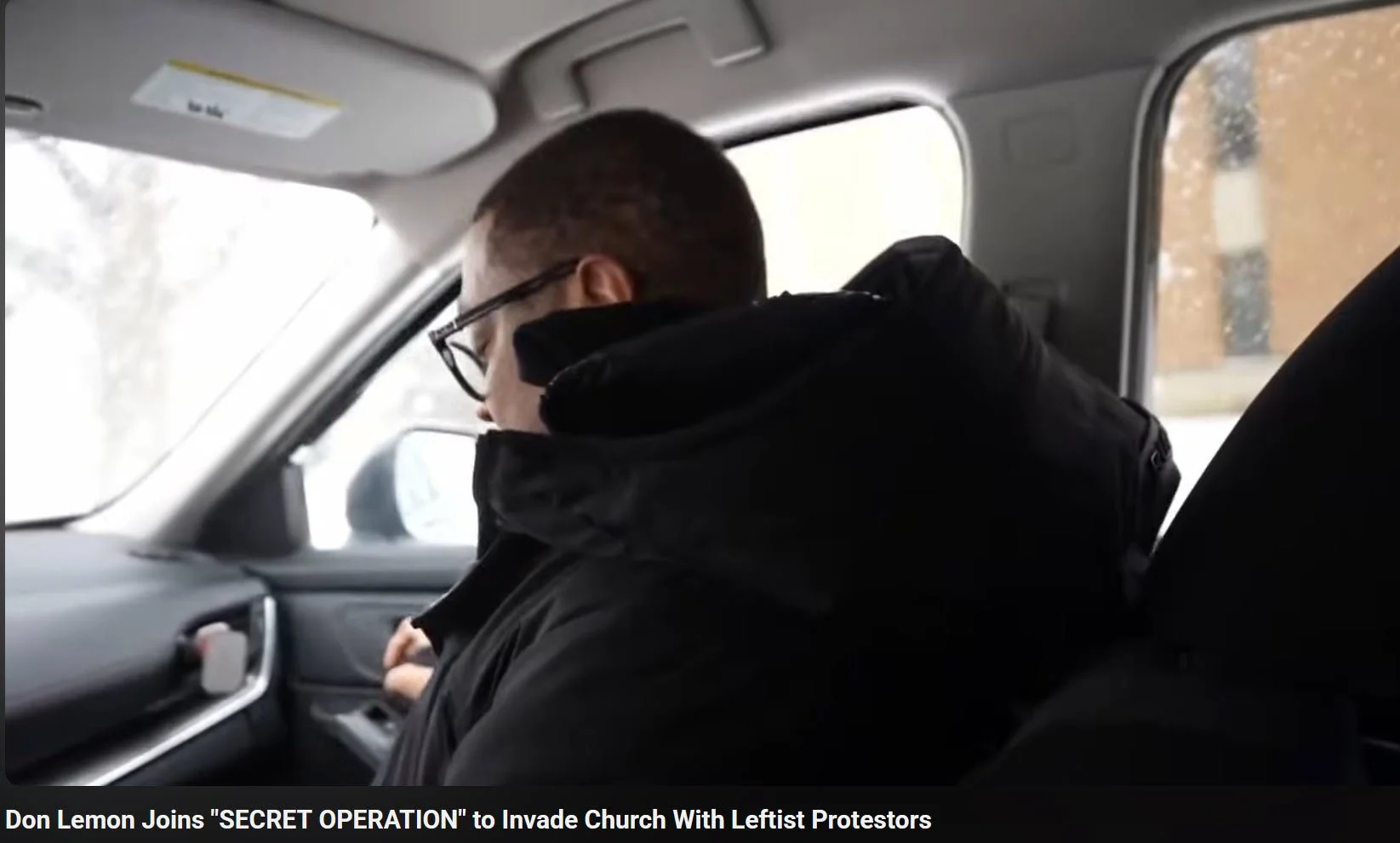
Don Lemon was involved in covering a protest on January 18, 2026, at Cities Church in St. Paul, Minnesota (near Minneapolis). Anti-ICE activists stormed the church during a Sunday worship service to protest Immigration and Customs Enforcement (ICE), accusing a pastor of ties to the agency and demanding justice for Renee Good (a woman fatally shot by an ICE agent earlier that month). Protesters chanted slogans like "ICE out" and disrupted the service, causing many attendees—including children—to leave upset and feeling violated.As an independent journalist (after being fired from CNN in 2023), Don Lemon livestreamed the event on his YouTube channel. He interviewed the protest leader Nekima Levy Armstrong beforehand, followed the group into the church, filmed from inside, defended the protest as protected by the First Amendment ("This is what the First Amendment is about, the freedom to protest"), and spoke with church leaders and attendees during the chaos.The key controversy is whether Lemon knew about the planned disruption ("church invasion") in advance. Sources report:
He discussed the "clandestine operation" with activists prior to entering.
In his own livestream footage, he mentioned knowing what was going to happen and deliberated whether to go inside.
After the fact, he stated he learned about it that morning and was there purely for journalism.
However, DOJ Assistant Attorney General Harmeet Dhillon (in the Trump administration) put Lemon "on notice," saying he admitted knowing "exactly what was going to happen" and that journalism isn't a shield from potential involvement in a "criminal conspiracy." The Justice Department launched an investigation into possible violations of civil rights laws, including the FACE Act (which protects access to places of worship) and even referenced the Ku Klux Klan Act (1871 law against conspiracies to interfere with rights). Some conservative figures and President Trump amplified calls for charges against Lemon and the protesters, comparing it to prosecutions of pro-life activists at clinics.Lemon has defended himself, insisting it was legitimate journalism, he wasn't organizing or part of the protest, and he was reporting on events as they unfolded. Critics (especially on the right) accuse him of embedding with the group and having foreknowledge, while some defenders see it as protected press coverage of a newsworthy event.This incident has sparked huge backlash, including homophobic attacks (e.g., from Nicki Minaj) and debates over free speech vs. disrupting religious services.If you're referring to something else or have more context about "church inasion" (invasion?), feel free to clarify—there's no other major known scandal tying Lemon directly to a church event like this in his past!
What Can Churches Do in the Future to Protect Their Ability to Worship
Churches, as private entities, have several legal avenues to stop disruptions during services without violating constitutional rights, primarily relying on property rights, state and federal laws protecting religious assemblies, and standard criminal statutes. These measures ensure the congregation's right to free exercise of religion under the First Amendment is preserved, while disruptors' speech rights are not absolute inside private spaces. Below, I'll outline key conditions and mechanisms based on established legal principles.1. Private Property Rights and Trespass
Churches are generally considered private property, even if open to the public for worship. A disruption can be halted if the individual refuses to comply with reasonable requests from church leadership or staff.
Conditions: The person must be engaging in behavior that interferes with the service (e.g., shouting, protesting inside, or refusing to leave when asked). If they enter without permission or overstay after being told to depart, it constitutes trespass.
Legal Actions: Church officials (e.g., pastors, ushers, or security) can verbally instruct the disruptor to leave. If they refuse, police can be called to remove them and potentially charge with trespass or disorderly conduct. Courts have upheld this, noting that no First Amendment right exists to disrupt private religious gatherings.
churchlawandtax.com
For proactive measures, churches can deny entry to known disruptors if there's reasonable cause, such as prior incidents.
churchsecurity-101.com
2. State Laws Prohibiting Disruption of Religious Services
Many states have specific statutes criminalizing the willful disturbance of religious worship, allowing churches to seek immediate intervention.
Conditions: The disruption must be intentional and interfere with the assembly (e.g., noise, rude behavior, or physical obstruction). Accidental or minor interruptions typically don't qualify.
Legal Actions: Examples include California's Penal Code § 302, New York's Penal Law § 240.21, and similar laws in most states. Church leaders can report the incident to law enforcement for arrests or citations. In ongoing cases, churches can obtain court orders to bar individuals.
thegospelcoalition.org +1
3. Federal Protections Under the FACE Act
The Freedom of Access to Clinic Entrances (FACE) Act (18 U.S.C. § 248) extends to places of worship, making it a federal crime to use force, threats, or physical obstruction to interfere with religious exercise.
Conditions: Applies when the disruption involves violence, threats, intimidation, or blocking access/egress. It doesn't cover peaceful, non-obstructive speech but targets actions that prevent worship.
Legal Actions: Churches can report to the Department of Justice for investigation and prosecution. This has been used in cases like recent protests entering sanctuaries, leading to federal charges without infringing on protesters' rights outside the building.
thegospelcoalition.org
4. Credible Threats or Repeated Disruptions
For escalating or chronic issues, churches can pursue restraining orders or no-trespass notices.
Conditions: There must be evidence of a "credible threat" of harm, harassment, or repeated interference (e.g., social media threats, prior violence, or stalking). Random or unsubstantiated claims won't suffice; documentation like videos, witness statements, or police reports is key.
Legal Actions: Issue a formal no-trespass letter via certified mail, then seek a court-issued restraining order if needed. Some states have "workplace violence" laws applicable to nonprofits like churches, allowing orders to prohibit approach or entry. Evidence from security cameras or cell phone recordings strengthens the case.
electionforum.org +1
5. Practical and Preventive Measures
Churches can enhance security without waiting for a disruption, such as training ushers, installing cameras, or coordinating with local police for rapid response.
Conditions: These are allowable as long as they're applied neutrally and don't discriminate based on protected characteristics (e.g., race or religion). They're especially justified if there's advance notice of potential protests.
Legal Actions: Record incidents for evidence, use de-escalation tactics first, and involve law enforcement only when necessary to avoid liability claims. In emergencies, shelter-in-place or evacuation protocols may apply if safety is at risk.
electionforum.org +1
In all cases, actions must be reasonable and not excessive (e.g., no vigilante force). If a disruption stems from broader issues like government mandates (e.g., during emergencies), courts may scrutinize for First Amendment violations, but standard disruptions by private individuals are routinely stoppable.
findlaw.com
Conservative legal analyses, such as from Church Law & Tax, emphasize that these protections prioritize religious freedom over unchecked protest rights inside sanctuaries.
churchlawandtax.com
For specific advice, churches should consult local attorneys, as laws vary by jurisdiction.