
Kharg Island - Iran’s Vulnerability
Segment #813

Strategic and Operational Considerations
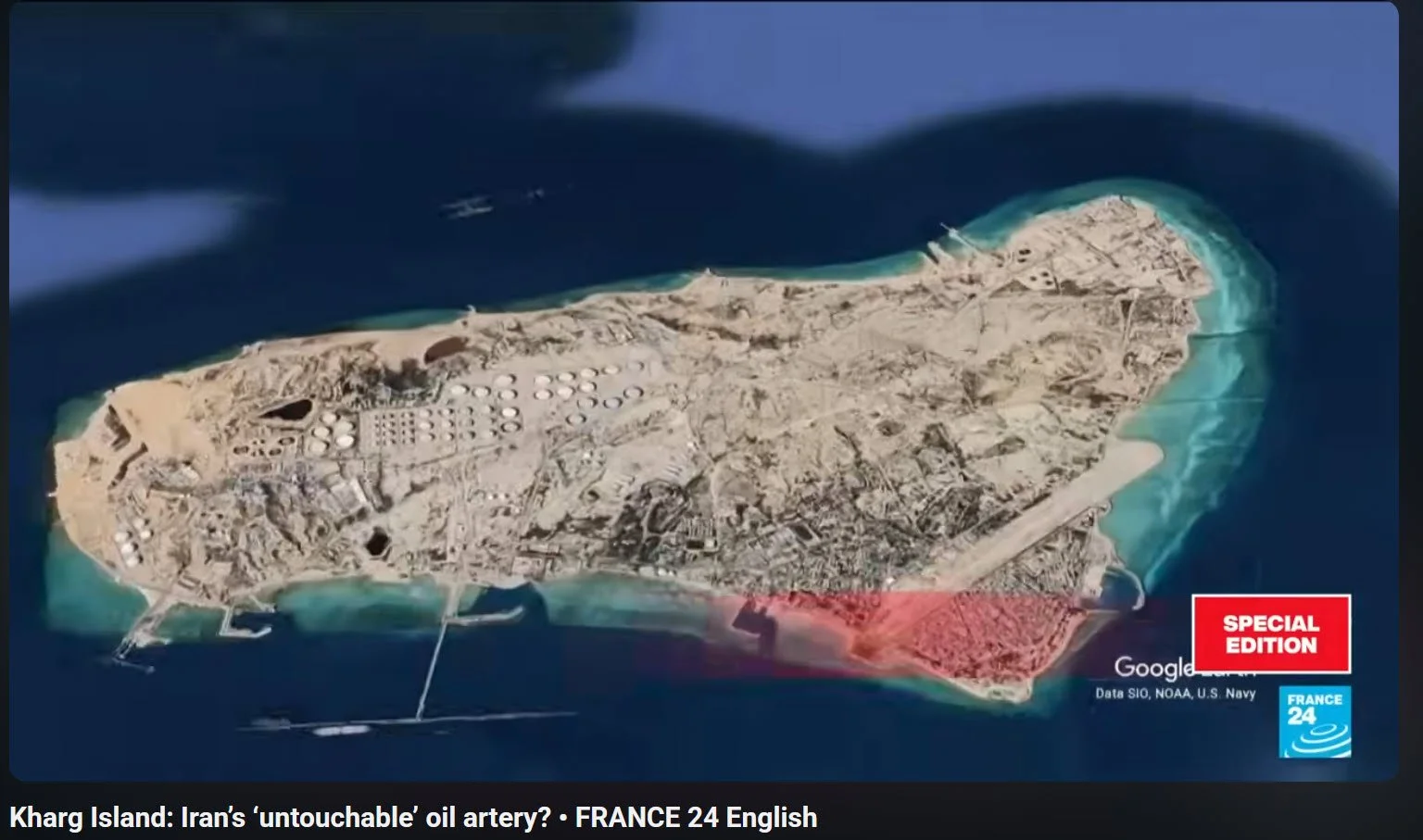
Military analysts and policy experts have debated various approaches to disrupting or controlling this hub. Any operation intended to minimize loss of life must navigate the reality that such actions would likely be viewed by Iran as an existential threat, potentially triggering broad, escalatory retaliation. Controlling the export of oil from Kharg Island is a complex strategic problem. Because Kharg Island facilitates approximately 90% of Iran’s crude oil exports, it is the central artery of the Iranian economy. However, as of March 2026, the island remains largely untouched by the current military campaign, reflecting a calculated risk assessment by the United States and its allies regarding the potential for global economic fallout and regional escalation.
Naval Interdiction (Maritime Sanctions Enforcement)
Instead of a direct strike or occupation, the United States could employ enhanced maritime interdiction.
Mechanism: Using naval assets to board, inspect, and divert tankers suspected of transporting Iranian oil, or enforcing a "quarantine" zone around the island to prevent vessels from docking.
"Minimal Loss of Life" Approach: This relies on technological dominance and non-kinetic coercion—using warnings, electronic warfare (e.g., GPS spoofing or jamming), and the overwhelming presence of carrier strike groups to force compliance without direct combat.
Risk: This assumes Iranian naval and proxy forces would not engage. Iran’s "asymmetric" strategy involves the use of fast-attack craft, anti-ship missiles, and sea mines, which are specifically designed to challenge larger naval forces in a contested environment.
Seizing the Island (Occupation)
Proponents have suggested a limited special operations mission to seize the terminal rather than destroy it.
Mechanism: A rapid, surgical insertion of special operations forces to secure the facility.
"Minimal Loss of Life" Approach: Proponents argue that by securing the infrastructure rather than bombing it, the U.S. could preserve the asset for a future, non-sanctioned government, effectively "turning off" the regime's funding without the casualties associated with leveling the facility.
Risk: Occupation is inherently high-risk. It requires holding a position 25 kilometers from the Iranian mainland, leaving forces vulnerable to sustained Iranian missile, drone, and artillery bombardment. This would likely necessitate a significant defensive air and missile umbrella, increasing the likelihood
The Escalation Paradox
Regardless of the tactical method—whether blockading, seizing, or striking—there is a widespread consensus among analysts that the "red line" surrounding Kharg Island is defined by the high probability of Iranian retaliation.
Retaliation Threshold: Iran has historically signaled that if it cannot export oil, it may attempt to disrupt the transit of oil from regional neighbors through the Strait of Hormuz.
Regional Instability: Disrupting the flow of oil from Kharg Island, even partially, risks a significant spike in global energy prices and broader economic volatility, which may impact US-China relations, given that China is the primary consumer of Iranian oil.
Strategic Restraint: The current avoidance of striking Kharg Island, even during active conflict, reflects a calculated effort to prevent a "total war" scenario where both sides feel compelled to strike each other's primary energy infrastructure.
The "Red Line" Effect: Iranian officials have historically indicated that if their oil cannot leave the Persian Gulf, they will ensure no one else's oil leaves the region either. This creates a "mutually assured destruction" dynamic regarding energy exports.
Economic Consequences: Because the world cannot easily replace the volume of oil that flows through the Strait of Hormuz, the U.S. is constrained by the reality that any successful intervention—even one that avoids immediate loss of life on the island itself—could trigger a global economic depression and force a military confrontation that far exceeds the scope of the current conflict.
U.S. Naval Assets in the Region
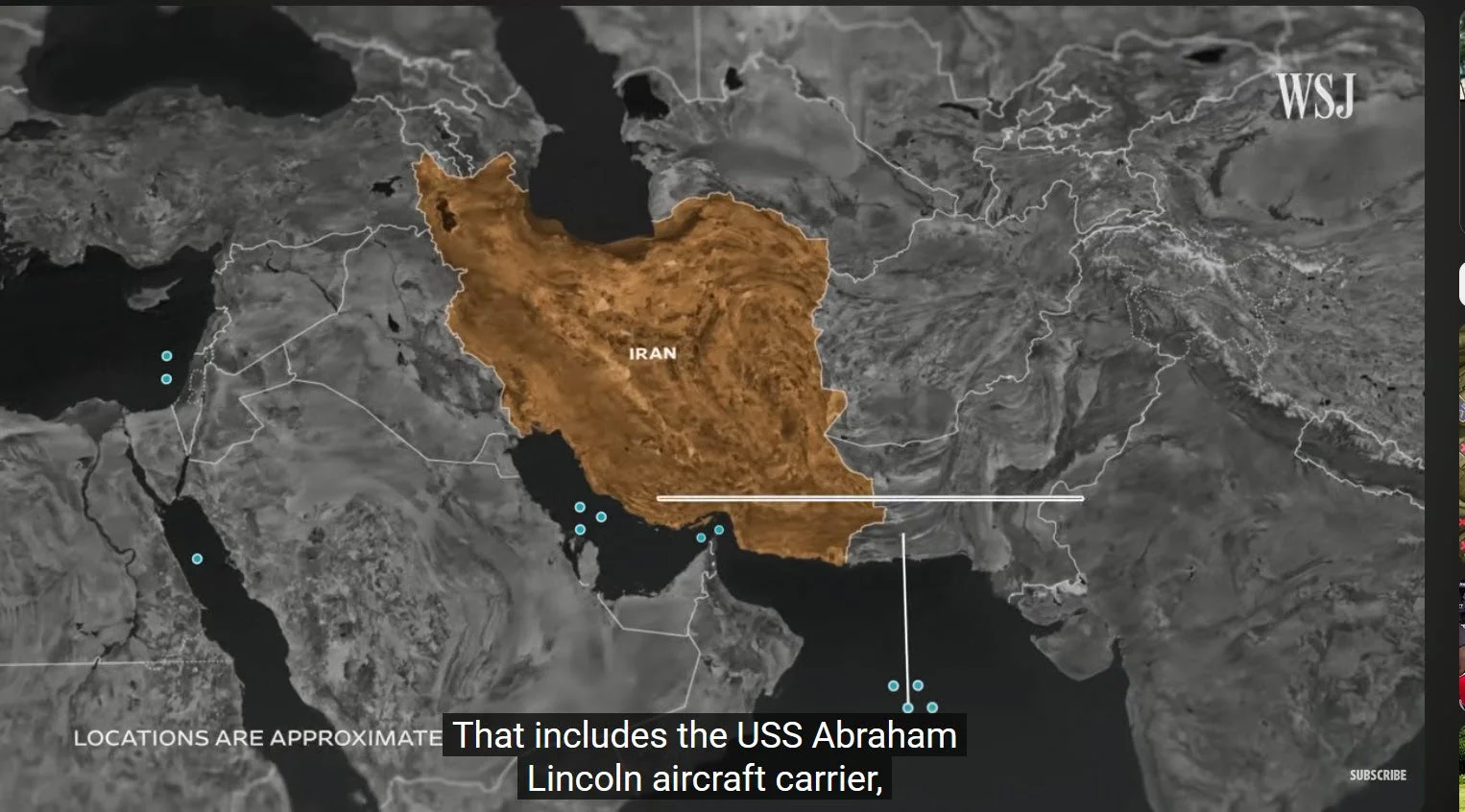
The U.S. has assembled its largest naval force in the Middle East since the 2003 invasion of Iraq. This "robust" posture is designed to both conduct offensive operations and deter Iranian retaliation.
Dual Carrier Strike Groups: The region currently hosts both the USS Abraham Lincoln and the USS Gerald R. Ford strike groups. This allows for sustained, high-intensity air operations and massive cruise missile strike capabilities.
Layered Defensive and Offensive Network:
Surface Combatants: Dozens of guided-missile destroyers and cruisers are positioned across the Mediterranean, Red Sea, Arabian Sea, and Persian Gulf, forming a strategic "ring" to intercept missiles and drones.
Air Power: Beyond the carriers, the U.S. has surged over 100 fighter aircraft—including F-22 Raptors and F-35s—to regional bases in countries like Israel, Jordan, and Qatar.
Defense Systems: Additional Patriot and THAAD missile defense batteries have been deployed to protect regional partners from potential Iranian saturation attacks.
Base Status: Recent reports indicate a consolidation of U.S. personnel at mission-critical levels in Bahrain, with many ships having moved out of port to avoid being trapped in confined waters during a conflict.
Impact on Global Oil Markets
The market response to the current conflict has been swift and severe, driven by the fact that roughly 20% of the world’s seaborne oil transits the Strait of Hormuz.
Price Volatility: Between late February and March 9, 2026, Brent crude oil prices surged dramatically, spiking from approximately $70/barrel to over $110–$120/barrel during periods of peak panic. While prices have retreated somewhat due to official statements, they remain highly sensitive to news of shipping disruptions.
The "Chokepoint" Risk: The market's primary concern is not just Iranian output, but the potential for a total blockade of the Strait of Hormuz. Because the region lacks sufficient pipeline capacity to bypass this chokepoint, any sustained closure threatens to remove roughly 20 million barrels of crude and massive quantities of LNG from the market daily.
Broader Economic Ripple Effects: * Inflation: Global institutions, including the IMF, have warned that prolonged conflict and elevated energy prices will likely reignite global inflation and threaten economic growth.
Logistics & Insurance: Even where physical transit is possible, soaring insurance premiums and the reluctance of commercial tanker operators to enter the war zone have created "de facto" supply disruptions.
Market Sentiment: The market is currently pricing in a "geopolitical risk premium." Investors are bracing for a prolonged conflict, and analysts suggest that while strategic petroleum reserves can buffer short-term shocks, they cannot replace the sustained flow of millions of barrels per day.

Impact on the Global Airline Industry
The sudden surge in crude oil prices—which spiked significantly due to the conflict—has hit the aviation industry particularly hard, as fuel represents roughly 20% to 30% of total operating costs.
Operational Costs: Jet fuel prices have risen dramatically, in some reports doubling from pre-conflict levels ($85–$90/barrel to $150–$200/barrel).
Uneven Resilience (Hedging): The impact is highly dependent on an airline's "fuel hedging" strategy.
European Carriers: Many European airlines (e.g., Lufthansa, IAG, Air France-KLM) have significant fuel hedging in place, which provides short-term protection but will likely result in delayed earnings pressure if prices remain high.
U.S. Carriers: Most major U.S. airlines have largely abandoned fuel hedging over the past two decades, leaving them fully exposed to the spot-price volatility of the current spike.
Iran’s Military Infrastructure
Iranian Asymmetric Naval Warfare
Iran’s maritime strategy is designed to exploit the geographic constraints of the Persian Gulf—a narrow, shallow body of water—to negate the U.S. Navy's technological superiority. They employ a layered approach of "swarm" tactics and low-cost, high-volume munitions to force an exhausting war of attrition.
Swarm Tactics: Utilizing large numbers of small, fast-attack watercraft armed with heavy machine guns, rockets, and anti-ship missiles. These are designed to overwhelm the defensive perimeters of larger, more expensive U.S. vessels.
Drone & Missile Arsenal:
One-Way Attack (OWA) Drones: Systems like the Shahed-136 are used in mass, attempting to saturate and deplete expensive allied missile defense interceptors.
Missile Threats: Iran utilizes a mix of cruise missiles and ballistic missiles, including reports of advanced hypersonic capabilities like the Fattah-2, which are intended to maneuver unpredictably and bypass sophisticated interception systems.
Sea Mines & Sabotage: Iran has historically demonstrated the capacity to use sea mines and unmanned surface/underwater vehicles to threaten commercial shipping. By creating an atmosphere of extreme risk, they have successfully caused a de facto halt to commercial traffic through the Strait of Hormuz, with over 150 tankers reportedly anchored in open waters as of early March 2026.
Electronic Warfare: Extensive use of GPS jamming across the Gulf has complicated navigation and increased the risk for commercial operators, further driving up insurance premiums and deterring shipping traffic.
The initial and subsequent waves of joint U.S.-Israeli strikes have systematically targeted the pillars of Iran’s military power:
Current Status of Iran’s Military Infastructure
Missile and Drone Arsenal: A central focus of the air campaign has been the destruction of Iran’s ballistic missile program. Reports indicate that a substantial percentage of missile launchers (estimated by some sources to be over 75%) have been neutralized. Missile production facilities, including those at Parchin, have been targeted and damaged.
Air Defense Systems: Iran’s integrated air defense network, including high-end systems like the S-300 and Bavar-373, has been largely neutralized, allowing for uncontested air operations by the U.S. and Israel.
Naval Capabilities: The campaign has inflicted heavy losses on the Islamic Revolutionary Guard Corps (IRGC) Navy, with reports of dozens of vessels damaged or destroyed at ports like Bandar Abbas.
Command and Control: The assassination of Supreme Leader Ali Khamenei and other senior officials in the opening strikes has disrupted the regime’s decision-making apparatus, complicating the coordination of a unified strategic response.
Iran’s Response Under Current Condition
Regional Asymmetric Strikes: Lacking the ability to mount a sustained conventional challenge, Iran has shifted to smaller, coordinated barrages of missiles and drones. These attacks target U.S. bases and commercial infrastructure across the Middle East, including in Saudi Arabia, the UAE, Bahrain, Kuwait, Qatar, Jordan, and Oman.
Economic Warfare: By effectively closing the Strait of Hormuz and targeting energy infrastructure, Iran has triggered global economic instability. This strategy seeks to force an end to the conflict by making the regional and global economic costs of the war unsustainable.
Proxy Activity: Despite significant losses, Iran’s "Axis of Resistance"—most notably Hezbollah in Lebanon—continues to engage in hostilities, forcing Israel to manage a multi-front conflict.
Strategic Summary

The Strategic Landscape
The Global Significance: Kharg Island is not merely an Iranian asset; it is a critical node in global energy security. Any action that disrupts oil flow from this terminal—or triggers a retaliation that closes the Strait of Hormuz—risks immediate and sharp spikes in global oil prices. Such a shock could destabilize global markets, disproportionately harming energy-importing nations and potentially deepening the economic crisis.
Iran’s Deterrence & Asymmetric Capability: Iran’s strategy hinges on the fact that it does not need to win a naval battle to impose massive costs. By maintaining a capability to threaten or disrupt shipping via drones, mines, or anti-ship missiles, it creates an environment of extreme risk for commercial insurers and shipping companies. Even the threat of attack has historically been enough to freeze maritime traffic.
The U.S. military is currently positioned to exercise total control over the waters around Iran, but it faces a difficult dilemma: military success requires time, but the global economy may not be able to afford the time necessary to achieve it. If the conflict in the Strait of Hormuz persists, the resulting economic pain—for both the U.S. and its global allies—could create significant political pressure to seek a premature end to the military campaign before its strategic objectives are fully met
The "Overwhelming Force" Strategy: The U.S. and Israel are betting that persistent, high-intensity aerial bombardment will collapse Iran’s remaining capabilities before the economic, political, and regional costs of the conflict become prohibitive.
The "Endurance" Strategy: Iran is attempting to pace its remaining firepower, avoiding the exhaustion of its weapon stocks in a single spectacular failure, while gambling that the international community—and regional neighbors—will pressure the U.S. and Israel to halt the operation due to the cascading global economic impact.