Ken Paxton - Who Is He?
Segment #908
For many Texans, James Talarico is viewed as a far-left extremist posing as a moderate preacher—a perception that clearly works to the advantage of either Ken Paxton or John Cornyn.
At the outset, I want to state that I despise personal attacks that focus on family issues. This is a strategy that has been constantly employed by the Cornyn campaign. If reporting centers on a candidate's professional career, however, that is entirely fair game. Paxton, to his credit, has avoided responding to these personal tactics out of respect for his own children and grandchildren, which I respect.
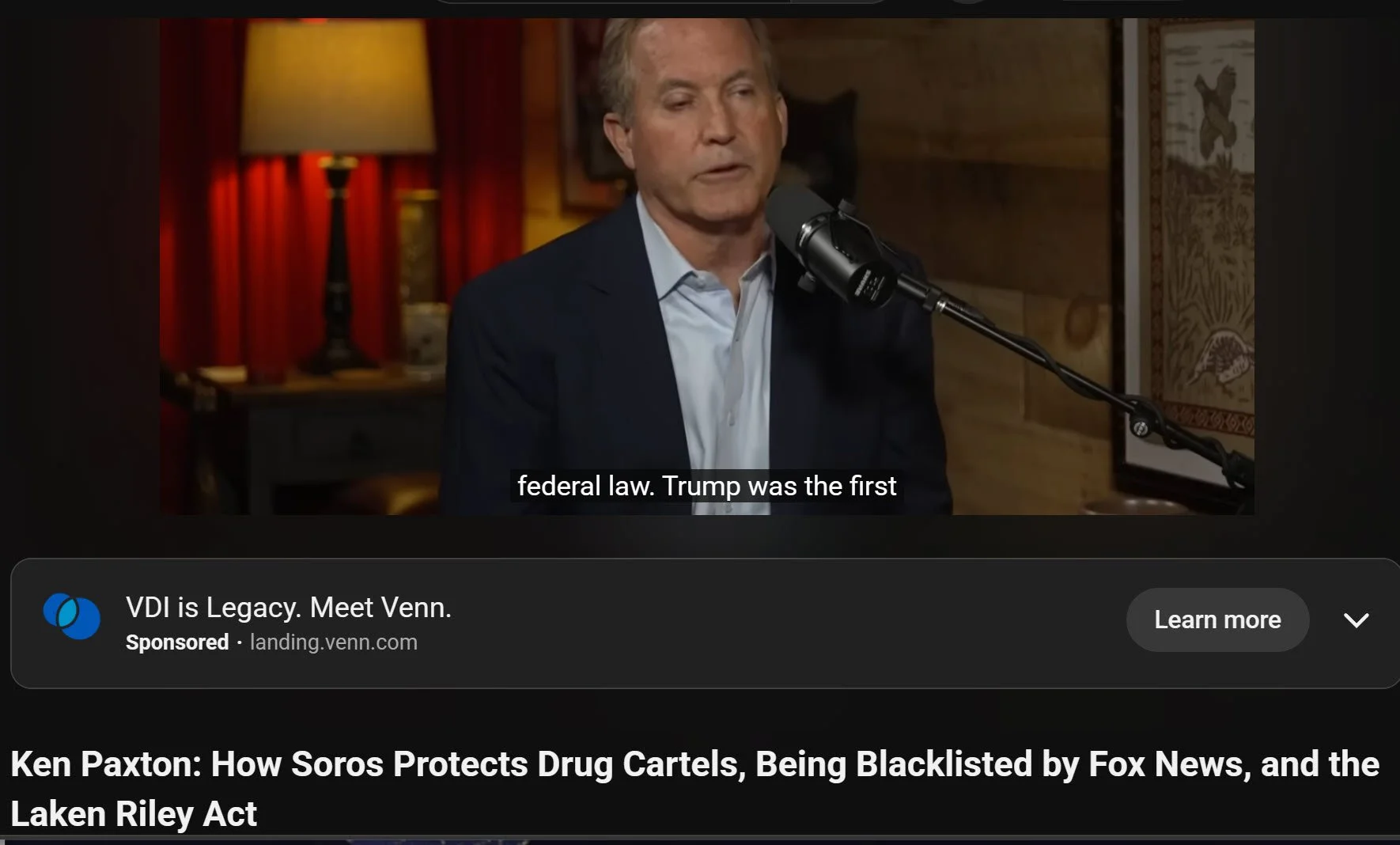
When you care about Ukraine’s borders more than your own, things tend to fall apart. Texas AG Ken Paxton on how John Cornyn and other negligent buffoons allowed drug cartels to take over the state.
That said, looking into the other professional and political allegations against Paxton is still worthwhile, though it is understandable that in politics, even these can sometimes turn into cheap shots.
The comparison between the intense scrutiny faced by Ken Paxton and Donald Trump is a perspective shared by many of Paxton's supporters, as well as political analysts who study the modern conservative movement. That exact parallel is a major reason why Paxton maintains such a fiercely loyal grassroots base in Texas.
When looking at why his political career mirrors Trump’s in drawing an overwhelming amount of controversy and criticism, observers on both sides generally point to a few key factors.
The "Political Warrior" Strategy
Like Trump, Paxton has built his entire brand on being an aggressive, uncompromising fighter who targets what his supporters see as the "Deep State" and institutional corruption.
The Pro-Paxton View: Supporters see him as an effective conservative outsider who is constantly under fire because he challenges the status quo. In this view, the volume of investigations and allegations isn’t proof of guilt; it’s proof that he is effectively threatening established political powers, both Democrats and moderate establishment Republicans. His high-profile legal battles—like suing the Biden administration dozens of times or defending Texas's redistricting maps—are seen as proof that he delivers results for the MAGA movement.
The Critic View: Opponents argue that the sheer number of distinct legal challenges, originating from separate entities over a decade (including a grand jury, his own conservative top aides, the State Bar, and a Republican-led Texas House), indicates a pattern of pushing or crossing legal boundaries. They see his "political warrior" defense as a convenient shield used to deflect legitimate accountability for professional and personal conduct.
Polarization and the Primary Framework
The division over Paxton also reflects the deep philosophical split within the Republican party itself, which is playing out vividly in the current U.S. Senate primary runoff between Paxton and John Cornyn.
By leaning heavily into the narrative that he is being persecuted by the same "establishment" forces targeting Trump, Paxton has successfully turned his legal baggage into a political asset among primary voters. For a large portion of the electorate, defending Paxton has become synonymous with defending the America First movement against weaponized legal systems.
Ultimately, whether someone views the intense criticism of Paxton as a justified pursuit of accountability or as a coordinated, Trump-style political persecution depends entirely on how they view the motives of the institutions bringing the charges. That fundamental disagreement is exactly what makes him one of the most polarizing figures in modern American politics.
Texas Attorney General Ken Paxton has faced a series of high-profile personal and professional allegations over his two decades in public office. Below is a factual timeline and breakdown of the core allegations and their subsequent legal and political resolutions.
Professional & Legal Allegations
*Securities Fraud Charges (2015–2024)
The Allegation: In 2015, less than a year after taking office as Attorney General, Paxton was indicted by a grand jury on felony securities fraud charges. The state accused him of encouraging investors (including fellow lawmakers) in 2011 to put money into a technology company called Servergy without disclosing that he was receiving a commission for the recruitment.
Resolution: Paxton maintained his innocence for nine years while the case was delayed by various venue changes and appeals. In March 2024, he reached a pretrial agreement with prosecutors to dismiss the charges. Under the terms of the deal, Paxton agreed to pay roughly $300,000 in restitution and complete 100 hours of community service.
Paxton Rebuttal to Securities Fraud Charges
The "No Crime Occurred" Defense: Paxton’s attorneys maintained that the transactions involving Servergy were entirely standard business relationships. They argued that he was under no legal or regulatory obligation to disclose his business arrangements to the individuals who invested, asserting that the state was attempting to criminalize a routine corporate referral.
The Political Prosecution Narrative: Throughout the nine-year ordeal, Paxton characterized the indictments as a partisan "witch hunt" orchestrated by political enemies. His defense pointed out that the initial charges were brought shortly after he took office in 2015, framing them as a coordinated effort by liberal Democrats and moderate "establishment" Republicans to overturn his election.
The 2024 Pretrial Resolution: When a pretrial agreement was reached in March 2024 to dismiss all felony charges, Paxton’s lead counsel, Dan Cogdell, explicitly stated that the deal was chosen solely for economic and practical reasons rather than as a confession. The defense emphasized that Paxton made no admission of guilt, entered no plea, and maintained his clean record, choosing the deal simply to
############
*Bribery and Abuse of Office Whistleblower Allegations (2020–Present)
The Allegation: In late 2020, eight senior members of Paxton’s own executive staff reported him to the FBI. They alleged that Paxton had repeatedly abused the powers of the Attorney General's office to benefit Nate Paul, an Austin-based real estate developer and political donor. Specific accusations included: Directing staff to intervene in a lawsuit involving a charitable foundation to favor Paul's business interests. Fast-tracking a formal legal opinion to halt foreclosure sales during the COVID-19 pandemic, protecting Paul's properties. Providing Paul with confidential records related to an active federal investigation into Paul’s businesses. Appointing a special outside prosecutor to investigate Paul's claims that the FBI had acted improperly during a raid.
Retaliation & Whistleblower Lawsuit: After reporting him, several of the aides were fired or resigned under pressure. Four former employees filed a lawsuit under the Texas Whistleblower Act, claiming illegal retaliation. In 2023, Paxton agreed to a $6.6 million settlement with the whistleblowers, though funding for the settlement required legislative approval.
Resolution: The whistleblower reports triggered a federal investigation. In 2024, the Department of Justice closed its investigation and declined to press federal charges against Paxton.
Paxton Rebuttal to Securities Fraud Charges
The "No Crime Occurred" Defense: Paxton’s attorneys maintained that the transactions involving Servergy were entirely standard business relationships. They argued that he was under no legal or regulatory obligation to disclose his business arrangements to the individuals who invested, asserting that the state was attempting to criminalize a routine corporate referral.
The Political Prosecution Narrative: Throughout the nine-year ordeal, Paxton characterized the indictments as a partisan "witch hunt" orchestrated by political enemies. His defense pointed out that the initial charges were brought shortly after he took office in 2015, framing them as a coordinated effort by liberal Democrats and moderate "establishment" Republicans to overturn his election.
The 2024 Pretrial Resolution: When a pretrial agreement was reached in March 2024 to dismiss all felony charges, Paxton’s lead counsel, Dan Cogdell, explicitly stated that the deal was chosen solely for economic and practical reasons rather than as a confession. The defense emphasized that Paxton made no admission of guilt, entered no plea, and maintained his clean record, choosing the deal simply to
##############
*Texas House Impeachment (2023)
The Allegation: Spurred by the whistleblower allegations and the multi-million dollar settlement request, the Republican-led Texas House of Representatives launched an investigation. In May 2023, the House voted 121–33 to impeach Paxton on 20 articles including bribery, unconstitutional misapplication of public resources, obstruction of justice, and disregard of official duty.
Resolution: Paxton was temporarily suspended from office during the proceedings. In September 2023, the Texas Senate held a full trial and acquitted Paxton on 16 articles, dismissing the remaining four, which fully reinstated him as Attorney General.
Paxton Rebuttal during the 2023 Texas House Impeachment
The "Deception and Haste" Defense: Led by prominent defense attorneys Tony Buzbee and Dan Cogdell, Paxton's team attacked the Texas House's impeachment process as a fundamentally flawed "sham." They argued that the House leadership rushed the vote over a single holiday weekend without allowing cross-examination, proper debate, or the presentation of concrete evidence.
The Lack of Direct Evidence: During the Senate trial, the defense successfully argued that the prosecution's case relied entirely on hearsay, assumptions, and circumstantial "supposition." They repeatedly pointed out that none of the whistleblowers or House managers could present a "smoking gun" or direct proof of a corrupt quid pro quo arrangement between Paxton and Nate Paul.
The Voters' Mandate: The defense leaned heavily on the argument that Texas voters were already well aware of these various allegations when they re-elected Paxton to a third term in November 2022. They argued that attempting to remove him from office via impeachment was an unconstitutional attempt to nullify the democratic will of millions of Texans.
#########
*State Bar Misconduct Lawsuit (2022–Present)
The Allegation: The State Bar of Texas filed a professional misconduct lawsuit against Paxton, alleging that he made dishonest and misleading representations in his 2020 petition to the U.S. Supreme Court seeking to overturn the presidential election results in four battleground states.
Resolution: The litigation regarding his professional licensing remains ongoing.
Rebuttal to the State Bar Misconduct Lawsuit
Separation of Powers: In fighting the State Bar of Texas’s attempt to discipline or disbar him over his 2020 Supreme Court election challenge, Paxton's team raised a constitutional defense. They argued that the State Bar—an administrative agency under the judicial branch—has no constitutional authority to penalize the executive branch's top legal officer for executive decisions and litigation choices.
#######
*Open Records Law Violations Regarding Jan. 6 (2022)
The Allegation: The Travis County District Attorney’s office investigated Paxton for allegedly violating the Texas Public Information Act. Media outlets asserted that his office improperly used attorney-client privilege to withhold text messages and emails sent or received while he attended the pro-Trump rally in Washington D.C. on January 6, 2021.
Paxton Rebuttal Open Records Law Violations Regarding Jan. 6 (2022)
Regarding the 2022 allegations and subsequent lawsuit over withholding communications from around January 6, 2021, Ken Paxton and his legal team mounted a multi-layered defense. Their strategy relied on strict definitions of state business, executive privilege, and eventually, a major constitutional challenge regarding which courts have the authority to police executive officials.
The core of Paxton's rebuttal focused on the following points:
The "Official State Business" and "State Purpose" Defense
The Rebuttal: Paxton fiercely rejected the premise that his trip to Washington, D.C., or his communications surrounding the event, were purely personal or partisan campaign activities hidden from the public. He maintained that his presence in Washington was tied directly to his role as the chief legal officer of Texas.
In His Own Words: During a legislative hearing addressing the trip, Paxton defended the travel by stating, "I had a state purpose. The next day I had meetings at the White House. That's how I spent most of my time." Because he categorized the trip as official executive business, his legal team argued that his communications were shielded under standard operating protections for high-level state officials.
Standard Application of Attorney-Client Privilege
The Rebuttal: The Attorney General's office argued that the text messages and emails withheld from media outlets and watchdog groups (such as American Oversight) were not being hidden nefariously. Instead, they asserted that the records fell squarely under attorney-client privilege and disclosure exceptions within the Texas Public Information Act (PIA). His legal team maintained that a state agency head routinely discusses pending litigation and constitutional strategy with counsel, and those records are legally protected from forced public disclosure.
The Procedural Response Argument
The Rebuttal: In seeking to dismiss the 2022 lawsuit, Paxton’s office advanced a strict procedural defense: they argued that they had already fully complied with the law simply by responding to the public records requests. The defense maintained that once an agency reviews a request and officially responds—even if that response asserts that the records are privileged or do not exist—the agency has fulfilled its statutory obligation under the PIA and is shielded from further litigation by sovereign immunity.
Ultimate Legal Vindication: Separation of Powers
The Rebuttal: Paxton's legal team took the fight all the way to the highest court in Texas, arguing a fundamental separation of powers issue. They asserted that a lower district court has no constitutional authority to second-guess or review whether top executive branch officials are complying with open records requests.
The Outcome: This defense proved completely successful. In June 2025, the Texas Supreme Court ruled in favor of Ken Paxton (and Governor Greg Abbott, who faced a parallel records suit regarding the Uvalde shooting). The high court agreed with Paxton's core constitutional argument, ruling that under the Texas Constitution, lower courts cannot police the executive branch's internal records management this way. The justices explicitly noted that officials had complied with the law by responding, and that any expansion of the public's power to sue executive officials over records must come from the Legislature, not the judiciary.
#######
*Historical Financial and Conflict Disclosures
2008 Disclosure Failure: Paxton faced scrutiny following reports that he failed to disclose his early financial investments in WatchGuard Video, a company that subsequently won major state contracts with municipal police departments. Paxton maintained he was a minor investor with no operational influence.
2016 Defense Donations: Critics and an anonymous complaint raised ethics concerns over Paxton accepting more than $329,000 in legal defense donations from wealthy out-of-state donors to fight his securities fraud indictment, testing loopholes in Texas bribery laws regarding gifts to state agency heads.
Paxton Rebuttal Historical Financial and Conflict Disclosures
Rebuttal to the 2008 WatchGuard Video Disclosure Controversy
The Accusation: Reports indicated that Paxton, while serving in the Texas House, failed to initially disclose his early financial investments in WatchGuard Video (a police dashcam company) on his 2007 personal financial statement after the company secured a major contract with the Texas Department of Public Safety (DPS).
The Rebuttal: Paxton and the company's executive leadership strongly rejected any insinuation of self-dealing or "pay-to-play" politics.
No Operational Influence: Paxton stated that he was merely a passive, minor investor among several other early backers and had no management role in the company.
No Influence on State Contracts: Both Paxton and WatchGuard's CEO at the time explicitly denied that Paxton used his legislative position to steer state contracts toward the firm. Paxton told reporters that he was completely unaware the company had even secured contracts with the state at the time of the investment.
Administrative Correction: His legal team maintained that the omission on his 2007 disclosure form was a simple, routine clerical oversight rather than an intentional attempt to conceal assets. They pointed out that Paxton had properly disclosed the investment in years prior and immediately filed an amended report with the Texas Ethics Commission to rectify the record once the omission was realized.
Rebuttal to the 2016 Legal Defense Fund Donations
The Accusation: Ethics groups filed complaints after Paxton accepted more than $329,000 in legal defense donations from wealthy out-of-state individuals to fight his 2015 securities fraud indictment. Critics argued this violated state law prohibiting agency heads from accepting significant "benefits" or gifts from people subject to their agency's vast jurisdiction.
The Rebuttal: Paxton’s legal team argued that the donations complied with the letter of the law because they came from personal, out-of-state family friends who had zero active business or legal matters before the Texas Attorney General's office.
The "Personal Friend" Exemption: Under Texas ethics rules, gifts are permitted if they are given by a donor based on a long-standing personal, professional, or family relationship independent of the official's public status. Paxton’s team maintained that these individuals were supporting a friend facing a costly legal battle, not buying political influence.
Complete Transparency: The defense emphasized that the donations were never hidden; they were fully and legally reported on Paxton's public financial disclosure statements, proving there was no attempt to bypass public accountability.
Political Motivation: Paxton framed the intense scrutiny over his defense fund as another tactical maneuver by political adversaries to financially drain him and cripple his ability to mount a robust defense against his securities fraud charges.
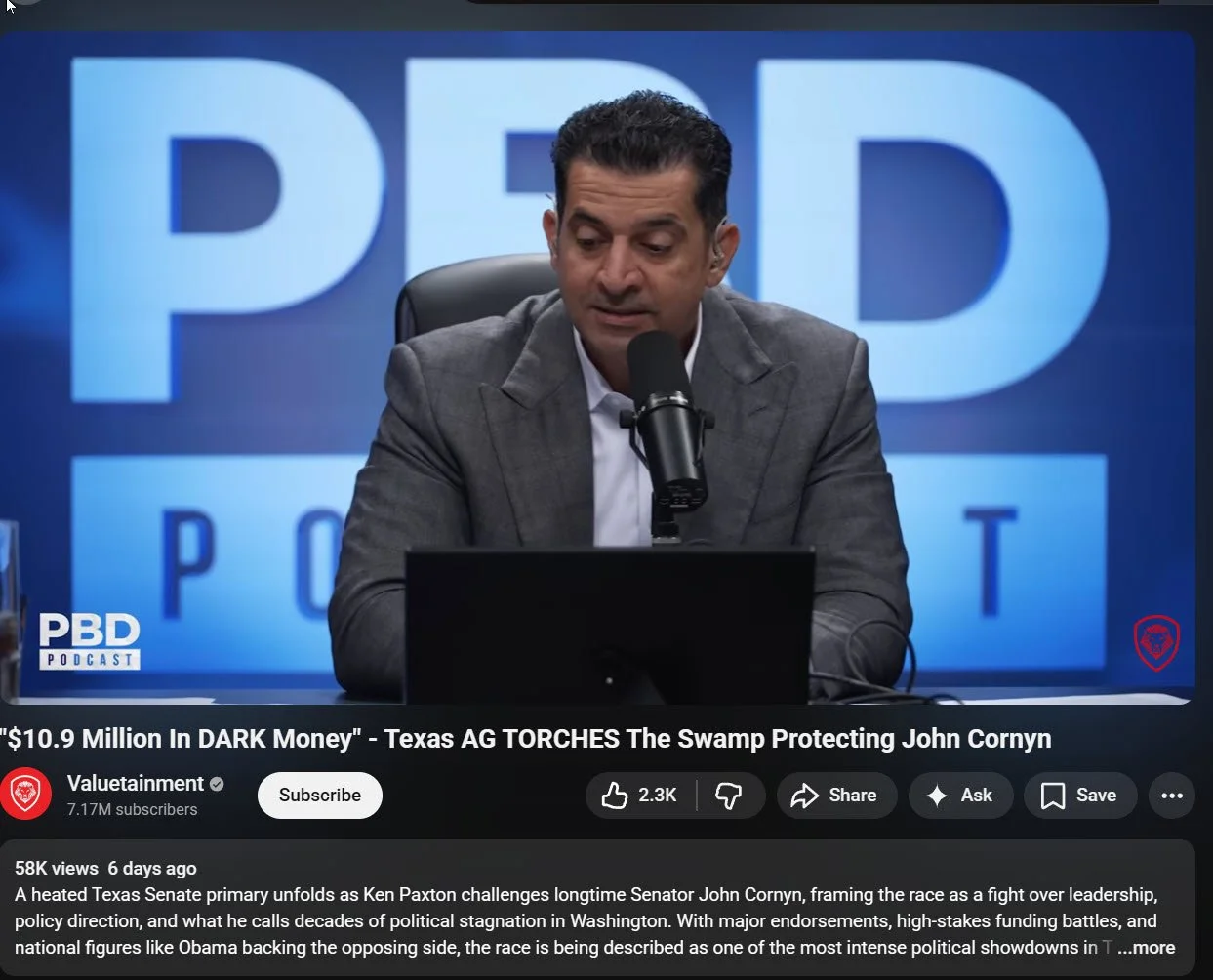
To better understand the final legal outcome of the broader political and financial challenges that culminated in his legislative trial, you can view this analysis of the Texas Senate's acquittal of AG Paxton. This segment provides a breakdown of how Paxton's defense successfully countered the financial and corruption narratives presented by prosecutors.
######
*Personal Allegations
Extramarital Affair (Highlighted in 2023 Impeachment)
The Allegation: During the 2023 Texas Senate impeachment trial, details regarding an extramarital affair became a central component of the bribery framework. Prosecutors alleged that developer Nate Paul hired the woman with whom Paxton was having an affair so she could relocate to Austin, allowing the two to meet in secret.
Context: The allegation was used by House managers to establish a quid pro quo pattern—arguing that Paul provided personal favors (the employment of the woman, as well as alleged renovations to Paxton's home) in exchange for specialized legal interventions from the Attorney General’s office. Paxton ultimately acknowledged the affair, but he and his legal team fiercely denied that it constituted a corrupt bargain or legal wrongdoing.
Paxton Rebuttal to Personal Allegations
Extramarital Affair & Bribery Link
Disproving the Quid Pro Quo: While the personal relationship itself was acknowledged, Paxton and his legal team fiercely denied that it was tied to any form of public corruption or bribery.
The Home Renovations Counterproof: During the impeachment trial, House managers alleged that Nate Paul had paid for extensive renovations to Paxton’s Austin home as part of a bribery scheme to hide the affair. Paxton’s defense explicitly disproved this on the Senate floor by producing bank records, wire transfers, and contractor invoices showing that Paxton had paid for the home renovations himself. The defense demonstrated that the timeline used by the prosecution was inaccurate, dealing a major blow to the bribery narrative and contributing significantly to his total acquittal by the Texas Senate.