
Europe's Best Intentions Have Backfired Dangerously
Segment #910
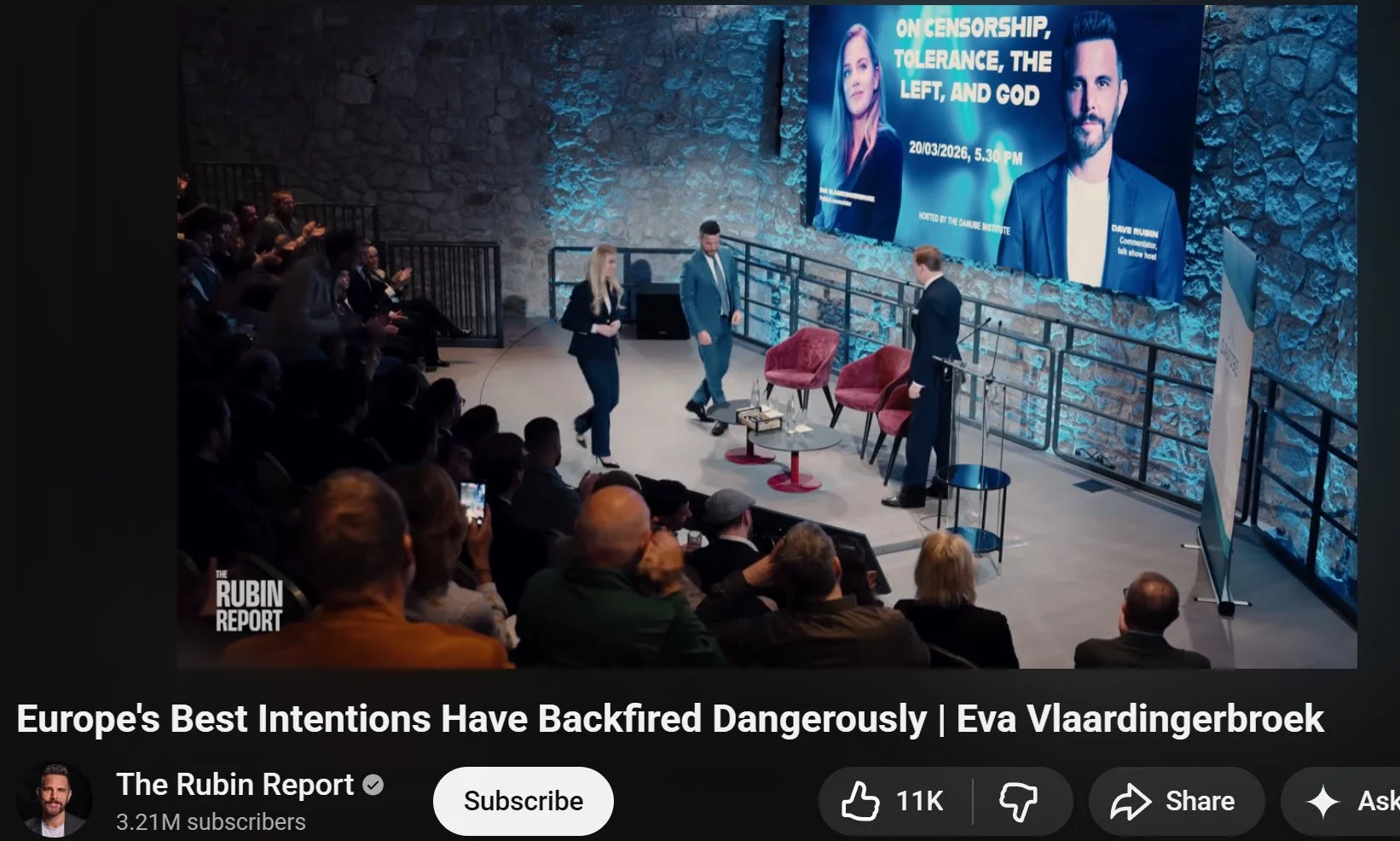
Dave Rubin of “The Rubin Report” participates in a talk with Eva Vlaardingerbroek hosted by David Oldroyd-Bolt of the Danube Institute about Eva’s UK entry ban and free speech concerns in Europe; debate over mass migration, and cultural identity; comparisons between US and European immigration policy; geopolitical discussions on Ukraine, Iran, and Western media narratives; the role of Christianity in Western civilization and moral values; and analysis of the modern political left, progressive alliances, and shifting European politics, and much more
The European Union: Mass Migration & Sovereignty
The core thesis of the "backfired intentions" argument centers on the EU's long-standing approach to border control, asylum, and demographic management.
The "Surrender" Narrative: Populist critics argue that post-nationalism and open-border policies—conceived as humanitarian ideals—have systematically eroded European cultural identity and strained social infrastructure. They contend that the ruling political class has effectively surrendered national sovereignty to bureaucratic bodies like the European Commission.
The Bureaucratic Backlash: The conversation highlights a growing friction between localized populist movements (such as the farmer protests in the Netherlands or the rise of right-wing parties across the continent) and Brussels. Populists argue that central EU policies override the democratic will of individual nation-states, particularly regarding mandatory migrant relocation quotas.
The United Kingdom: Two-Tier Governance & Free Speech
The discussion takes a sharp, specific turn into the domestic politics of the UK, heavily influenced by Vlaardingerbroek’s own recent legal status.
The UK Entry Ban: The British Home Office revoked Vlaardingerbroek's Electronic Travel Authorisation (ETA), barring her from entering the UK to speak at an upcoming political rally on the grounds that her presence was "not conducive to the public good."
The Free Speech Debate: Conservatves cite this ban—along with the blocking of other international right-wing figures—as evidence of an escalating crackdown on political dissent under Prime Minister Keir Starmer's Labour government. Critics argue that the state is utilizing immigration and security laws to censor peaceful, alternative political narratives, a phenomenon they label as institutional "authoritarianism."
Social Friction: The conversation underscores deep concerns about public safety and cultural cohesion in Britain. Activists draw attention to instances of violent crime involving asylum seekers to argue that mainstream media and leadership are intentionally minimizing the negative consequences of rapid demographic shifts.
The United States: Parallel Tracks & Geopolitical Fallback
The dialogue explicitly connects European trends to current dynamics in the US, positioning Europe as a cautionary tale for the American electorate.
Immigration Parallels: The speakers draw a direct line between the EU’s migration challenges and the ongoing border security debate in the United States. The argument presented is that the US is repeating Europe’s mistakes by failing to strictly enforce federal immigration laws, which they warn will inevitably lead to the same erosion of social cohesion and public trust.
The Weapons of "Lawfare": The discussion touches on the perceived weaponization of state institutions—such as the justice system and border enforcement—against political outsiders. What Europeans see as politically motivated travel bans, American conservatives view as parallel to domestic "lawfare" and federal overreach targeting right-of-center figures.
The Cultural Pivot: Both commentators emphasize a return to traditional values, specifically highlighting the historical role of Christianity in Western civilization, as the necessary moral anchor to counter what they define as a failing progressive consensus.
The Counter-Perspective: Mainstream European and UK authorities strongly reject these narratives, maintaining that travel exclusions and hate-speech regulations are necessary, lawful tools to prevent public disorder, curb targeted incitement, and maintain national security against political extremism.
For a deeper dive into the specific discussion regarding the UK's entry bans and the broader European political landscape, you can watch the commentary on The Rubin Report interview with Eva Vlaardingerbroek. This segment provides additional context on how free speech and border policies are currently clashing across Europe.