Segment #730
In the past people migrated to America to be a part of our system. International migration now to Australia, United Kingdon, Eurpe, and the United States is part of a strategy for worldwide Islamic domination. This is not hyperbole. These Islamic radicals freely admit their plans to dominate the west. There are now plans for assimilation or seeking the American dream.
Europe
The Muslim population in Europe (including broader continental estimates) increased from approximately 44 million in 2010 (about 6% of the population) to 46 million in 2020 (up 16%, remaining around 6%). By 2025, estimates converge on around 46 million (roughly 6% of Europe's ~745 million people). Growth over the past decade has been driven primarily by higher fertility rates and immigration, though migration slowed after the 2015–2016 refugee peak.
United Kingdom
According to official census data, the Muslim population in England and Wales rose from 2.71 million in 2011 (4.9% of the population) to 3.87 million in 2021 (6.5%), an increase of 1.16 million (about 43%). Including Scotland and Northern Ireland, the UK total approached just under 4 million (around 6%). This growth accounted for roughly one-third of the overall population increase in England and Wales during the decade and reflects both natural increase (younger age profile and higher birth rates) and immigration.
United States
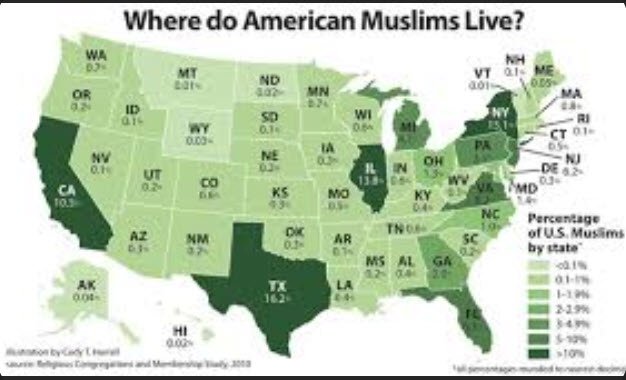
Estimates vary due to the lack of official religious data in the U.S. Census. Pew Research Center's widely cited figure was 3.45 million Muslims in 2017 (about 1.1% of the population). More recent sources, including the 2020 U.S. Religion Census, estimate around 4.5 million (1.34%). Growth has been steady, driven by immigration, conversions, and higher fertility rates, with projections suggesting continued moderate increases.
There are ongoing ideological efforts by certain Islamist groups to advocate for or pursue the establishment of a global Islamic caliphate, often framed as a means to unite Muslims under Sharia law and challenge Western influence. However, these represent fringe extremist movements, not a unified or mainstream "movement" supported by the vast majority of the world's 1.8+ billion Muslims, who overwhelmingly reject violence and such ambitions.Key Groups and Activities
Hizb ut-Tahrir (HT): This transnational, non-violent (in method) organization explicitly campaigns for a global caliphate through political and intellectual means. It remains active in 2025, organizing global events, protests, and conferences to commemorate the 1924 abolition of the Ottoman Caliphate and mobilize support. HT operates in dozens of countries, including Western ones, and has been banned in places like Germany, the UK, and several Muslim-majority states due to its radical ideology.
Islamic State (ISIS/ISIL) remnants and affiliates: Though ISIS lost its territorial "caliphate" in 2019, it and branches like ISIS-Khorasan continue to aspire to a global caliphate. In 2025, affiliates are resurgent in regions like Africa and Asia, inspiring or directing attacks worldwide. ISIS propaganda still promotes the caliphate ideal, but the group is diminished and operates as a decentralized terrorist network rather than a state-builder.
Other Islamist entities: Groups like certain Muslim Brotherhood offshoots or smaller networks (e.g., Muslim Interactive in Europe) echo caliphate rhetoric, often tying it to anti-Western or anti-Israel sentiments. Recent reports highlight bans (e.g., Germany in 2025) and concerns over radicalization in Western cities.
These efforts exploit conflicts (e.g., Gaza, Syria) for recruitment and propaganda, with some officials (like U.S. DNI Tulsi Gabbard in 2025) describing "Islamist ideology" as a long-term threat seeking global Sharia governance.
RAIR Foundation USA (rairfoundation.com) is a real organization. It is a grassroots activist group founded by Amy Mekelburg (known online as Amy Mek), focused on opposing what it describes as threats from "Islamic supremacists," radical leftists, immigration, and globalism. It is part of the counter-jihad movement and has been criticized as promoting anti-Muslim conspiracy theories and hate by groups like the Southern Poverty Law Center and the Council on American-Islamic Relations. Independent media bias evaluators, such as Media Bias/Fact Check, rate it as extreme right-biased with low factual reporting due to propaganda, poor sourcing, and failed fact checks.The provided text appears to be an article (or excerpt) from RAIR Foundation, based on its alarmist style and themes, which align with their frequent coverage of alleged "Islamization" in Texas. RAIR has published multiple similar pieces on topics like the East Plano Islamic Center (EPIC Mosque), the proposed EPIC City development (a planned residential community with Islamic facilities, now renamed "The Meadow" and facing delays/investigations), and related figures/institutions.Key claims in the text have partial basis in reality but are presented in a highly inflammatory, conspiratorial manner:
Arabic-language recruitment video: There are reports of Arabic-language videos/influencer content promoting Dallas-Fort Worth to Arab/Muslim families, highlighting mosques, Islamic schools, halal businesses, and community support as reasons to relocate (e.g., for easier practice of faith without full assimilation). This is framed by critics as "recruitment" for non-assimilation, but proponents see it as standard community marketing, similar to how other religious/ethnic groups (e.g., Jewish or Amish communities) promote enclaves.
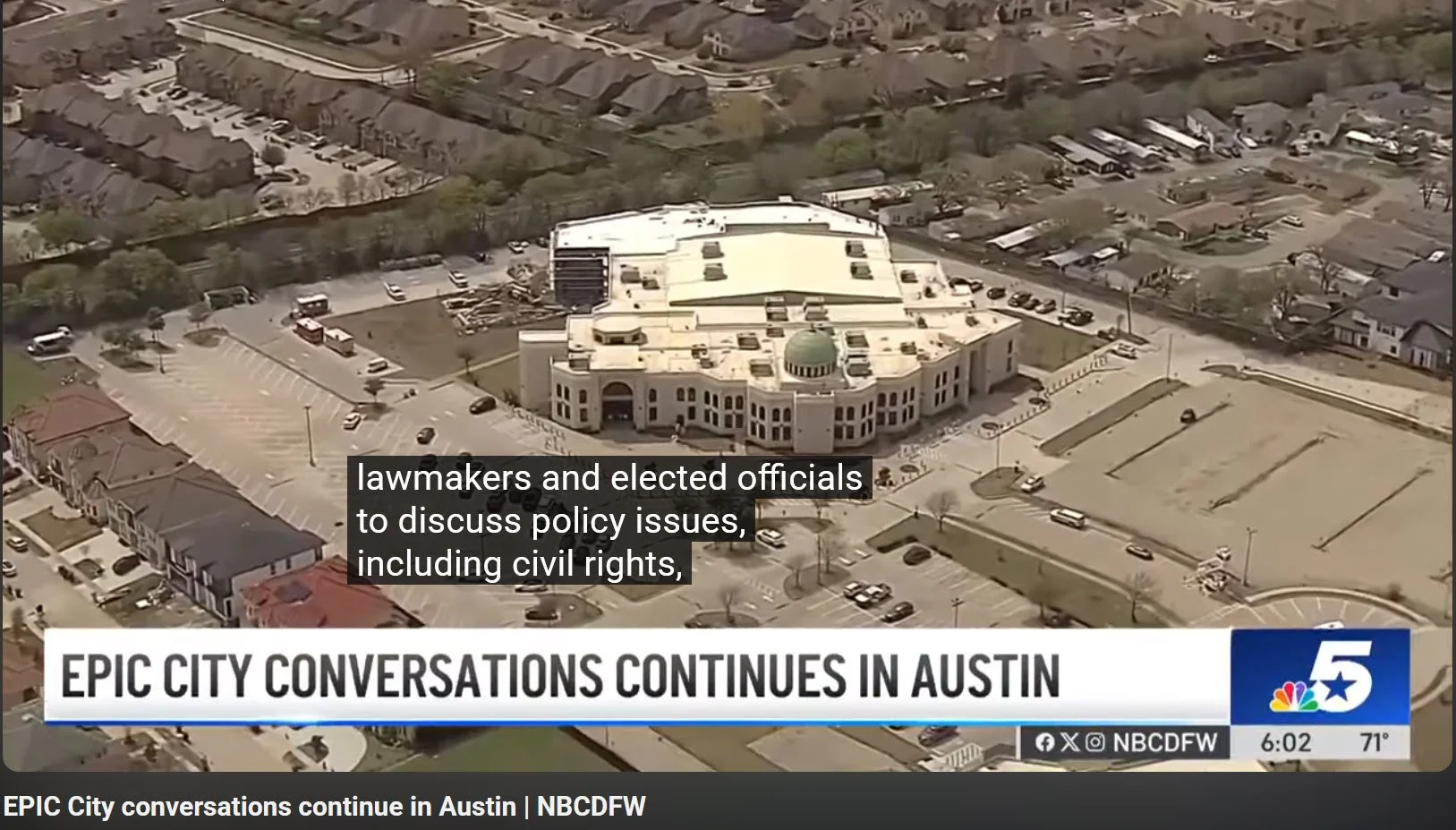
EPIC Mosque and EPIC City: The East Plano Islamic Center is a real, large mosque in Plano, Texas. EPIC City was a proposed 402-acre development with homes, a mosque, K-12 Islamic school, and amenities. It sparked controversy, leading to state/federal investigations (some closed without findings of wrongdoing) and a name change. Development has been halted or delayed amid scrutiny from figures like Gov. Greg Abbott.
MAS Youth Center and Muslim American Society (MAS): MAS is a real U.S. Islamic organization with youth programs. It has acknowledged early ties to the Muslim Brotherhood but denies current connections. Federal investigators have historically linked it to Brotherhood networks.
Marwan Marouf: A real Dallas-area Muslim community leader associated with MAS. He was detained by ICE in 2025 and ordered deported due to overstaying a visa and past donations (pre-2001 designation) to the Holy Land Foundation (a charity convicted of Hamas financing ties). The text's claim of him appearing in the video "despite later being deported" aligns with timing.
Douglas Deaton: A retired Plano Police lieutenant who has publicly testified and spoken (e.g., on Fox News) warning about EPIC City as an "exclusionary zone" expanding an alleged existing parallel Islamic system in Plano/Richardson areas.
Taxpayer funds/school choice: Concerns exist about voucher programs potentially funding Islamic schools, a broader debate in Texas education policy.
In summary, the institutions and events mentioned are real, and North Texas has a growing Muslim community with clustered mosques/schools/businesses (common in many U.S. immigrant/religious groups). However, the narrative of deliberate "Islamization," "recruitment" to avoid assimilation, and rejection of integration is a subjective, politically charged interpretation promoted by anti-Islam activists. Mainstream sources describe these as legitimate community-building efforts open to all (though naturally appealing more to Muslims), with no evidence of imposed Sharia law or enclaves barring non-Muslims by force. The claims amplify fears of "parallel societies" but lack substantiation for overt rejection of U.S. laws/assimilation beyond religious conservatism.
Keep An Eye On These Communities And See if There Are Any Efforts To Assimilate
The United States has several notable Muslim-majority or high-concentration neighborhoods and communities, often in urban or suburban areas with historical immigration patterns (e.g., Arab, South Asian, Somali). These are integrated ethnic enclaves similar to historic Chinatowns or Little Italys, featuring mosques, halal businesses, and cultural institutions—all operating under U.S. law. No areas function as autonomous "Islamist" zones; growth stems from immigration, higher birth rates, and economic opportunities. Estimates for 2025 (from sources like Pew projections, community reports, and demographic analyses) vary due to lack of official religious census data.Key Large or Growing Muslim Neighborhoods/Communities
Discover the Top 10 US Cities with the Largest Muslim Populations and why so many of these communities are growing faster than ever. In this video, we break down where America’s Muslim population lives, how these cities changed over the last few decades, and what local life actually looks like in each one. You’ll see familiar names like Detroit and Houston, plus a few cities that might surprise you. We dig into population percentages, community history, immigration patterns, and the cultural footprint shaping each place. If you’re into demographics, urban change, or just curious about how different American cities evolve, this one’s for you. And speaking of big shifts, we also touch on one of 2025’s most talked-about political moments: Zohran Mamdani becoming the new mayor of New York City. Yep, the same NYC that shows up on this list now has its first Muslim mayor, marking a historic moment for both the city and the country. Stick around for the full ranking, the stats behind each city, and a little commentary only Briggs could get away with.
Dearborn, Michigan (Metro Detroit area) — Highest proportional concentration; 55% Arab-American (mostly Muslim) in the city proper (110,000 residents). Home to the largest mosque in North America (Islamic Center of America). Long-established Arab hub with Yemeni, Lebanese, Iraqi roots.
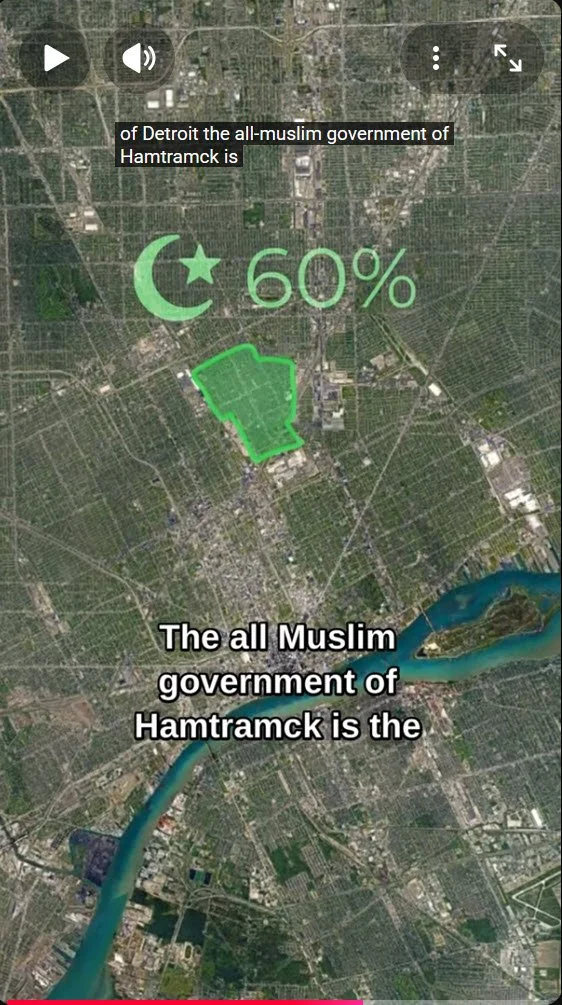
Hamtramck, Michigan (enclave within Detroit) — Muslim-majority city (~60% Muslim, primarily Yemeni and Bangladeshi). First U.S. city with a majority-Muslim council; known for cultural shifts and community institutions.
New York City metro (various boroughs) — Largest absolute numbers (~750,000–1.5 million Muslims metro-wide). Key neighborhoods:
Bay Ridge (Brooklyn): Arab-centric (Palestinian, Yemeni).
Astoria (Queens): Diverse, including Egyptian and North African.
Jackson Heights (Queens): South Asian (Pakistani, Bengali).
Paterson, New Jersey — Nicknamed "Little Ramallah" or "Little Istanbul"; ~20,000–30,000 Arab-Americans (mostly Palestinian Muslim). Dense urban enclave with halal markets and mosques.
Minneapolis–St. Paul (Twin Cities), Minnesota — Largest Somali-American community in the U.S. (tens of thousands, mostly Muslim). Concentrated in areas like Cedar-Riverside; growing through refugee resettlement.
Chicago metro (Illinois) — ~400,000 Muslims; historic African-American Muslim base plus South Asian/Arab suburbs (e.g., Devon Avenue corridor for Pakistani/Indian communities).
Dallas–Fort Worth, Texas — Rapidly growing (~100,000–150,000 Muslims); suburban centers with large Islamic institutions, attracting professionals and families.
Houston, Texas — ~250,000+ Muslims; diverse and expanding due to economic growth.
Los Angeles metro (California) — ~250,000–300,000 Muslims; diverse (Iranian in "Tehrangeles," Arab, South Asian).
Philadelphia metro (Pennsylvania) — ~110,000–150,000 Muslims; mature community with African-American and immigrant roots.
Other emerging or notable areas include Northern Virginia (e.g., Fairfax County), Bay Area (California), and smaller clusters in cities like Boston or Atlanta. Overall U.S. Muslim population estimates range from 4–4.5 million in 2025 (1.3% of total population), with growth in Sunbelt cities (Texas, California) outpacing traditional hubs. These communities are diverse, educated, and contribute economically/civically, with no evidence of parallel governance or radical separatism.