
Intel Brief on Iran on the Brink
Segment #821
Recent episodes of The Brink podcast (hosted by Jake Wallis Simons and Andrew Fox) have focused heavily on the unfolding military conflict between the U.S.-Israeli coalition and Iran that began in late February 2026.
Three specific episodes from the last two weeks provide a comprehensive look at the "Iran Intel" and strategic situation:
1. CIA Iran Expert: This War Will Change Global Power
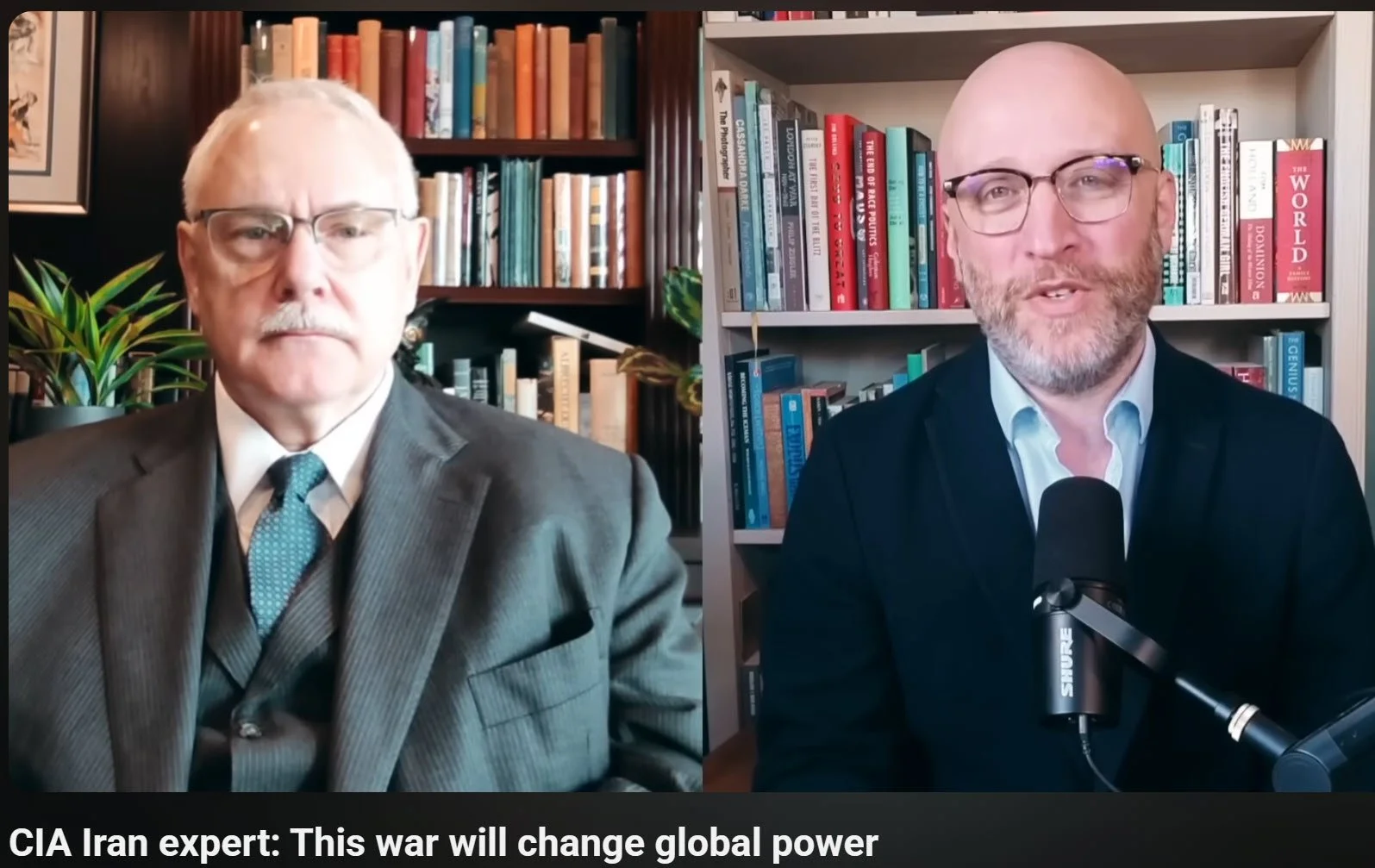
In this episode of The Brink, we sit down with Norman Roule to unpack the unfolding war with Iran and the strategic thinking behind the campaign against the Islamic Republic. We discuss how the military operation has unfolded so far, why Iran’s response has followed a predictable pattern of drones and ballistic missiles, and what the campaign reveals about the strengths and weaknesses of the Iranian regime. Norman explains why Tehran may avoid closing the Strait of Hormuz, the strategic miscalculations that may have shaped Iran’s early decisions, and how Gulf states are navigating a conflict happening on their doorstep. The conversation also explores the broader geopolitical stakes. We examine the role of intelligence cooperation between the United States and Israel, the limits of air power in forcing regime change, and the difficult question of what a post-conflict Iran might look like. Could the regime collapse, or could the country descend into fragmentation and unrest? Finally, we discuss the long-term implications for the Middle East, from the future of the Abraham Accords to the possibility of deeper security integration among Gulf states. This is a wide-ranging and sobering conversation about war, intelligence, and the uncertain path toward a more stable Middle East.
Guest: Norman Roule (former CIA National Intelligence Manager for Iran)
This episode breaks down the strategic thinking behind the current campaign against the Islamic Republic.
Intelligence Cooperation: Detailed discussion on the level of U.S.-Israel intelligence sharing and how it shaped the initial strikes.
Iranian Tactics: Roule explains why Tehran's response has followed a predictable pattern of drones and ballistic missiles.
Strait of Hormuz: Analysis of why Iran may be hesitant to fully close the Strait, despite rhetoric, and how they are "weaponizing commercial risk" instead.
2. MI6 Spymaster Reveals The Shadow War in Iran

In this episode of The Brink, we are joined by Richard Dearlove, former Chief of the Secret Intelligence Service, for a wide-ranging conversation about intelligence, geopolitics, and the mounting confrontation between the West and the Iranian regime. Sir Richard draws on decades of experience at the heart of Britain’s intelligence community to explain how the current crisis with Iran should be understood. We discuss the strategic calculations behind Western and Israeli actions, how intelligence agencies assess regime stability, and why the Islamic Republic remains such a persistent threat to regional and global security. The conversation also explores the role of intelligence in modern conflict, from covert operations and alliance cooperation to the limits of diplomacy when dealing with ideological regimes. Sir Richard reflects on how Western intelligence services interpret signals from Tehran, the risks of escalation in the Middle East, and what the conflict could mean for the wider balance of power. Finally, we look at the long-term future of the Iranian regime and whether internal pressure, economic strain, and external confrontation could ultimately lead to its collapse. This is a rare and revealing conversation with one of Britain’s most experienced intelligence figures about espionage, statecraft, and the high-stakes struggle now unfolding in the Middle East.
Guest: Sir Richard Dearlove (former Chief of the Secret Intelligence Service, MI6)
Sir Richard provides a high-level intelligence perspective on regime stability and escalation risks.
Signaling: How Western services are interpreting signals coming out of Tehran during the transition of power to Mojtaba Khamenei.
Regime Collapse: Analysis of whether internal economic strain and external military pressure could lead to a total collapse of the current security apparatus.
3. Iran War: How the UN Has Been Hijacked
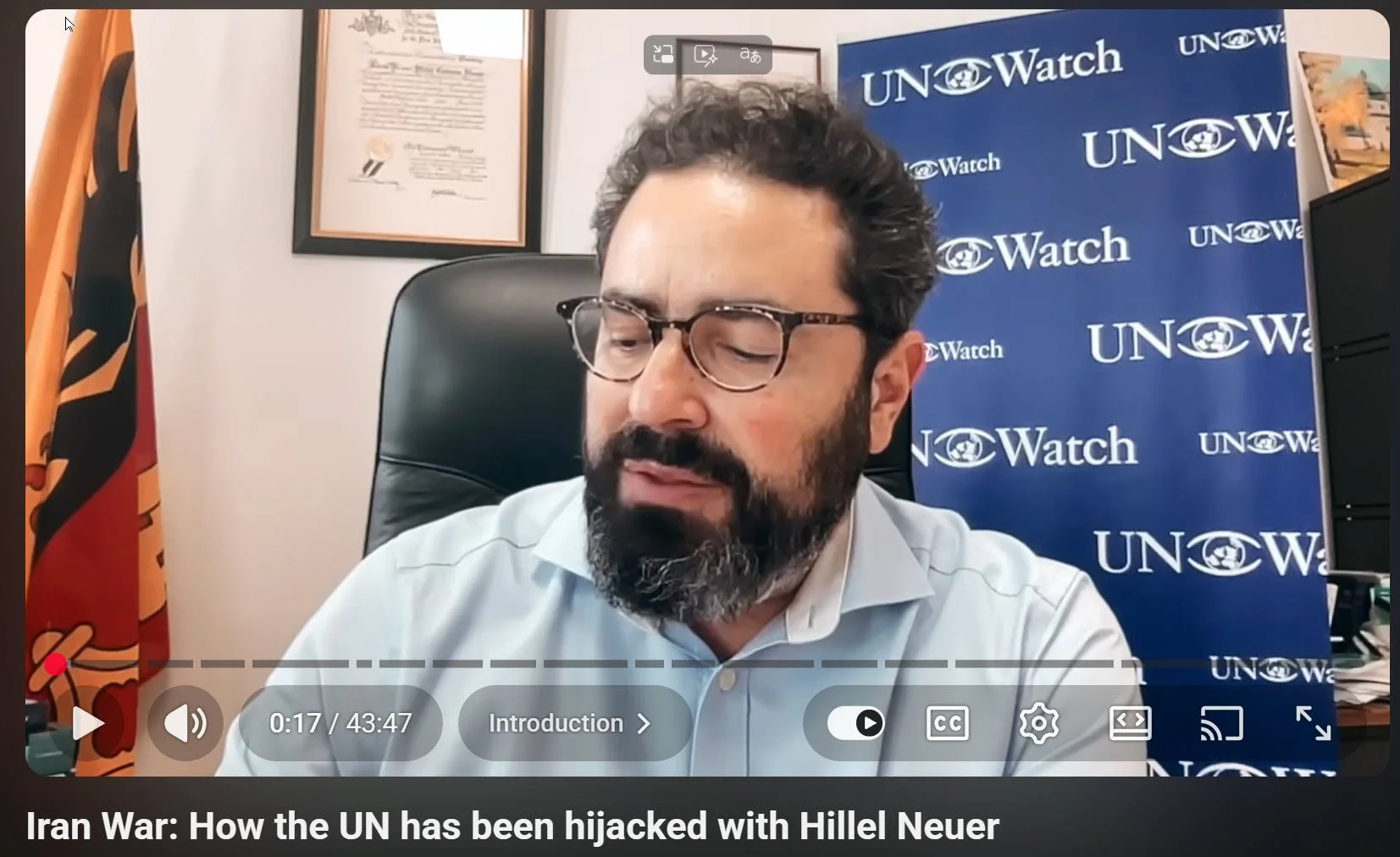
In this episode of The Brink, we are joined by Hillel Neuer to examine the role of the United Nations during the escalating crisis in Iran and to ask whether the institution is still capable of acting as a moral authority in world affairs. Hillel argues that the UN’s response to the Iranian uprising has exposed deep structural problems within the organisation. While tens of thousands of protesters were reportedly killed during the regime’s crackdown, many UN bodies remained largely silent, yet quickly condemned the United States and Israel when military action was taken against the Iranian regime. We explore how authoritarian states have gradually come to dominate key UN institutions, from the Human Rights Council to special rapporteur positions, and why mechanisms that were originally intended to defend human rights are now often used to advance political agendas. Hillel also explains how propaganda, procedural manoeuvres, and ideological alliances shape the way international law and legitimacy are discussed on the global stage. Finally, we ask whether the UN can realistically be reformed, or whether democracies must find new ways to defend liberal values in a world where authoritarian regimes increasingly shape international institutions. This is a candid and provocative conversation about international law, moral authority, and the struggle over the institutions meant to uphold the global order.
Guest: Hillel Neuer (Executive Director of UN Watch)
While focused on diplomacy, this episode covers the "intelligence case" for the war and the shifting positions of regional players.
Regional Intel Shift: Observations on how Bahrain, the UAE, and Saudi Arabia are now openly condemning Iranian aggression—a significant departure from previous years.
Public Justification: Discussion on the "imminent threat" logic used by the Trump administration to justify the initial February 28 strikes.