
Drones
Segment #719
Shawn Ryan gets an inside look at two of the most advanced law-enforcement drones ever built. The first is Skydio’s Cybertruck-deployed fixed-wing VTOL prototype, an experimental aircraft designed to launch directly from the bed of a Tesla Cybertruck, transition into forward flight, and cover large areas at high speed. This next-generation concept is built for rapid perimeter response, long-range overwatch, and future police deployment scenarios. Shawn then takes control of the Skydio X10, a fully capable law-enforcement drone equipped with autonomous flight, night-vision and thermal cameras, AI tracking, and precision police-grade navigation. He flies the X10, testing its maneuverability, speed, and ability to support officers during fast-moving situations.
Shawn Ryan, host of the popular podcast The Shawn Ryan Show (a former avy SEAL and CIA contractor), recently featured episodes and clips focused on advanced drone technology.The most relevant and recent is episode #258 (released December 1-2, 2025) with Adam Bry, CEO of Skydio—a leading U.S. drone manufacturer specializing in AI-powered autonomous drones.Key Highlights from the Episode
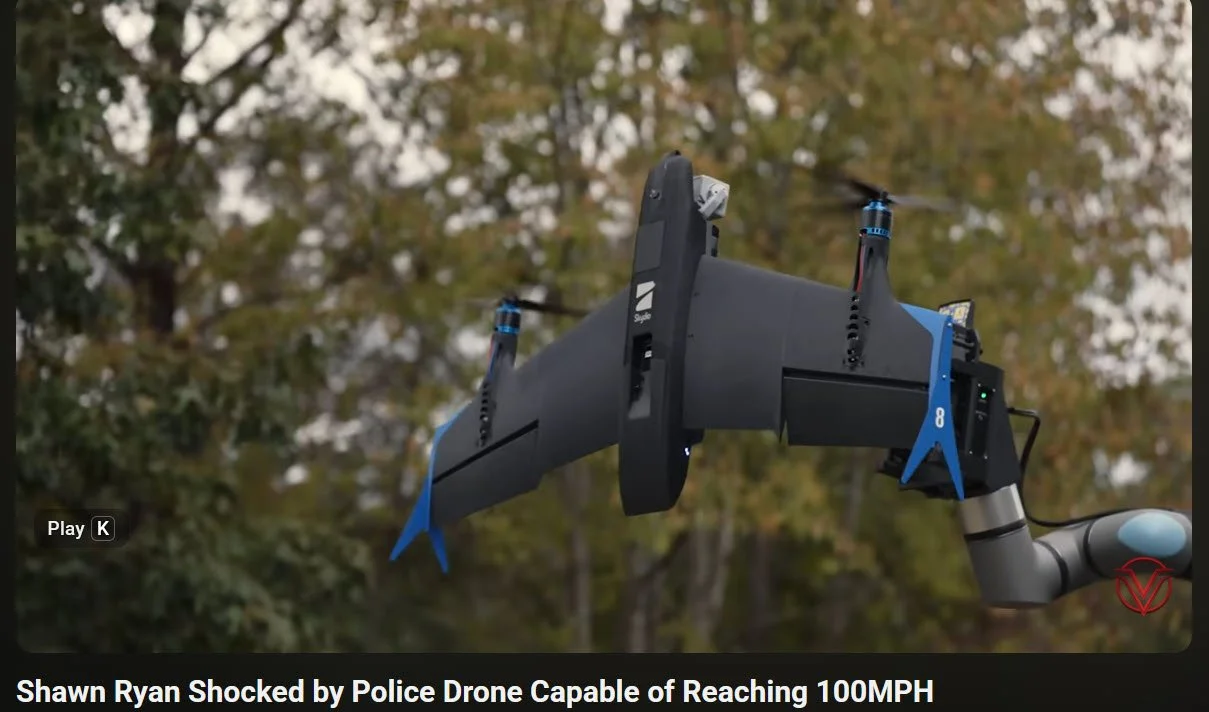
Shawn Ryan gets an inside look at two of the most advanced law-enforcement drones ever built. The first is Skydio’s Cybertruck-deployed fixed-wing VTOL prototype, an experimental aircraft designed to launch directly from the bed of a Tesla Cybertruck, transition into forward flight, and cover large areas at high speed. This next-generation concept is built for rapid perimeter response, long-range overwatch, and future police deployment scenarios. Shawn then takes control of the Skydio X10, a fully capable law-enforcement drone equipped with autonomous flight, night-vision and thermal cameras, AI tracking, and precision police-grade navigation. He flies the X10, testing its maneuverability, speed, and ability to support officers during fast-moving situations.
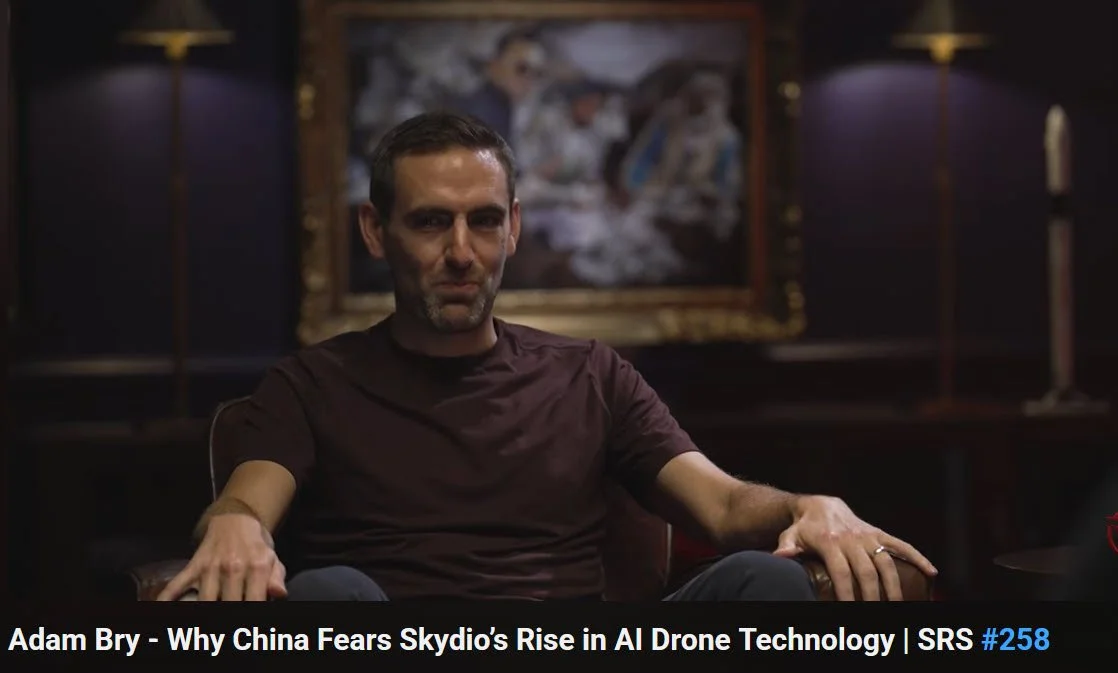
Adam Bry is the Co-Founder and CEO of Skydio, the leading U.S. drone manufacturer and world leader in autonomous flight technology, founded in 2014 to develop AI-powered drones for consumer, enterprise, and defense applications. A graduate of the Massachusetts Institute of Technology with a degree in aerospace engineering, Bry was an early team member at Google X's Project Wing, contributing to delivery drone initiatives before launching Skydio. Under his leadership, Skydio achieved unicorn status in 2021 with a $1 billion valuation after a $170 million Series D round and has since grown to a multi-billion-dollar company, securing contracts with the U.S. Department of Defense and international partners for autonomous systems like the Skydio X10 drone. Bry has testified before Congress on U.S. drone policy and national security, emphasizing innovation in aviation and electric vertical takeoff and landing (eVTOL) technologies. He advocates for American leadership in the next century of aviation, ethical AI in drones, and bridging public-private partnerships to advance critical infrastructure and defense capabilities.
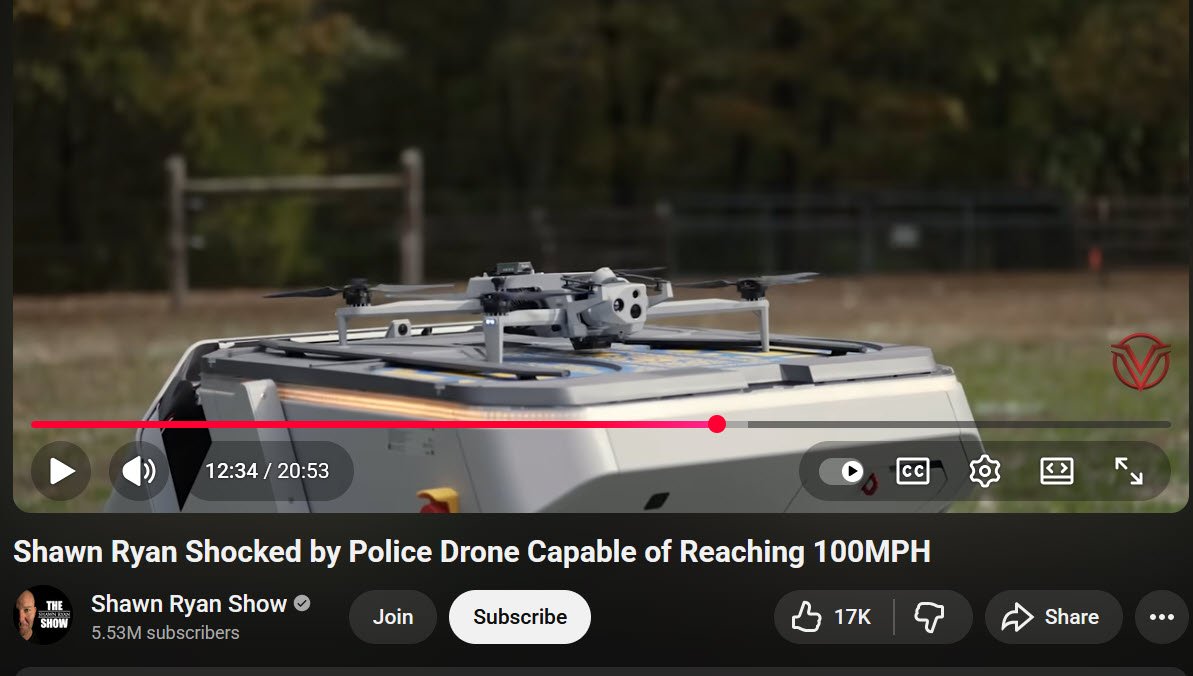
Shawn Ryan gets an inside look at two of the most advanced law-enforcement drones ever built. The first is Skydio’s Cybertruck-deployed fixed-wing VTOL prototype, an experimental aircraft designed to launch directly from the bed of a Tesla Cybertruck, transition into forward flight, and cover large areas at high speed. This next-generation concept is built for rapid perimeter response, long-range overwatch, and future police deployment scenarios. Shawn then takes control of the Skydio X10, a fully capable law-enforcement drone equipped with autonomous flight, night-vision and thermal cameras, AI tracking, and precision police-grade navigation. He flies the X10, testing its maneuverability, speed, and ability to support officers during fast-moving situations.
Shawn Ryan reacts to demonstrations of cutting-edge law enforcement and tactical drones, including one capable of reaching 100 mph and a Cybertruck-deployed fixed-wing VTOL prototype.
Bry discusses how Skydio is shifting drones from manual control to fully autonomous AI systems for defense, public safety, and infrastructure.
Topics include U.S. vs. China competition in drone tech (China sanctioned Bry and Skydio), ethical AI use, and future warfare implications.
Clips show Shawn visibly impressed by drones that can clear buildings, survive gunfire, and operate indoors or in high-speed pursuits.
This episode has generated buzz, with previews and reactions circulating widely.Other Recent Drone-Related Content on the Show
Earlier episodes touched on mysterious drone sightings (e.g., New Jersey drone swarms in late 2024) and defense tech like AI fighter jets or EMP weapons to counter drones.
One clip discusses "gravitic propulsion" drones in a conspiracy context tied to other events.
If you're referring to a specific clip, episode, or something else (like drone sightings discussed on the show), let me know for more details! The full episode #258 is available on YouTube and podcast platforms.
US Drone Capability
Overview of US Military Drone Capabilities (as of December 2025)The United States military maintains one of the world's most advanced and diverse unmanned aerial vehicle (UAV) fleets, encompassing small tactical systems, medium-altitude strike platforms, and high-altitude surveillance drones. These systems support intelligence, surveillance, reconnaissance (ISR), precision strikes, and increasingly swarm-based operations. Lessons from conflicts like Ukraine have driven a major shift toward low-cost, attritable (expendable) drones, with the Pentagon launching the Drone Dominance Program in 2025 to acquire over 300,000 small drones in the coming years.Key Current Platforms
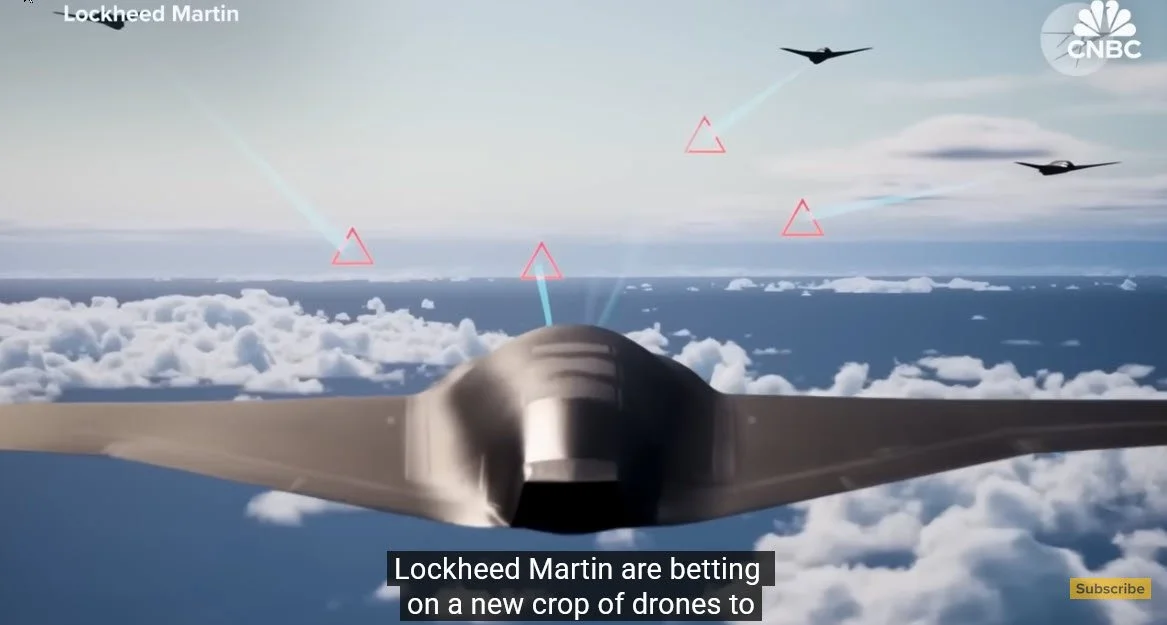
Multiple startups all the way to defense giants like Lockheed Martin are betting that a new generation of advanced drones will define the future of warfare. Shield AI gave CNBC an exclusive first look at the X-BAT, its new AI-powered fighter jet. The company has quickly become a rising force in defense technology, reaching a $5.3 billion valuation after raising $240 million in its latest funding round. Still, it’s competing against established defense primes like Lockheed Martin and Northrop Grumman — and has yet to turn a profit. Watch the video to see how Shield AI is trying to stand out in a crowded field.
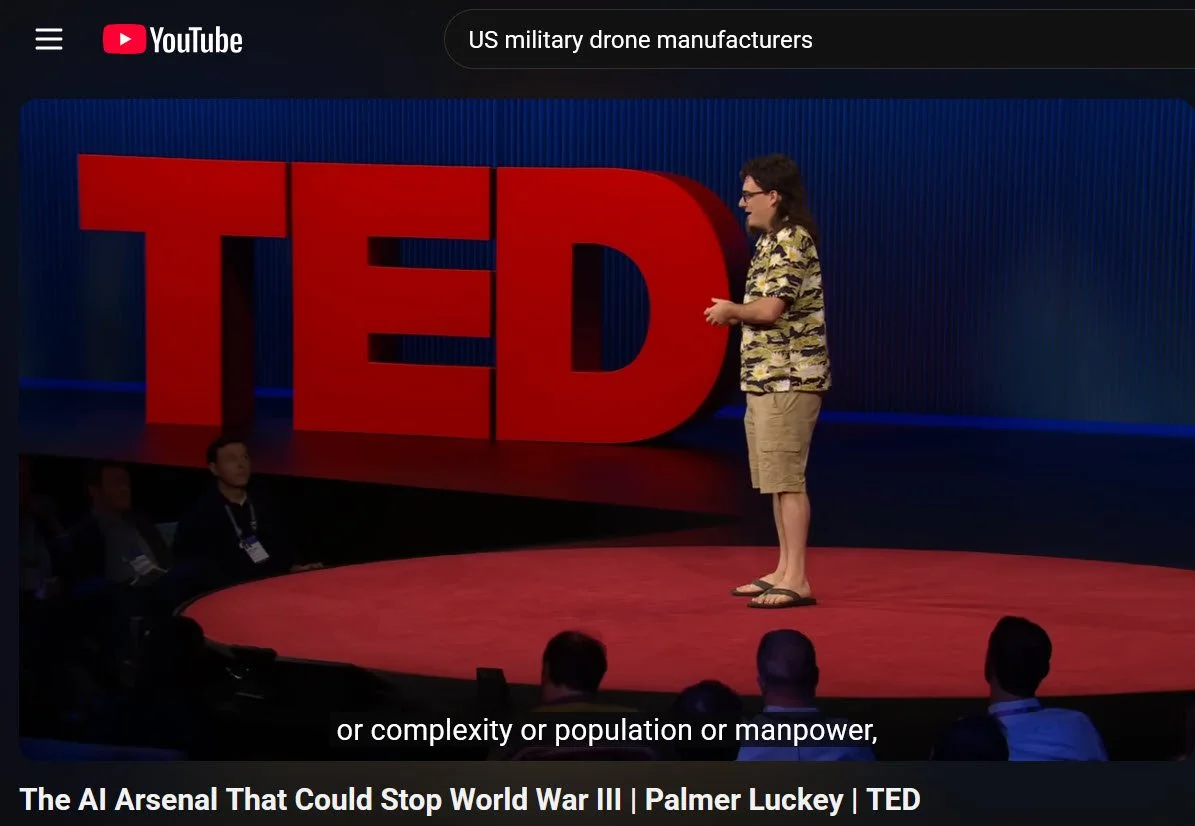
AI in warfare is no longer hypothetical; it's inevitable, says Palmer Luckey, an inventor and founder of the defense technology company Anduril Industries. He takes us inside the high-tech arms race to build AI-powered weapons, "killer robots" and autonomous fighter jets at scale — and makes the counterintuitive case for why this may be the surest path to deterrence and lasting peace. (Followed by Q&A with technologist Bilawal Sidhu) (Recorded at TED2025 on April 8, 2025)
MQ-9 Reaper (US Air Force primary operator, also used by others):
Medium-altitude, long-endurance (MALE) hunter-killer drone.
Endurance: Over 27 hours (up to 34 hours in extended-range variant).
Altitude: Up to 50,000 feet.
Speed: ~240 knots.
Payload: Up to 3,850 lbs, including Hellfire missiles, GBU-38 JDAMs, and sensors (EO/IR, synthetic aperture radar).
Capabilities: Persistent ISR, precision strikes, close air support, and maritime surveillance. Equipped with multi-spectral targeting systems for day/night operations.
RQ-4 Global Hawk (US Air Force):
High-altitude, long-endurance (HALE) strategic ISR platform.
Endurance: Over 30 hours.
Altitude: Up to 60,000 feet.
Coverage: Can survey ~40,000 square miles per day.
Sensors: High-resolution SAR, EO/IR, signals intelligence (SIGINT), and ground moving target indication (GMTI).
Capabilities: All-weather, global ISR; complements satellites for broad-area surveillance.
MQ-1C Gray Eagle (US Army):
Army's MALE drone, similar to Reaper but optimized for division-level support.
Endurance: ~25 hours.
Payload: Hellfire missiles, sensors for ISR and strikes.
Capabilities: Persistent reconnaissance, targeting, and armed overwatch.
Small Tactical Drones (e.g., RQ-11 Raven, used across Army, Marines, Air Force):
Hand-launched, man-packable systems.
Weight: ~4-5 lbs.
Range: Up to 10 km.
Endurance: ~60-90 minutes.
Sensors: EO/IR cameras for real-time video.
Capabilities: Low-altitude ISR for platoon/company-level units; rapid deployment for overwatch and targeting.
The US inventory includes thousands of small UAS (e.g., several thousand Ravens/Switchblades) and hundreds of larger platforms like Reapers and Global Hawks.Emerging and Next-Generation Developments (2025 Focus)Influenced by global drone warfare trends, the US is prioritizing mass-produced, inexpensive systems over exquisite platforms:
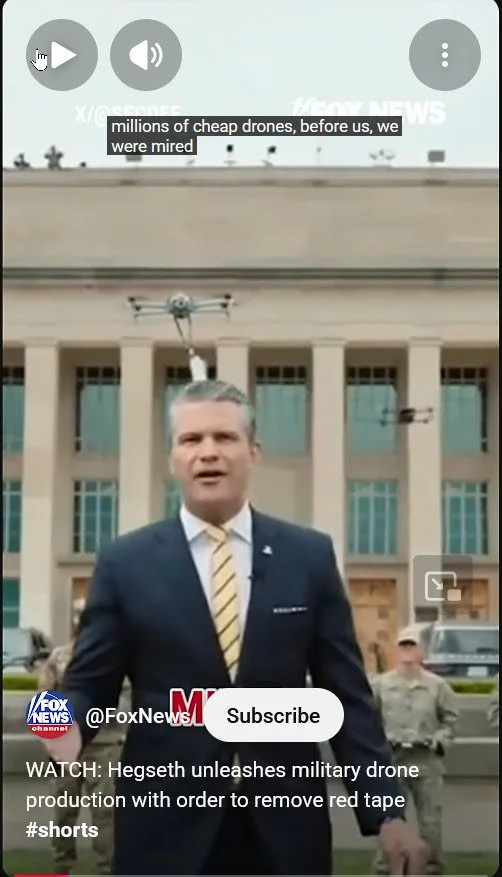
Drone Dominance Initiative (led by Secretary Pete Hegseth):
Goal: Field 300,000+ small, attritable drones by 2027-2028.
Cost: ~$5,000 per unit (scalable production).
Types: One-way attack drones (loitering munitions), FPV-style quadcopters carrying 4+ lbs explosives, swarm-capable systems.
Examples: Low-cost Unmanned Combat Attack System (LUCAS), reverse-engineered from captured designs for autonomous strikes.
Collaborative Combat Aircraft (CCA):
Loyal wingman drones to accompany manned fighters (e.g., F-35, NGAD).
Prototypes: Northrop Grumman's YFQ-48A (Project Talon), others in testing.
Planned: 1,000+ units for air-to-air combat, ISR, and electronic warfare.
Army-Specific Advances:
Seeking short/vertical takeoff and landing (S/VTOL) Group 4 drone by FY2028 to replace/augment Gray Eagle.
Launched Effects: Mid-size autonomous systems for surveillance, targeting, or kinetic strikes.
Goal: Equip every squad/division with organic drones by 2026.
Other Innovations:
Air Force experimental one-way attack drone units for swarm operations.
Replicator program: Thousands of all-domain attritable autonomous systems.
Counter-drone systems (e.g., Marine MADIS vehicles with missiles/cannons).
The US is emphasizing domestic manufacturing, rapid procurement, and integration of commercial tech to achieve "drone dominance" against peer adversaries. This represents the largest unmanned buildup in history, blending high-end persistence with mass low-cost attrition.