
Can the IRGC Hang On?
Segment #895
The IRGC is currently in its most precarious state since the 1980s. While they remain the most powerful entity in Iran, the combination of the 40-day war, the death of Supreme Leader Khamenei, and a total collapse of their "shadow economy" has created a level of fragility that was unthinkable just two years ago.
Here is an assessment of their current vulnerabilities as of mid-2026:
The Financial Breaking Point
Max Afterburner is the YouTube handle of Ryan Bodenheimer, a former U.S. Air Force fighter pilot. He has gained a significant following (over 800,000 subscribers as of mid-2026) by providing expert analysis on military aviation, modern air combat, and global geopolitics.
Who is Ryan Bodenheimer?
Bodenheimer brings a high level of credibility to his content due to his extensive military background: F-15E Strike Eagle Pilot: He flew over 70 combat missions, including tours in Afghanistan. U.S. Air Force Thunderbird: He served as Thunderbird #2, flying the F-16 in the prestigious aerial demonstration squadron. Commercial Pilot: In addition to his military service, he is a trained commercial airline pilot.
The IRGC’s "business empire" (which historically controlled ~30-40% of the Iranian economy) has been physically and legally dismantled.
Failed Revenue Streams: The attempt to charge "tolls" for safe passage through the Strait of Hormuz has failed to generate significant revenue, with only 8 shipments paying as of April 2026.
The "Economic Fury" Campaign: U.S. and international sanctions have effectively blocked the "shadow fleet" and Chinese "teapot" refineries from processing Iranian crude, cutting off the IRGC’s primary source of off-book cash used to pay the rank-and-file.
Internal Friction: There are credible reports of unpaid salaries within provincial IRGC units and the Basij. This is critical because their loyalty is historically transactional; without pay, the "ideological" commitment of lower-level soldiers is being tested by the need to feed their own families during 400% inflation.
Leadership and "Command & Control" (C2)
The IRGC is suffering from a massive brain drain and a crisis of succession.
Decapitation Strikes: The 2026 conflict saw the deaths of top-tier commanders, including IRGC Navy Commander Rear Admiral Alireza Tangsiri in March. This has left the leadership in the hands of "apparatchiks" who lack the battlefield charisma of the previous generation.
The Vahidi-Pezeshkian Rift: IRGC Commander-in-Chief Ahmad Vahidi is currently locked in a power struggle with President Masoud Pezeshkian. Vahidi is attempting to bypass the government entirely, but this "de facto military rule" is causing friction within the bureaucracy, leading to confused and often contradictory orders on the front lines.
Failed Mobilization: Reports from March 2026 indicate that the IRGC’s attempt to mobilize reserve forces largely failed, with many individuals simply not reporting to military centers. This suggests a significant breakdown in the C2 structure’s ability to project authority over the population.
Structural Vulnerabilities
The "Age Gap": In a sign of desperation, the IRGC recently lowered the recruitment age to 12 to support patrols and logistics. This indicates that their prime-age fighting force is either depleted, deserting, or being held back to protect Tehran from internal revolt.
Regional Fragmentation: As the "Axis of Resistance" (Hezbollah, Houthis) becomes more autonomous due to Tehran's inability to provide funding, the IRGC loses its primary external "shield."
Ethnic Insurgencies: With the IRGC's attention fixed on the capital and the border with Israel/U.S. forces, armed groups in Sistan-Baluchistan and Kurdistan are finding more "blind spots" to operate, stretching the Guards' remaining resources even thinner.
How vulnerable are they?
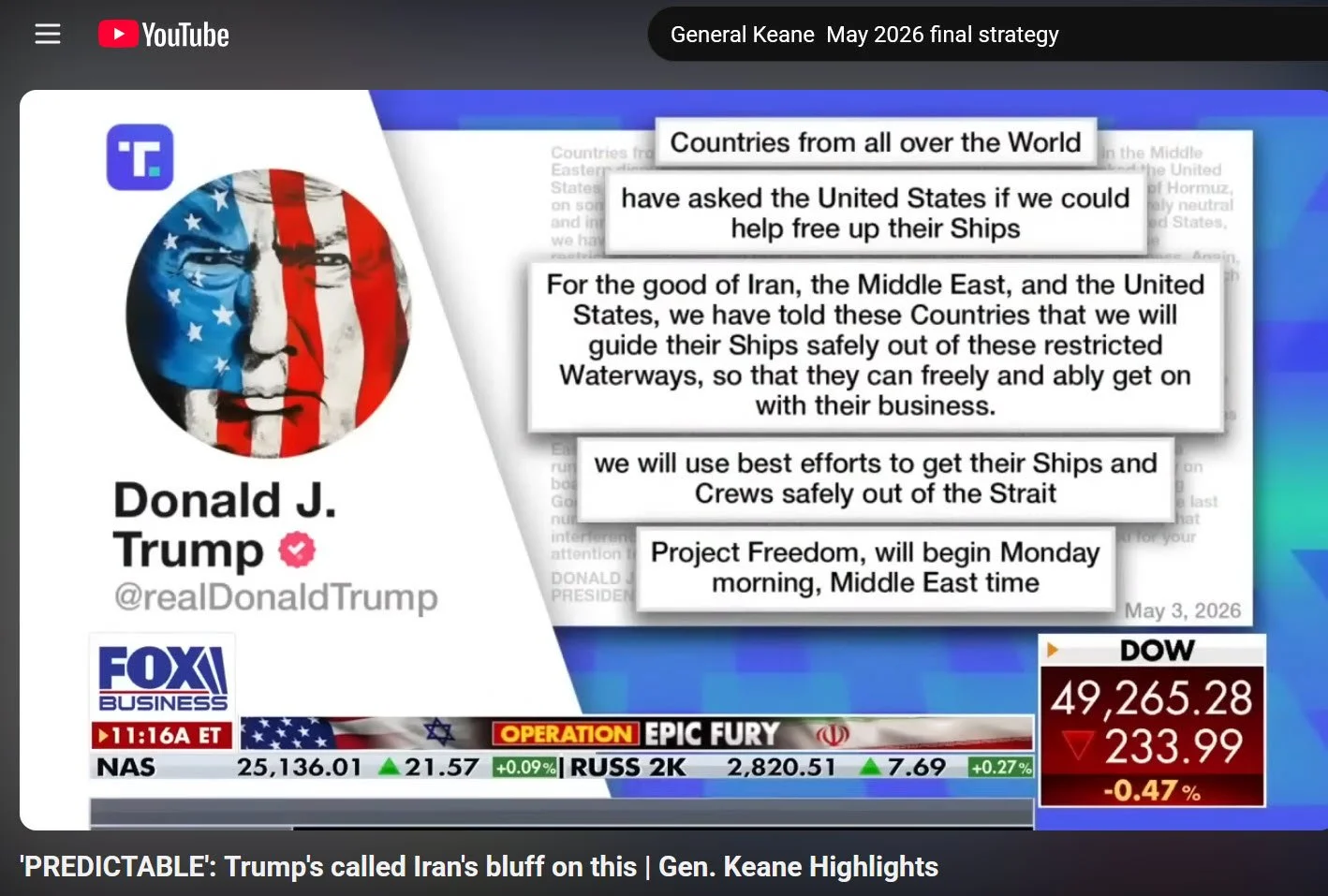
The IRGC is highly vulnerable to a "sudden-onset" collapse, but they are still a "wounded lion."
They possess a "rump core" of battle-hardened loyalists who view their survival as a zero-sum game. While they may not be able to win a conventional war or manage a national economy, they still have enough hardware and desperation to conduct militarized repression. The Verdict: Their vulnerability lies in attrition. They can no longer suppress the entire country simultaneously. If a massive domestic uprising coincides with another round of targeted strikes on their command centers, the "middle management" of the IRGC—the colonels and majors who actually run the street-level operations—may decide that defecting or staying home is the only way to survive the year.
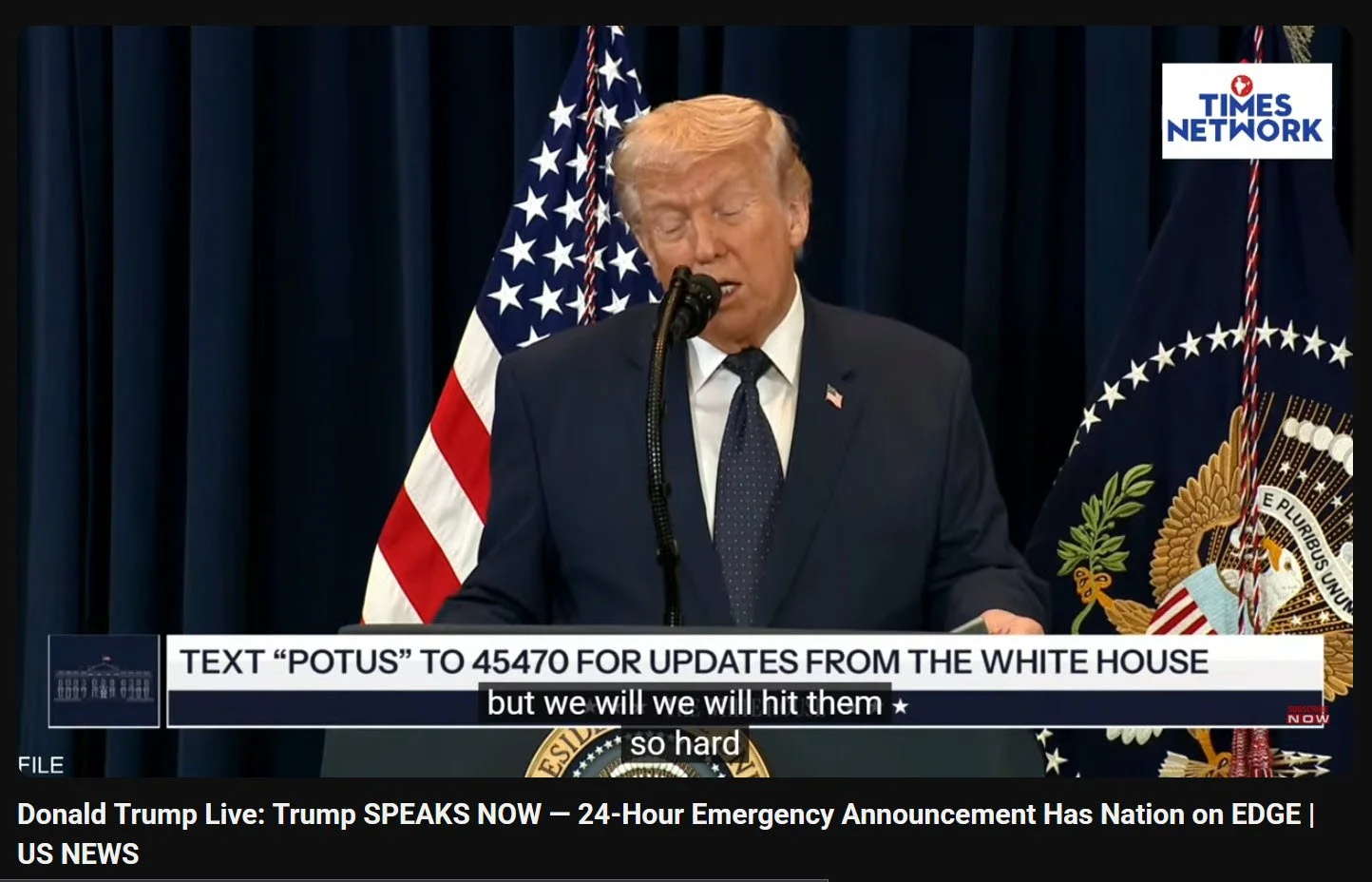
President Donald Trump has issued an urgent national warning from the White House, delivering an emergency announcement that has placed the nation on high alert amidst unspecified threats to national security. In a live address from the Oval Office, President Trump detailed pressing concerns requiring immediate public awareness and federal action, prompting swift reactions from Congress, the Pentagon, and global markets. The President's speech, focused on a developing situation, urged citizens to remain vigilant as federal agencies coordinate a response to the credible intelligence that prompted the emergency broadcast: As Sources Suggest live, trump live, america on high alert live, trump urgent announcement live, trump emergency address live, breaking news live, white house live, us national alert live, trump warning live, trump breaking news today live, us politics live, america breaking news live, live news coverage, world news live, us security alert live, national emergency live, real time news live, global alert live, us alert system live, presidential address live, high alert news live
Trump Strategy Going Forward
By May 2026, the Trump administration has moved past traditional "maximum pressure" and is actively executing a strategy of institutional strangulation following the major military strikes of Operation Epic Fury.
The administration’s "next steps" are designed to turn the IRGC’s current financial and structural frailty into a terminal collapse.
Operation "Economic Fury": Closing the Shadow Loophole
The Treasury Department is currently transitioning from targeting the Iranian state to targeting the IRGC's survival liquidity.
Shadow Bank Dismantling: Next steps involve an aggressive crackdown on "shadow banking" networks in the UAE, Turkey, and Qatar that the IRGC uses to pay its officers. The goal is to ensure the unpaid salary crisis spreads from the border provinces to the "Praetorian" units in Tehran.
Secondary Sanctions on China: President Trump is leveraging his upcoming summit with Xi Jinping to demand a total halt of Iranian oil "teapot" refinery imports. The administration has signaled it will impose massive secondary sanctions on any Chinese entity facilitating the IRGC’s remaining oil-for-crypto trades.
Encouraging Defection through "Conditional Immunity"
In a shift from 2024-era rhetoric, Trump has explicitly messaged the IRGC’s middle-management—the colonels and majors who are not yet on international "wanted" lists.
The Immunity Offer: The administration is floating a "Venezuela-style" exit ramp, where IRGC commanders who refuse orders to fire on protesters or who actively sabotage command-and-control assets are promised immunity and the unfreezing of personal assets.
Psychological Operations: U.S. Cyber Command is reportedly flooding IRGC internal communication channels with evidence of the senior leadership’s corruption and their families' luxury lives abroad, contrasting it with the rank-and-file's inability to buy bread.
Kinetic "Pruning" of Command and Control (C2)
Rather than a full-scale invasion, the strategy is now one of persistent decapitation.
Targeting Successors: Following the deaths of Khamenei and Larijani, the U.S. and Israel are using "persistent overhead presence" (drones) to target anyone attempting to centralize command. By killing "Number 3s and 4s" as soon as they are promoted, they keep the IRGC in a state of permanent lateral confusion.
Electronic Blockade: Next steps include the total jamming of the IRGC’s specialized communication networks (like the Baqir system), forcing them to use commercial, unencrypted channels that are easily monitored and manipulated.
Direct Support for "Regional Fracturing"
The administration is moving to empower ethnic and provincial opposition to force the IRGC to spread its remaining resources too thin.
Arming Peripheral Groups: Trump has acknowledged covertly arming Kurdish and Baluchi dissident groups. The logic is that if the IRGC has to fight three insurgencies on the borders while facing a general strike in Tehran, the C2 will shatter.
The "Ground Component" Threat: While Trump has downplayed a U.S. ground invasion, he is encouraging regional allies and the "Iranian opposition" to establish a provisional government in a "liberated zone" (likely in the south near the oil fields), which the U.S. would then recognize and fund.
The Admin's Current Stance: Trump recently stated that he has "shifted the definition of regime change." He argues that because the top leadership is gone and the money is dry, the "regime" has already changed—now, the U.S. is simply waiting for the "Final Collapse" by refusing to offer any diplomatic lifeline until the IRGC unconditionally surrenders its remaining nuclear and missile assets.
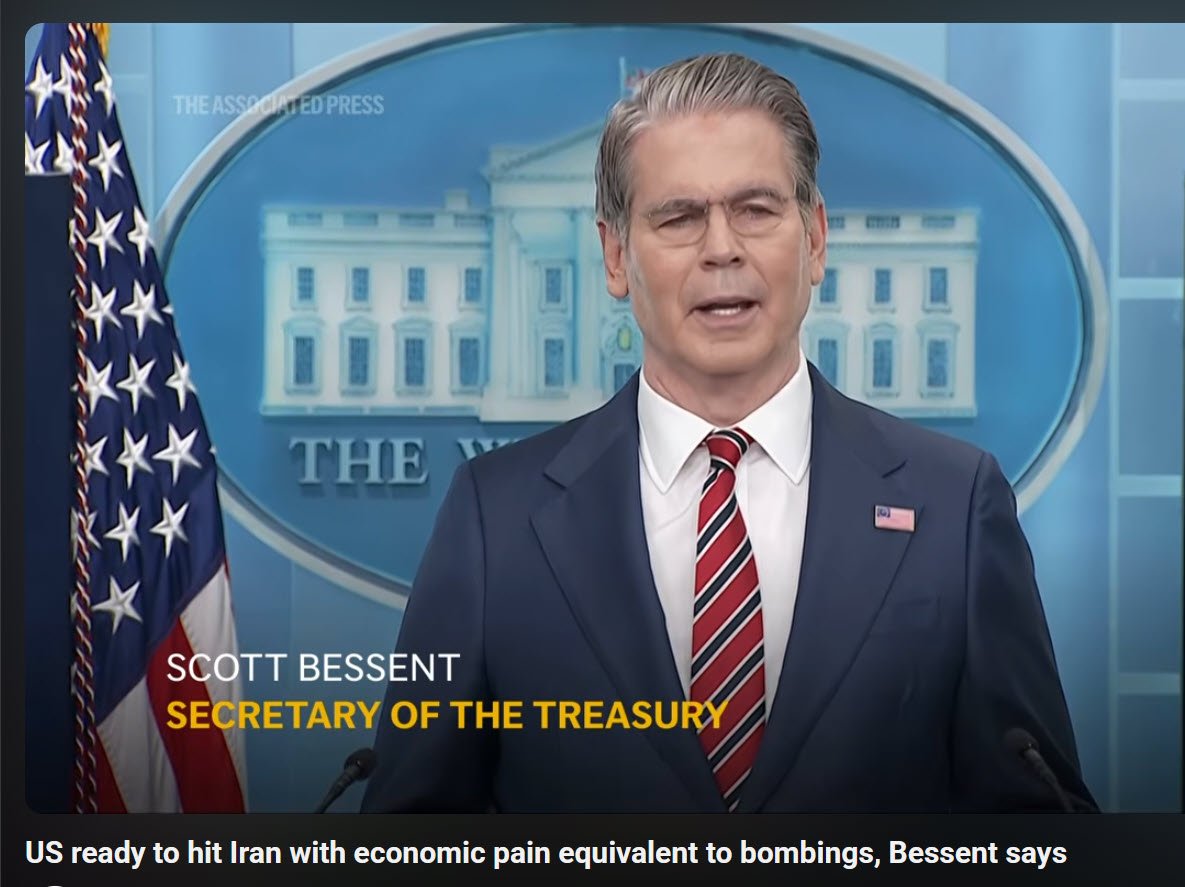
Treasury Secretary Scott Bessent warns that the US is preparing to ramp up economic pain on Iran by levying secondary sanctions on financial institutions that do business with Tehran. He says it is the “financial equivalent” of the bombing campaign.