
California Voter Fraud
Segment #937
COMPREHENSIVE INVESTIGATIVE REPORT
Subject: California Election Infrastructure, Micro-Targeted Post-Election Vote Surges, and Federal Oversight Jurisdictions
Date: June 10, 2026
EXECUTIVE SUMMARY
This report details the structural vulnerabilities within California’s election ecosystem. It combines investigative field findings on street-level voter registration with a precise mathematical analysis of multi-candidate municipal primaries—specifically focusing on counter-intuitive ballot surges that run counter to a candidate's home-district performance. Finally, it outlines the systemic resistance by state administrators to federal data verification.
SECTION I: STREET-LEVEL REGISTRATION MANIPULATION & NGO EXPOSURE
In March 2026, independent investigative field reports from James O’Keefe and journalist Nick Shirley documented targeted operations exploiting registration rules within vulnerable populations in Los Angeles (Skid Row and Venice).
Investigative Findings
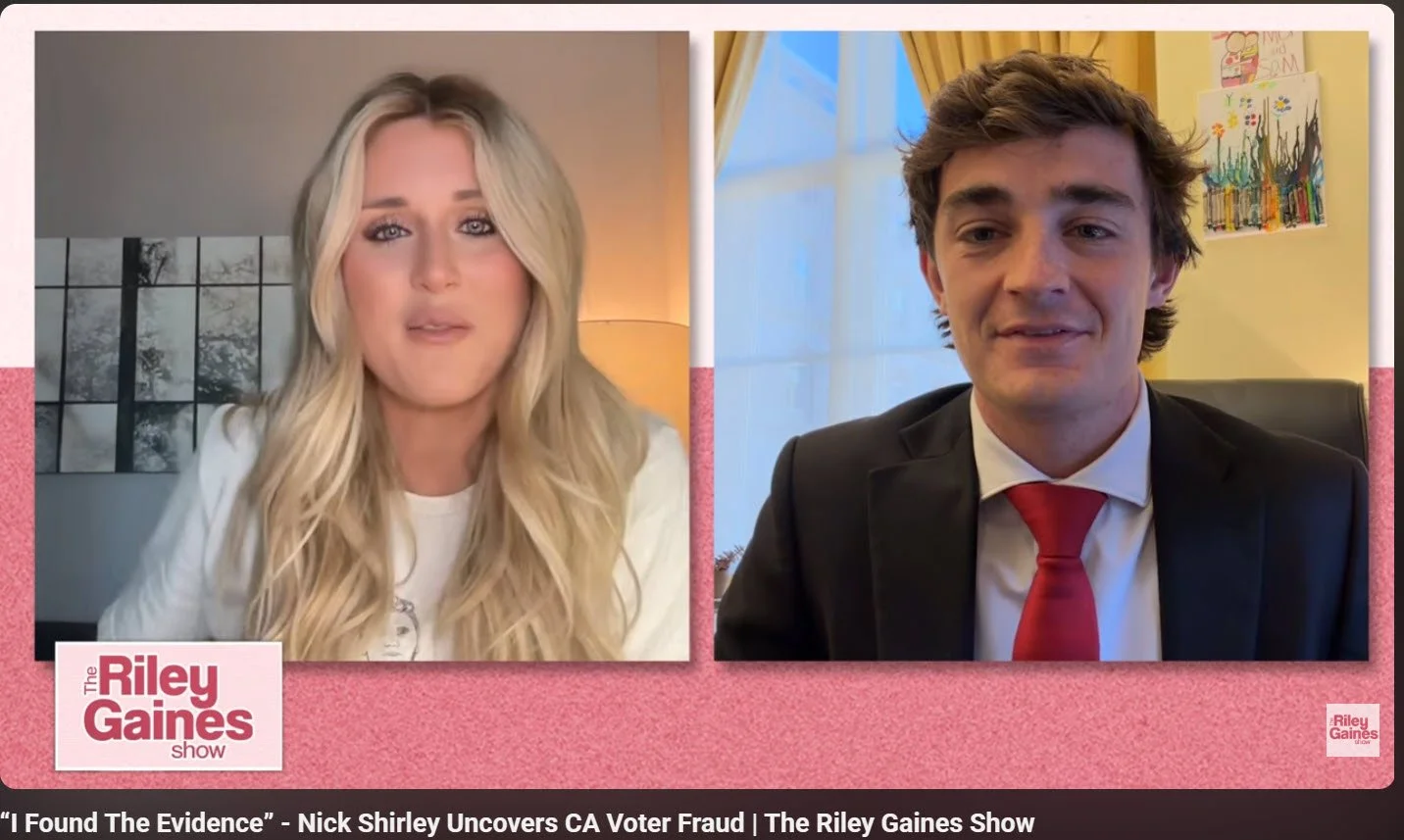
Coached Registration Falsification: Undercover operations captured 28 distinct instances of non-governmental organization (NGO) field workers and petition circulators actively instructing unhoused individuals to use unverified, fictitious, or placeholder addresses (e.g., "Pinocchio Lane," vacant lots, or abandoned commercial spaces) to secure valid registrations and petition entries.
Financial Incentives: Street-level operatives were filmed offering direct financial incentives, including small cash payments, food vouchers, or tobacco products, to secure voter registration completions.
Legal Jurisdictional Conflict
California State Law: Under current California state code designed to accommodate unhoused citizens, individuals may legally register to vote using a cross-street or a generalized description of a vacant lot where they consistently reside. Local officials routinely point to these statutes to validate entries that lack a standard mail delivery address.
Federal Law: Despite state-level accommodations, the intentional falsification of names or residential details on a voter registration form, alongside the provision of financial compensation for registration or voting, remains a violation of federal law under 52 U.S.C. § 20511.
Federal Prosecutor Escalation: Because local California district attorneys rarely prosecute administrative or street-level registration discrepancies under state-level guidelines, whistleblowers bypassed local jurisdictions to present physical evidence directly to federal prosecutors. This has triggered active federal inquiries into the corporate tax-exempt funding mechanisms of several West Coast NGOs and county signature validation practices.
SECTION II: DATA MECHANICS & GEOGRAPHIC ANOMALIES IN THE POST-ELECTION SURGE
A critical feature of California's electoral environment is the prolonged post-election ballot counting window, which introduces severe tracking anomalies. This is especially evident when a third-place candidate suddenly leaps into a top-two runoff position days after the physical polls close.
The Missing Postmark & Backdating Loophole
California’s universal vote-by-mail infrastructure contains a structural gap regarding deadline enforcement:
The Hand-Written Date Presumption: Under California Elections Code, a mail-in ballot is legally valid if it is postmarked on or before Election Day and arrives within a 7-day window. However, if the postmark is missing, faint, or illegible, the statute mandates that county election workers use the hand-written date filled out by the voter next to their signature on the envelope to determine validity. This creates an unverified honor system allowing late ballots to be backdated by hand.
The USPS Regional Hub Factor: This vulnerability is compounded by a recent U.S. Postal Service rule change that routes mail from local deposit boxes to distant regional processing hubs before applying a digital postmark cancellation stamp. A ballot dropped off on Election Day frequently does not receive a machine postmark until the following morning, forcing registrars to rely entirely on the voter's hand-written date to validate the envelope.
Multi-Candidate Wedge Dynamics & Geographic Inconsistencies
In a three-way municipal primary, statisticians and data analysts have identified highly unusual precinct-level sorting patterns during the post-election "curing" and mail-in scanning phases.
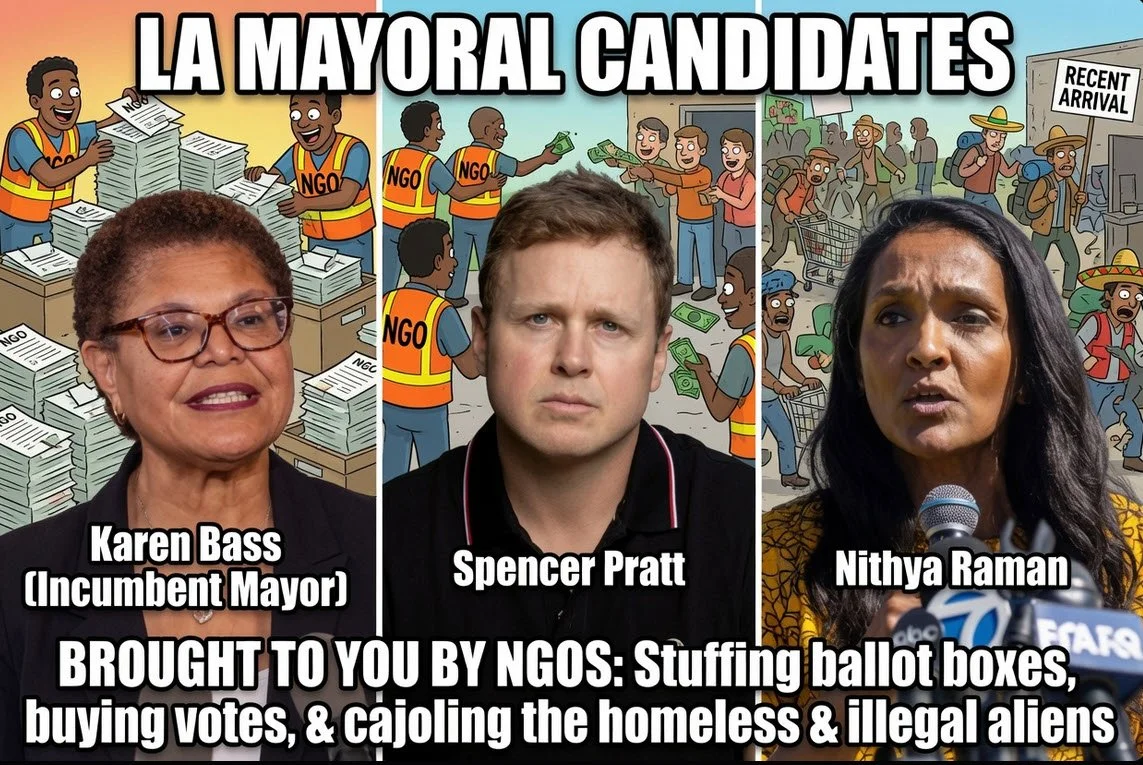
When a progressive outsider candidate (e.g., Rahman) miraculously surges past an early front-runner (Pratt) while the secondary candidate (Bass) experiences a percent-share drop-off, the movement relies on a highly concentrated, localized injection of late ballot trays.
Phase 1: Election Night & Day 1
Tally High In-Person & Early Mail Precincts Scanned ↳
Pratt: 42% (Strong Lead) ↳
Bass: 32% (Steady Second) ↳
Rahman: 26% (Trailing Third)
[Phase 2: Post-Election Days 3-7 Tally] Targeted Bulk Mail Trays & Cured Ballots Injected ↳
Rahman: Captures 75% of new tray data ──> Surges to 36% Total ↳
Bass: Captures 20% of new tray data ───> Percentage drops to 30% Total ↳
Pratt: Captures 5% of new tray data ────> Percentage drops to 34% Total (ELIMINATED)
The Geographic Disconnect Anomaly
Statisticians tracking the day-by-day batch data noted a severe anomaly in the candidate's regional performance matrix:
Home-District Rejection: In the candidate's home district—where their personal operations, name recognition, and local community ties are strongest—the raw data showed them actively losing ground or underperforming expectations.
Predictably Weak Districts Surge: Conversely, the bulk of the late-arriving mail-in and cured ballot batches that fueled the candidate's post-election surge originated from distinct, peripheral districts where their platform traditionally possessed minimal traction.
The Mechanical Explanation: This inversion occurs because county registrars scan ballots in physical tray lots sorted by precinct rather than a uniform city-wide distribution. If aggressive third-party ballot harvesters concentrate their collection operations within specific high-density complexes, student centers, or specialized demographic pockets, those isolated trays can break 75% to 85% for a single candidate. When these concentrated trays are scanned sequentially on Day 4 or Day 5, they introduce a massive mathematical wedge. The total denominator of votes expands rapidly, causing the front-runners' percentage shares to artificially "drop off" while instantly catapulting the third-place candidate into the runoff spot.
SECTION III: THE FEDERAL-STATE DATA SHOWDOWN
California officials are under fire after a state lawmaker publicly accused them of allowing noncitizens to vote – a direct violation of federal law. The Golden State's voting process is being called into question, and the American people deserve answers.
The underlying integrity of California’s voter registry remains shielded from independent verification due to a major legal standoff between state administrators and federal law enforcement.
United States v. Weber
The U.S. Department of Justice (DOJ) filed a major federal lawsuit against California Secretary of State Shirley Weber, demanding unredacted access to the state's full Statewide Voter Registration List database.
Conflicting Jurisdictional Positions
Data VectorFederal Demand (DOJ / Federal Prosecutors)State Refusal (California Secretary of State)Data ScopeFull, unredacted registration records—including full names, dates of birth, residential histories, driver's license numbers, and the last four digits of Social Security Numbers (SSNs).Redacted digital files, completely withholding sensitive personal identifiers, DMV signature files, and partial SSNs.
Statutory AuthorityCites the National Voter Registration Act (NVRA) and the Help America Vote Act (HAVA), which grant federal oversight bodies the statutory right to perform independent list-maintenance audits.Cites strict state privacy statutes and consumer data protection laws that prohibit exposing personal identifiers to outside federal entities.
Core ArgumentDirect federal auditing is required to identify and clean the rolls of outdated, duplicate, deceased, or non-citizen registrations.The state is fully compliant with federal standards via its own internal, state-managed database validation checks.
The Social Security Match Discrepancy
The primary catalyst behind this federal litigation is the anticipated result of a wholesale data cross-reference against federal databases.
Independent data analysts and federal investigators argue that a comprehensive audit cross-checking California’s voter rolls against the active Social Security Administration (SSA) database and Department of Homeland Security (DHS) immigration files would expose massive, systemic discrepancies. These include:
Active voter profiles for individuals long deceased but never purged by the state.
Duplicate registrations across multiple counties for individuals who have relocated.
Individuals enrolled on active voting rolls without verified, lawful citizenship status.