Radical Islam Takeover in the U.S.? We Are Not Europe
Segment #859
Europe and the U.K. are teetering on the edge of a self-inflicted abyss. By opening the gates to insane, unchecked immigration, they have effectively signed a death warrant for their own cultures and surrendered the keys to their sovereignty. They are watching their national identities get hollowed out in real-time, paralyzed by their own weakness.
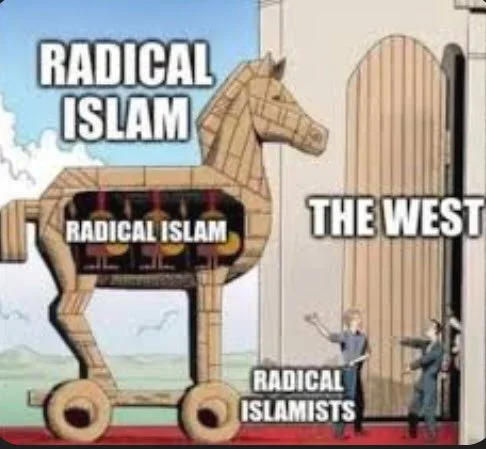
Make no mistake: those same scorched-earth tactics are being deployed right now on American soil. But if these radicals think they’re going to steamroll the United States the same way, they are in for a violent awakening. America is not Europe. We are anchored by the Supremacy Clause, shielded by the First Amendment, and backed by the Second Amendment. We don't just have rights; we have the firepower and the legal bedrock to defend them.
It is time to stop playing nice. Wake up and look at the footage. Listen to exactly what these dirtbags are screaming into the cameras on our own streets. They aren't hiding their agenda anymore—they’re bragging about it. If America doesn't find its spine and shut this down now, the fight won't be at the ballot box; it'll be at our front doors.
Existing Legal Restrictions
The primary barrier to any non-constitutional takeover is the preemption doctrine. Under the Supremacy Clause, no foreign or religious law can be enforced if it conflicts with the U.S. Constitution or state law.
1. American Laws for American Courts (ALAC)
Currently, several states (including Texas, Alabama, Florida, and Arizona) have enacted ALAC statutes. These laws explicitly prohibit state courts from applying foreign laws or religious codes—including Sharia—in cases of family law or contract disputes if doing so would violate the litigant's constitutional rights (such as due process or equal protection).
The Guardrail: If a private contract includes a provision that discriminates against a woman in a divorce proceeding based on religious law, an ALAC statute allows a judge to void that specific provision as a violation of "public policy."
2. The Federal Arbitration Act (FAA) and Its Limits
While the FAA allows parties to settle disputes in private religious tribunals, the results are only enforceable in U.S. courts if they meet fundamental "fairness" standards.
Current Restriction: Courts have increasingly ruled that arbitration agreements are unenforceable if they require a party to waive their statutory civil rights or if the tribunal's rules are "unconscionably" biased.
Anticipated and Proposed Legislation (2025-2026)
In response to concerns about cultural and legal subversion, several new legislative efforts have emerged at the federal level.

1. The Defeat Sharia Law in America Act (Introduced in early 2026, this federal bill seeks to expand the Civil Rights Act.)
The Mechanism: It would clarify that any attempt to implement religious legal standards in public accommodations (stores, services, or facilities) constitutes illegal discrimination.
The Intent: It is designed to prevent "Sharia-compliant" zones where business owners might attempt to enforce religious dress codes or gender segregation on the general public.
2. The No Sharia Act
This proposed legislation targets the judicial branch. It would prohibit federal courts from recognizing or enforcing any foreign court judgment that relies on a legal system that does not provide the same protections for freedom of religion, speech, and press as the U.S. Constitution.
3. Foreign Funding Transparency and "Sharia-Free" Caucuses
A new "Sharia-Free America Caucus" was formed in late 2025 by members of the House of Representatives. Their legislative agenda includes:
Enhanced FARA Requirements: Requiring mosques and Islamic community centers to disclose 100% of foreign donations over $1,000 to identify potential influence from foreign regimes.
Visa Restrictions: Proposed amendments to the Immigration and Nationality Act that would mandate social media screening for "anti-constitutional" sentiments, such as advocacy for a global Caliphate, as grounds for visa denial.