
Segment #744
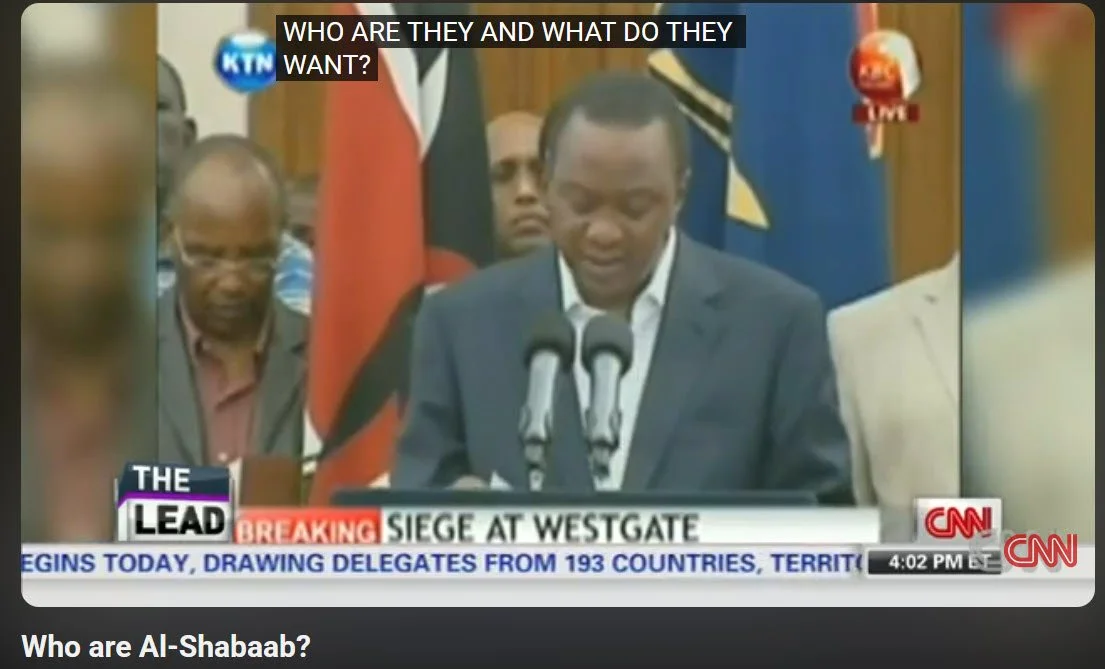
Al-Shabaab has proven particularly adept at recruiting American- born jihadis. CNN's Jake Tapper reports.
Al-Shabaab (also spelled al-Shabaab or Harakat al-Shabaab al-Mujahidin, meaning "Mujahideen Youth Movement") is a jihadist terrorist group based primarily in Somalia. It is designated as a foreign terrorist organization by the United States, the European Union, and many other countries. Below, I'll outline its history, funding sources, key alignments, and address the question about Red Sea ship attacks based on available reports as of January 2026.
cfr.org
History and OriginsAl-Shabaab traces its roots to the late 1980s, when Somali fighters who participated in the Afghan mujahideen resistance against the Soviet Union returned home and formed the Salafi militant group al-Ittihad al-Islami (AIAI, or Islamic Union). After Somalia's civil war and state collapse in the early 1990s, AIAI splintered, and its younger, more hardline members joined the Islamic Courts Union (ICU) as its enforcement arm in south-central Somalia during the late 1990s and early 2000s.
cfr.org
The group formally emerged as an independent insurgency around 2006–2007 following Ethiopia's invasion of Somalia (at the request of Somalia's Transitional Federal Government, or TFG) to oust the ICU from power. This fueled anti-Ethiopian resentment and allowed Al-Shabaab to recruit and expand rapidly, controlling much of southern Somalia by 2008–2011, including parts of Mogadishu and the key port of Kismayo. It imposed strict Sharia law in its territories, including public executions, amputations, and bans on music and Western education.
cfr.org +1
Key events and milestones:
Who is Al Shabaab and how did they become a major force in Somalia? AJ+ looks at what gave rise to the Somali armed group and how they gained support among the country's disenfranchised youth.
2007–2011 Peak Control: Backed by foreign fighters, it grew to thousands of members and launched its first international attack in 2010 (suicide bombings in Kampala, Uganda, killing 76 during the World Cup final).
cfr.org
2011–2012 Setbacks: Pushed out of major cities by African Union forces (AMISOM, later ATMIS in 2022) and Kenyan troops, but it pledged formal allegiance to al-Qaeda in February 2012.
cfr.org
High-Profile Attacks: Includes the 2013 Westgate Mall siege in Nairobi (67 killed); 2015 Garissa University attack in Kenya (148 killed); 2017 and 2022 truck bombings in Mogadishu (over 500 and 100 killed, respectively); and ongoing strikes on hotels, military bases, and civilians in Somalia, Kenya, and Ethiopia.
cfr.org
Recent Developments (2022–2026): Under Somali President Hassan Sheikh Mohamud's "total war" declaration in 2022, government and clan-backed offensives reclaimed some territory in central Somalia, killing thousands of militants. However, Al-Shabaab has regrouped, launching counterattacks (e.g., killing 178 soldiers in 2023) and exploiting droughts/famines for recruitment. As of late 2025, it controls rural swaths of central and southern Somalia, with violence up 41% in recent years. U.S. airstrikes and joint operations (e.g., killing leader Maalim Ayman in December 2023) continue, but the group remains resilient amid Somalia's weak governance and humanitarian crises.
cfr.org +1
The insurgency has lasted over 15 years, killing tens of thousands and displacing millions, while exploiting clan rivalries and corruption in the Somali government.
crisisgroup.org
Funding SourcesAl-Shabaab generates an estimated $100–200 million annually, making it one of Africa's most financially robust terrorist groups. Its funding is diverse and resilient, relying on control of territory and criminal networks rather than heavy foreign donations.
africacenter.org +2
Primary methods:
Extortion and Taxation ("Zakat"): Collects "protection" fees from businesses, farmers, and communities in controlled areas, including checkpoints, ports, and markets. This accounts for the bulk of revenue, often enforced through violence.
africacenter.org +1
Smuggling and Trade: Involved in illegal charcoal exports (banned by the UN but worth millions), sugar smuggling from Kenya, and arms trafficking. It also taxes livestock and aid convoys during famines.
rewardsforjustice.net +1
Money Laundering and Diaspora Networks: Uses hawala systems, front companies, and remittances from the Somali diaspora (e.g., in Kenya, UAE, Sweden, and the U.S.). U.S. Treasury sanctions in 2024–2025 targeted 15+ leaders and entities in a transnational network spanning the UAE, Sweden, and Cyprus.
home.treasury.gov +2
Piracy and Ransoms: Increasing involvement in maritime piracy off Somalia's coast, including ransoms (e.g., $5 million from a 2024 hijacking).
africacenter.org
Other Sources: Alleged diversion of international aid or welfare funds (e.g., unproven claims of Minnesota fraud proceeds reaching them), kidnappings, and limited donations from sympathizers.
city-journal.org +1
Efforts to disrupt funding include U.S. rewards of up to $10 million for information on its networks and UN sanctions, but corruption in Somalia's financial system allows persistence.
rewardsforjustice.net +1
Alignments and AlliancesAl-Shabaab is formally aligned with al-Qaeda, having pledged bay'ah (allegiance) in 2012, making it one of al-Qaeda's most active and successful affiliates. It coordinates with al-Qaeda in the Arabian Peninsula (AQAP) in Yemen, including a non-aggression pact.
cfr.org +1
Emerging alliances:
Houthis (Ansar Allah) in Yemen: Since the Israel-Hamas war began in October 2023, ties have grown rapidly. Houthis provide Al-Shabaab with advanced weapons (drones, ballistic missiles), training (hundreds of fighters trained in Yemen on Iranian-made tech), and technical expertise. In exchange, Al-Shabaab offers piracy networks, smuggling routes, and safe havens in Somalia. This Sunni-Shiite collaboration is opportunistic, facilitated by shared anti-Western goals and Iranian influence on Houthis.
africacenter.org +3
UN reports from late 2025 confirm this widening alliance, including arms shipments intercepted in the Gulf of Aden.
Islamic State in Somalia (ISS): Loose contacts, but mostly rivals; both compete for territory in northern Somalia.
carnegieendowment.org
Other Links: Indirect Iranian support via Houthis; alleged ties to Eritrean smuggling networks for arms to Houthis/Hamas; and opportunistic deals with local clans or criminals.
It opposes the Somali government, African Union forces, and Western-backed entities, framing its fight as resistance to foreign occupation.Are They the Pirates Attacking Ships in the Red Sea?No, Al-Shabaab is not the primary group responsible for the ongoing attacks on ships in the Red Sea—that's predominantly the Houthis (Ansar Allah) from Yemen, who have targeted over 100 vessels since November 2023 using drones, missiles, and boats in solidarity with Palestinians amid the Israel-Hamas conflict.
youtube.com +1
These attacks have disrupted global trade, reducing Suez Canal traffic by 50–60%.
africacenter.org
However, Al-Shabaab is increasingly involved through its alliance with the Houthis, contributing to piracy spikes in the adjacent Gulf of Aden and Western Indian Ocean (e.g., hijackings in 2024–2025). This collaboration allows Al-Shabaab to provide smuggling support and piracy expertise in exchange for weapons, escalating threats across the Bab al-Mandab Strait and Horn of Africa.
africacenter.org +2
Recent piracy off Somalia (e.g., attacks on tankers in late 2025) is linked to this axis, but Al-Shabaab itself focuses more on land-based insurgency than direct Red Sea naval operations.
cfr.org +1