
The False Equivalency of Iran
Segment #915
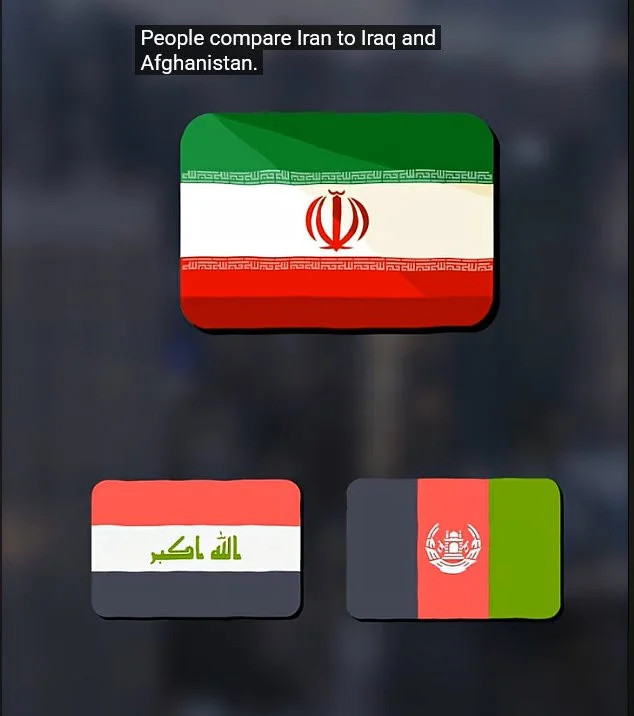
Comparing Iran to Iraq or Afghanistan is a massive false equivalency, and it is a point that anti-interventionists, military strategists, and the intelligence community have consistently raised. Iran presents an entirely different, vastly more dangerous challenge on several levels. Critics opposing the attacks on Iran frequently rely on the "forever war" false equivalency. To support this, they confidently assert that the military simply attacked without a plan. This claim reveals either a profound ignorance of how the military operates or a deliberate attempt to mislead. The military is constantly engaged in contingency planning; while one might disagree with the strategy chosen, a plan always exists. Furthermore, critics accuse the military of shifting its strategy, but while core objectives usually remain constant, expecting the military not to adapt to enemy tactics is fundamentally absurd.
The Nightmare Geography (A Fortress State)
From a pure military standpoint, Iran is a geographical fortress compared to Iraq or Afghanistan.
The Mountains: Iraq is largely flat, open desert, which allowed American tanks and armor to roll into Baghdad in just 21 days in 2003. Iran, by contrast, is ringed by two massive mountain ranges—the Zagros and the Alborz. The terrain is intensely rugged and naturally suited for defensive guerrilla warfare. Vehicles would be forced into narrow mountain passes, making them highly vulnerable choke points.
The Scale: Iran is roughly three and a half times the size of Iraq and has a population of over 90 million people. Militarily, the RAND Corporation and Pentagon analysts estimate that a full ground invasion and occupation of Iran would require between 500,000 to 1,000,000 troops—a logistical impossibility given the total active-duty size of the current U.S. military.
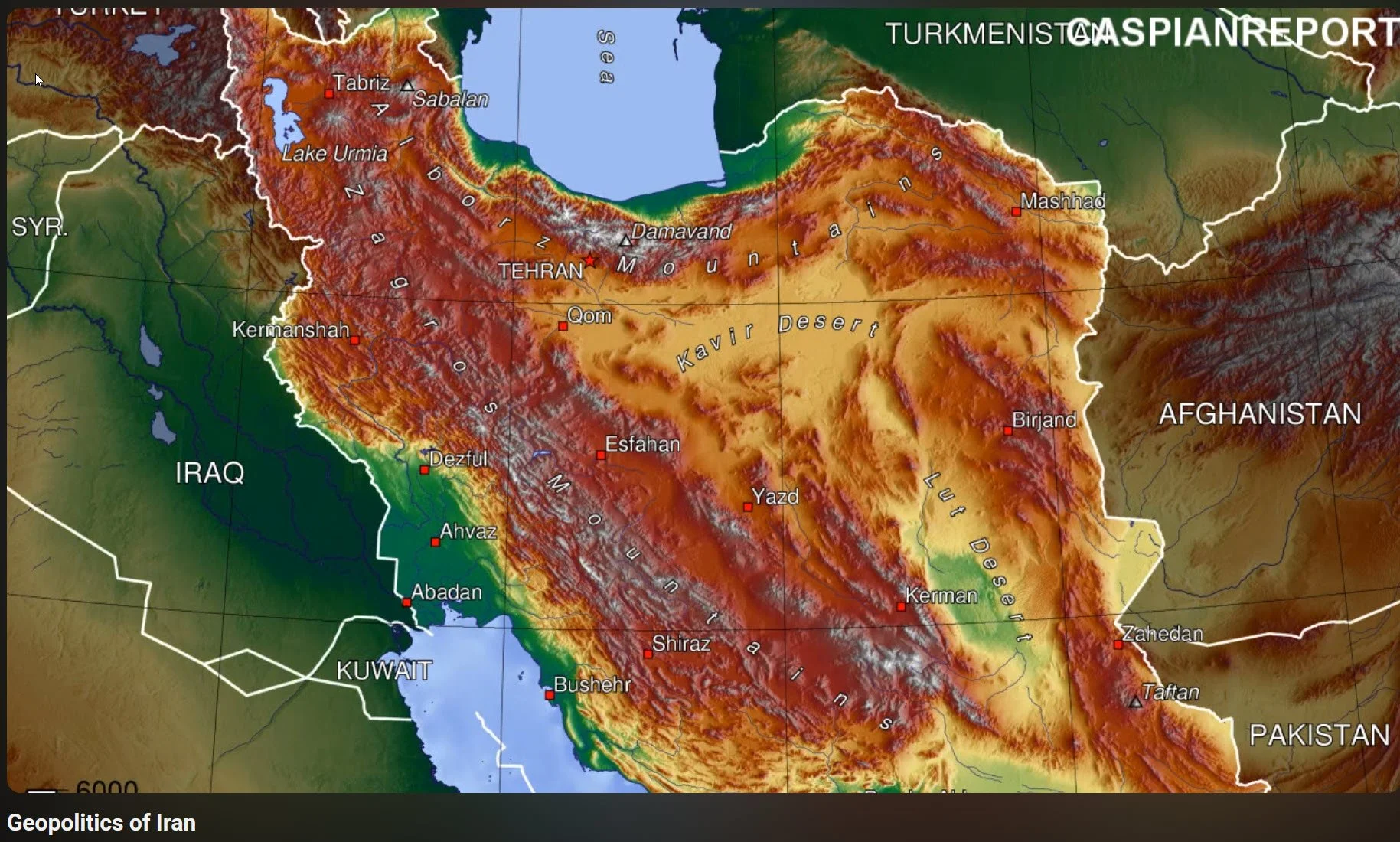
In the last 500 years the borders of Iran have remained more or less the same. This is because of the topographical barriers. The country is surrounded by thee mountainous borders and a coastline in the south. The center of the country is an uninhabitable wasteland. Iran's rough terrain brought forth the 16th century metaphor, "The walls of Iran". And despite Iran's growing regional influence, the country remains vulnerable from the inside. Although the country is also known as Persia, almost half of Iran's total population is actually non-Persian. Many of Iran's strategic regions are populated by ethnic minorities such as the Azerbaijanis, Kurds, Balochis and Arabs.
Deeply Entrenched Infrastructure
Unlike Afghanistan, which lacked a centralized, modern state apparatus, or Iraq, whose infrastructure was heavily degraded by years of sanctions before 2003, Iran is a highly advanced, industrialized nation.
Their military doctrine explicitly accounted for U.S. air superiority. For decades, Iran built its key military assets, missile production facilities, and nuclear laboratories deep underground, buried up to 80 meters inside solid rock.
Bombing them from the air can degrade their capabilities (as seen during Operation Epic Fury), but completely neutralizing them or controlling the country without boots on the ground is virtually impossible.
Asymmetric and Global Choke Points
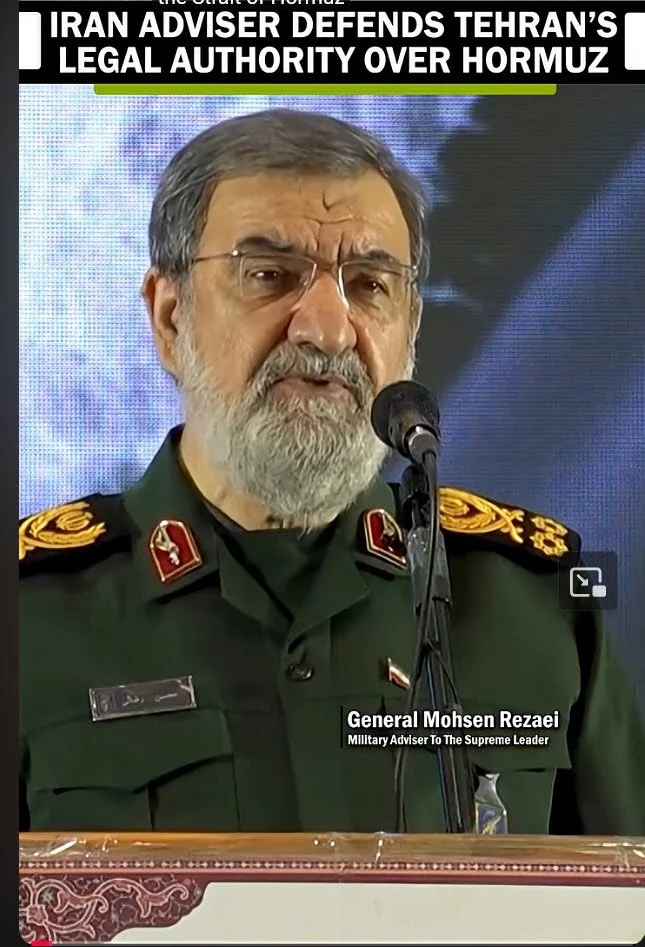
Iran’s geopolitical leverage isn't based on its ability to win a conventional, face-to-face war against the United States; it’s based on its ability to inflict global economic pain.
The Strait of Hormuz: Iran sits directly on this narrow maritime passage, through which 20% of the world's petroleum and liquid natural gas flows. Unlike landlocked Afghanistan or mostly landlocked Iraq, Iran has the geographic capability to mine the strait, deploy anti-ship missiles, and effectively strangle the global economy, causing instant global inflation.
The Axis of Resistance: Iraq and Afghanistan didn't possess highly organized, heavily armed transnational proxy networks. Iran's "Axis of Resistance" (Hezbollah, the Houthis, Iraqi militias) means that a strike on Tehran doesn't stay in Tehran—it instantly triggers attacks on U.S. bases across the Middle East, commercial shipping in the Red Sea, and regional allies like Israel and Saudi Arabia.
How This Shapes the Argument
This stark geographic and geopolitical reality is precisely why the stakes are so high, and why someone like Gabbard approached the intelligence with such caution.
The Hawkish Takeaway: Because Iran is so huge, mountainous, and geographically dangerous, we must never let them get a nuclear weapon. If a country that is already this hard to invade obtains a nuclear deterrent, they will become completely untouchable, allowing them to dominate the Persian Gulf and terrorize the region with impunity.
The Power Projection Paradox
Iran’s "Axis of Resistance"—which includes Hezbollah, the Houthis, and various PMF militias in Iraq and Syria—serves as a highly effective tool for asymmetric warfare.
Plausible Deniability: Historically, surrogates allowed Tehran to strike at regional adversaries (and Western interests) while shielding the Iranian mainland from direct retaliation.
Geographic Encirclement: By positioning assets in Lebanon, Syria, Iraq, and Yemen, Iran effectively created a ring of influence that could threaten the entire Middle East simultaneously, forcing its neighbors into highly defensive postures.
The Ultimatum of the Chokepoints
The threat to close the Strait of Hormuz is Iran's ultimate economic lever.
Global Economic Blackmail: Because roughly 20% of the world's seaborne petroleum and a massive chunk of liquefied natural gas (LNG) pass through this narrow waterway, even the threat of disruption can send shockwaves through global energy markets, spiking inflation and panicking international capitals.
The Dual-Gate Option: With the Houthis commanding proximity to the Bab-el-Mandeb Strait in the Red Sea, the proxy network allows a theoretical "dual-chokepoint" threat, compounding the economic leverage.
The Cost of Inaction: The "Few Choices" Dilemma
When the international community treats these provocations with containment rather than decisive deterrence, it creates a dangerous trajectory:
Salami-Slicing Tactics: Iran has traditionally used a "salami-slicing" strategy—taking small, aggressive actions that are individually not worth starting a war over, but collectively shift the status quo in their favor.
The Binary Corner: Ignoring these shifts eventually leaves the international community with a terrible binary choice: either capitulate to a completely altered, Iran-dominated regional order, or engage in a massive, devastating conventional military conflict because all diplomatic and gray-zone off-ramps have been exhausted.