
Segment #903
The contrast between Joe Lonsdale and Tucker Carlson highlights one of the most significant philosophical and economic debates of our time. It centers on whether the rise of artificial intelligence represents a necessary evolution toward higher productivity or a sudden, destabilizing threat to societal cohesion.
Both men view the issue through vastly different lenses, reflecting the classic divide between Silicon Valley techno-optimism and populist cultural skepticism.

Joe Lonsdale: The Techno-Optimist
Joe Lonsdale, co-founder of Palantir and an active venture capitalist, approaches AI from a traditional capitalist framework. His perspective relies heavily on the economic concept of creative destruction—the idea that old industries and jobs must be dismantled to pave the way for more efficient, wealth-generating innovations.
Productivity and Wealth Creation: Lonsdale argues that society desperately needs productivity growth. In his view, using AI to allow fewer people to produce more goods and services makes a nation wealthier overall. He frequently draws parallels to the agricultural revolution, noting that while technology eliminated millions of farming jobs, it ultimately raised the global standard of living and allowed humans to pursue higher-level work.
The Job Creation Narrative: Rather than viewing AI as an end to employment, Lonsdale believes it will shift human labor toward new, uninvented industries and bolster the dignity of work in alternative fields, such as skilled vocational trades and robotics maintenance.
The "Will to Work" Critique: Lonsdale’s perspective leans heavily into individual agency and cultural attitudes toward labor. From his viewpoint, the market will provide opportunities and training programs, but the critical bottleneck is a cultural willingness to adapt, upskill, and actively participate in the evolving workforce.
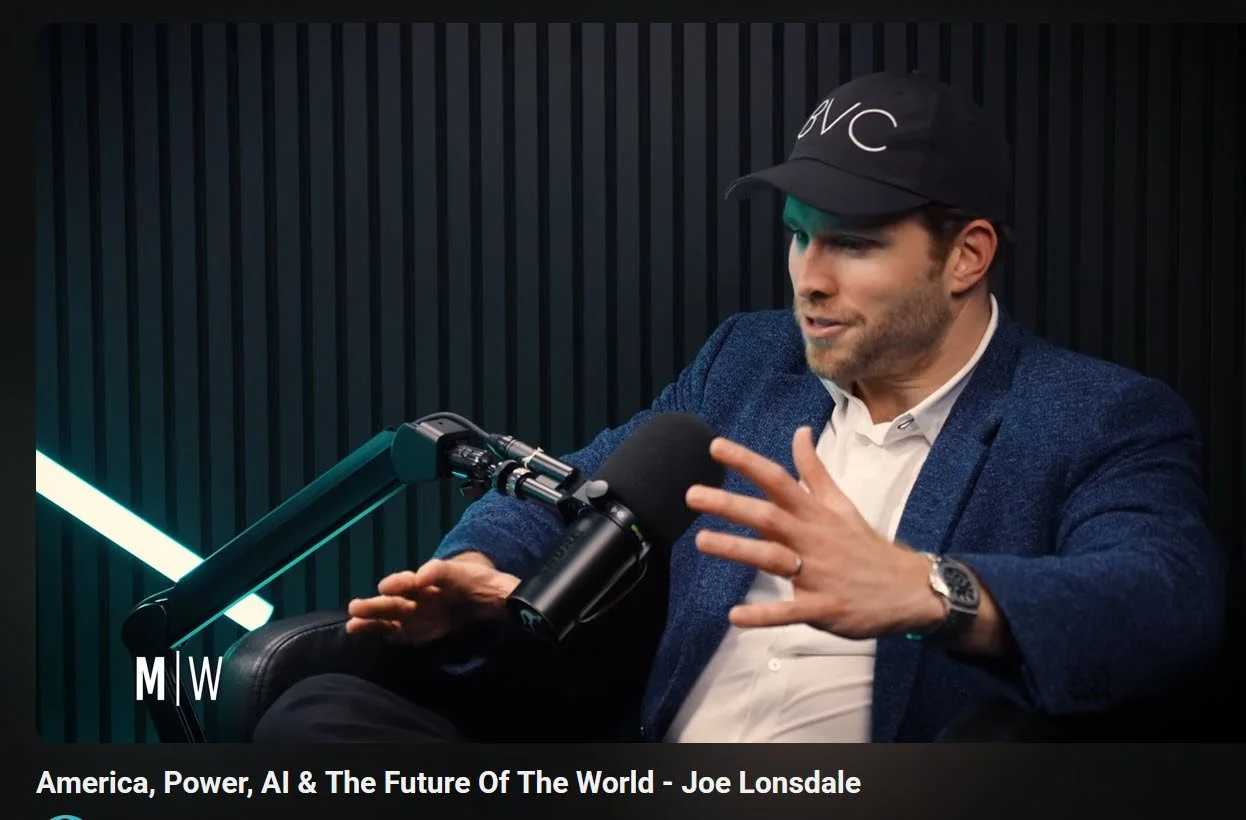
Lonsdale Solutions
Joe Lonsdale’s solutions to the AI transition stem directly from his philosophy as a venture capitalist and tech founder. Because he believes that technological displacement is a necessary catalyst for a wealthier, higher-performing society, his solutions focus heavily on market-driven adaptation, educational reform, and preserving the freedom to innovate.
Rather than leaning on government intervention or financial safety nets like Universal Basic Income (UBI), Lonsdale champions solutions built on individual agency and private sector initiative:
Cultural Realignment Toward the "Will to Work"
For Lonsdale, the primary bottleneck in an AI-driven economy isn't a lack of opportunities, but a cultural willingness to adapt.
The Solution: He advocates for a cultural shift that emphasizes hard work, agility, and high individual agency. Instead of fearing technology or relying on state support, he believes the cultural standard must push workers to actively up-skill, learn to collaborate with AI tools, and aggressively pursue the new roles the market creates.
A Massive Shift Toward Skilled Trades and Vocational Jobs
Lonsdale frequently points out that while AI can easily replace routine administrative and digital tasks, it cannot easily replicate physical, tactile, and high-level problem-solving labor.
The Solution: He strongly champions entrepreneurship and building wealth through the skilled trades and vocational industries (such as advanced manufacturing, robotics maintenance, and physical engineering). He believes that redirecting young people and displaced workers into these highly practical, non-automatable sectors will provide stable, high-dignity livelihoods.
Education Reform and School Choice
Lonsdale argues that the current, traditional public education system is failing to prepare the workforce for an exponential technological landscape.
The Solution: Through his work with policy organizations like the Cicero Institute, Lonsdale actively champions school choice and systemic education reform. His goal is to break up rigid educational models in favor of dynamic, competitive systems that teach real-world problem-solving, tech literacy, and entrepreneurial skills from an early age, allowing future generations to stay ahead of the AI curve.
Exploiting New Market Fields and "Human-Machine Symbiosis"
Lonsdale points out that history proves technology always creates massive, unpredicted employment sectors.
The Solution: Through his venture capital firm, 8VC, he invests heavily in the industries he believes will absorb displaced labor. He projects massive job growth in areas requiring human empathy and physical care (such as high-quality senior care and residential assistance for aging populations), breakthroughs in energy technology, and sectors built around "organic data analysis"—symbiotic roles where humans review, test, and guide AI outputs.
Highly Limited, Target-Specific Safety Regulation
When it comes to governance, Lonsdale is a staunch opponent of heavy-handed regulation, arguing that excessive bureaucracy or sweeping pauses on AI development will stifle Western innovation and cede a massive geopolitical advantage to adversaries like China.
The Solution: If the government is to intervene at all, Lonsdale insists national security and technology reviews must be as limited and tightly targeted as possible. He believes regulation should focus solely on catastrophic existential risks (like bio-weapons or critical infrastructure defense) while leaving the broader economic deployment of AI entirely to the free market.
In essence, while critics worry about the immediate friction of job loss, Lonsdale's overarching solution is a forward-leaning offensive strategy: decentralize education so people learn faster, steer the workforce toward high-demand physical and technical fields, and allow the free market to generate the wealth and industries of tomorrow.
Tucker Carlson: The Populist Skeptic and Societal Stability
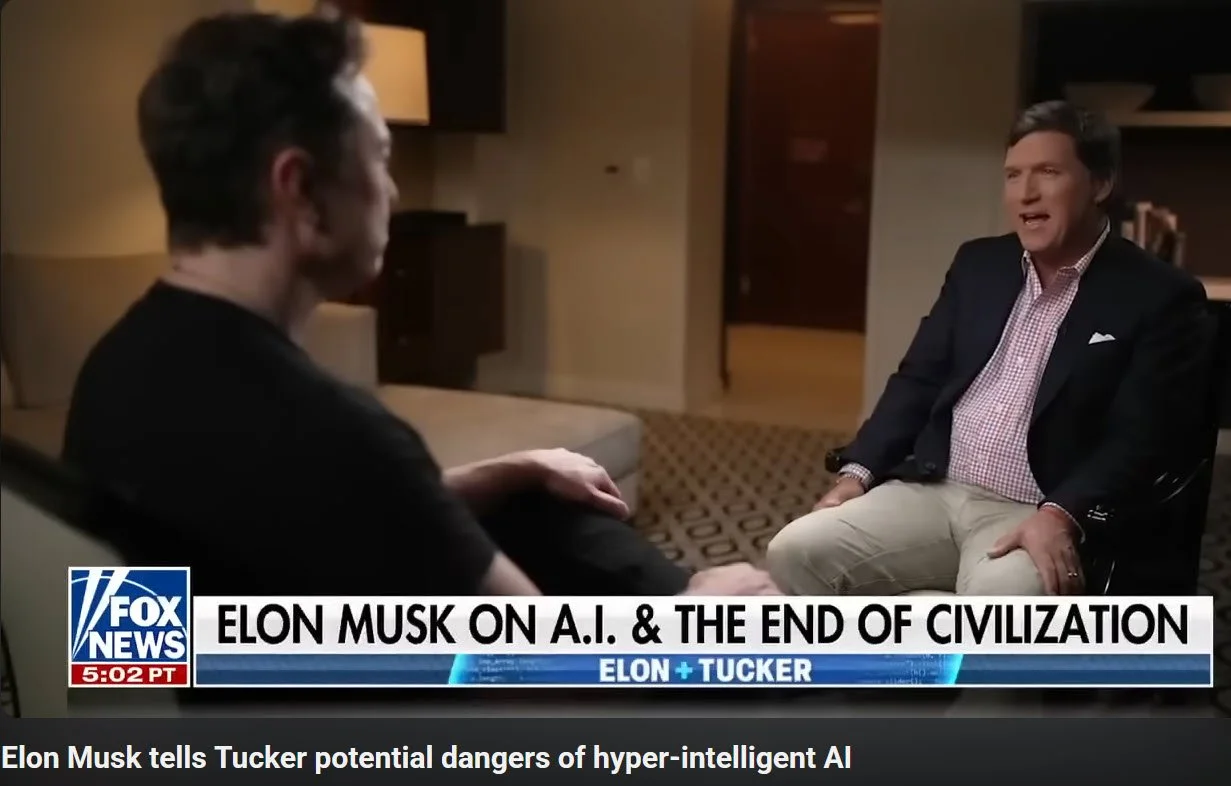
Tucker Carlson views the AI transition through a deeply populist lens, prioritizing immediate social stability, family structures, and the well-being of the working class over corporate efficiency or macroeconomic growth numbers.
The "Human Cost" of Mass Displacement: Carlson focuses intensely on the immediate and tangible threat of job loss. He points to staggering metrics—such as the potential elimination of hundreds of thousands of fulfillment, administrative, or driving jobs (like autonomous trucks and delivery vehicles)—and emphasizes that these disruptions affect real people who may not easily transition into high-tech roles.
Fears of Social Fallout: For Carlson, a job is not just an economic metric; it is a source of purpose, identity, and social order. He argues that sudden, mass unemployment among working-class men and entry-level professionals will lead to widespread social unrest, political destabilization, and the fracturing of communities.
Skepticism of the "Ruling Class": Carlson is deeply cynical of the tech elite's promises. He contends that Silicon Valley and big corporations champion AI primarily to cut labor costs, break unions, and maximize profit margins, leaving the displaced workforce to rely on government handouts or Universal Basic Income (UBI)—a outcome he views as corrosive to the human spirit.
Carlson’s Solutions
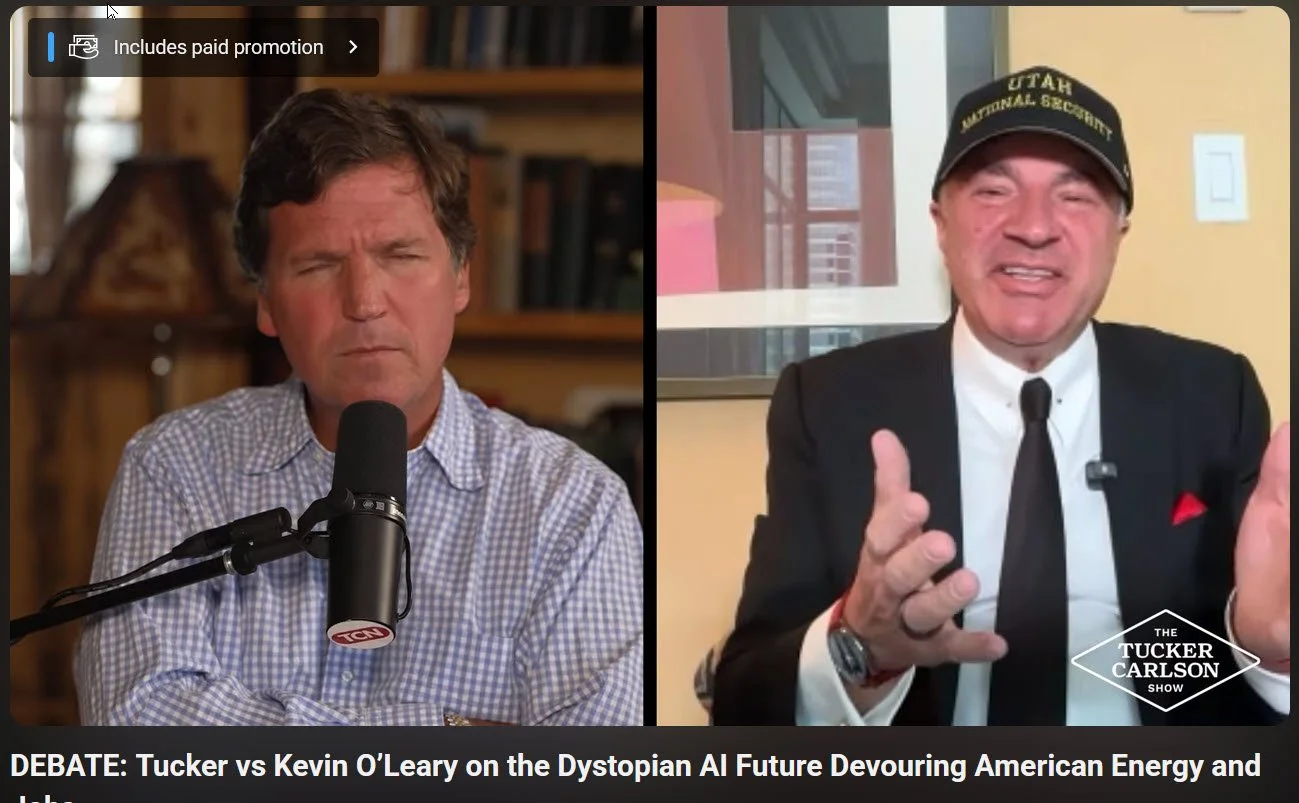
Because Tucker Carlson views the rise of AI as a direct threat to human dignity, societal stability, and the working class, his proposed "solutions" contrast sharply with the conventional corporate or Silicon Valley approaches. He does not advocate for smoother transition tools like retraining programs, Universal Basic Income (UBI), or government handouts, which he often views as corrosive to the human spirit. Pure idealism contrasts sharply with pragmatism in Tucker’s world diminishing his credibility.
Instead, Carlson’s commentary points toward aggressive intervention, protectionism, and a fundamental realignment of priorities:
Radical Intervention ("Strangle it in the Crib")
Carlson has taken a highly confrontational stance against the rapid, unchecked development of AI. In interviews—such as his appearance on The Joe Rogan Experience—he has used the provocative phrase "strangle AI in the crib."
The Core Idea: If a technology poses an existential threat to millions of American livelihoods and the stability of the family unit, society has the right and obligation to stop it. Rather than accepting its inevitability, he argues that the development of highly disruptive automation should be aggressively curtailed or halted before it can cause mass displacement.
Rejecting Corporate Subsidies and Incentives
Carlson strongly opposes the idea that taxpayers should fund the infrastructure driving their own displacement.
The Core Idea: In public debates—such as recent sharp exchanges with figures like Kevin O'Leary over massive AI data centers—Carlson has questioned the wisdom of giving corporate handouts, tax breaks, and subsidized electricity to Big Tech. His solution is to strip away the government-backed incentives that allow these companies to scale AI at a rate that outpaces society's ability to adapt.
Prioritizing Human Well-Being Over "Efficiency"
Carlson rejects the economic dogma that higher productivity and corporate profit margins are the ultimate metrics of a healthy nation.
The Core Idea: He argues that if a company replaces hundreds of thousands of workers (such as truck drivers, fulfillment staff, or administrative assistants) simply to lower labor costs, the resulting "efficiency" is a net negative for the country. His philosophical solution is a political and cultural shift that forces corporations to value the preservation of human jobs, community stability, and social order over raw economic efficiency.
International Regulation to Prevent Machine Autonomy
While Carlson is deeply cynical of government overreach and fears that politicians will use AI as a "propaganda device" to control information, he does acknowledge a specific role for global guardrails.
The Core Idea: He argues that if regulation is to exist, its primary goal must be international cooperation to keep AI from becoming fully autonomous. He maintains a strict boundary that "the machine cannot rule the man," asserting that governance must strictly prevent AI systems from ever issuing independent orders to human populations or overriding human authority.
In short, while Silicon Valley figures like Joe Lonsdale look for ways to adapt human beings to the technology, Tucker Carlson's solution is to force the technology to bend to the needs of human beings—even if that means stopping its progress entirely.
Moving Beyond the Debate: Managing the Transition

Your observation cuts to the core of the issue: AI deployment is an immutable reality. It is driven by global competition and market forces that operate independently of any single political or cultural approval. Because the technology cannot be paused, the debate shouldn't merely be a clash between Lonsdale's optimism and Carlson's warnings. Instead, the focus must shift to how society can actively manage the friction of this transition.
Re-engineering Training for Aggressive Up-Skilling
While Lonsdale is correct that training programs exist, the traditional educational models are often too slow to match the exponential curve of AI development. For a transition to succeed, retraining cannot just be an afterthought; it requires localized, highly targeted programs that rapidly equip displaced workers with practical skills in high-demand, AI-augmented sectors or physical trades that cannot be automated easily.
Acknowledging the "Coordination Tax" and Frictional Unemployment
Carlson’s concerns regarding sudden displacement are legitimate. Even if AI creates more wealth and new industries in the long run, the short-run friction—the gap between a job being destroyed and a worker being successfully retrained—can cause severe economic pain. A successful transition requires corporate leaders and policymakers to anticipate these displacement waves and establish safety nets or phased rollouts, rather than blindsiding entire labor sectors overnight.
Fostering High-Agency Adaptation
Ultimately, navigating the AI era requires individuals to adopt a mindset of "high agency" and curiosity. Instead of viewing AI purely as an adversarial replacement or a magic bullet, the workforce must learn to use it as an administrative partner—slashing mundane, repetitive tasks so humans can focus on deep, strategic, or tactile execution. By blending Lonsdale’s emphasis on adaptation and productivity with a serious, practical response to Carlson’s warnings about human displacement, society can work toward a transition that builds wealth without tearing its social fabric apart.
For a deeper look into this perspective, you can watch Joe Lonsdale discuss AI productivity on The Rubin Report. In this interview, Lonsdale elaborates on why he believes machine intelligence will ultimately drive a new industrial revolution and create wealth rather than permanently destroying opportunity.