
Segment #1017
Socialism Cannot Distribute Wealth That Capitalism Has Not Created
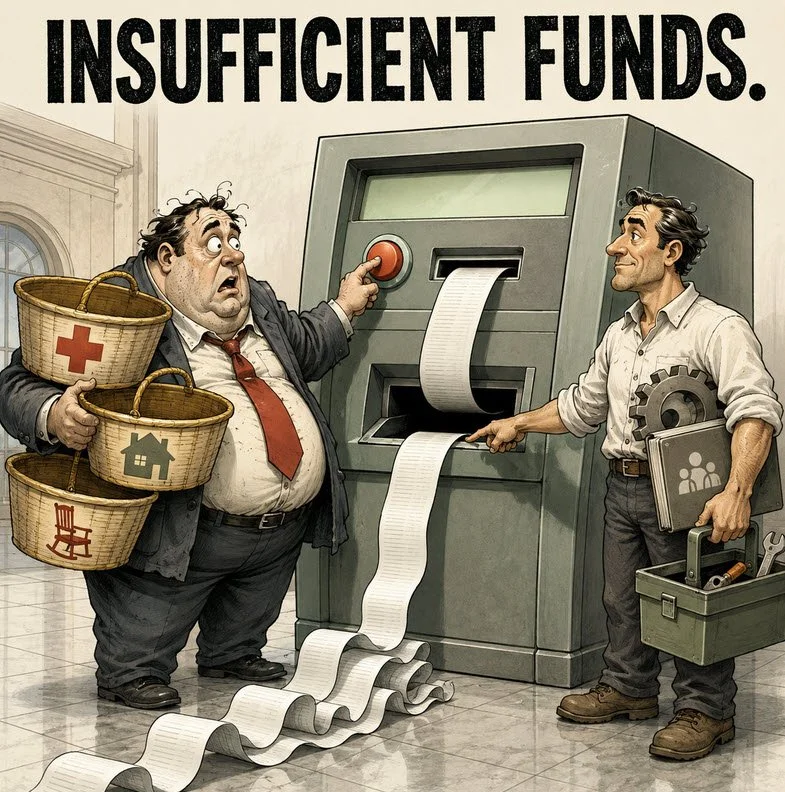
The central weakness of socialism is mathematical: government cannot sustainably distribute wealth that the economy has failed to produce.
Every welfare program—healthcare, pensions, housing assistance and income support—must be financed through taxes on workers, businesses and investors, or through borrowing that future taxpayers must repay.
Government can redistribute wealth, but productive enterprise must first create it.
The Socialist Contradiction
Pure socialism weakens the mechanisms that generate the revenue needed to finance its promises. When government replaces private ownership and competitive markets with political planning:
Prices no longer accurately reflect supply and demand.
Investment declines because potential rewards no longer justify the risks.
Businesses lose incentives to innovate and control costs.
Productivity stagnates while public obligations continue growing.
The government must eventually raise taxes, increase debt, create inflation, ration services or reduce benefits. These measures do not create wealth; they merely redistribute existing resources or postpone the bill.
Capitalism Pays for the Safety Net
A smart socialist—or, more accurately, a social democrat—should want capitalism to succeed.
A growing capitalist economy creates profitable businesses, well-paid workers, investment, innovation and expanding tax revenue. That revenue can then support a reasonable safety net without destroying the productive economy.
Successful welfare states are therefore not purely socialist. They depend on private property, competitive businesses, profits and trade. Their social programs rest on wealth generated by capitalism.
Markets are imperfect, and reasonable regulation can limit abuses while protecting workers and vulnerable citizens. But the order cannot be reversed:
Production must precede redistribution. Investment must precede taxation. Wealth must be created before government can spend it.
A welfare state that forgets this relationship eventually consumes its own economic foundation. Taxes rise, investment weakens, capital leaves and government relies increasingly on debt.
The sustainable approach is a vibrant capitalist economy combined with disciplined social protections. The real debate should be how to share prosperity without crippling the system that creates it.
Pure socialism cannot solve that equation. It attempts to divide the pie while weakening the incentives necessary to bake it.
Capitalism creates the wealth. Politics decides how it is shared.