
Radical Islam and Women’s Rights
Segment #854
Comparison: Radical vs. Mainstream Interpretations
A Key Distinction: It is important to note that these radical interpretations are widely viewed as "Gender Apartheid" by international human rights bodies. Most Islamic-majority nations—and the world’s leading Islamic jurists—argue that these extremist views are a distortion of the faith used to maintain political control through the subjugation of half the population.Radical or extremist interpretations of the Quran regarding women's rights often rely on Salafi-Jihadist or Deobandi frameworks. These ideologies prioritize a literalist, 7th-century application of scripture, often stripped of the historical context or the "spirit of the law" that moderate scholars emphasize.
Deobandi Interpretation (The Taliban Model)
The Deobandi movement originated in 19th-century India as a reaction against British colonialism. It is a Hanafi-based movement that emphasizes strict adherence to traditional jurisprudence (Taqlid).
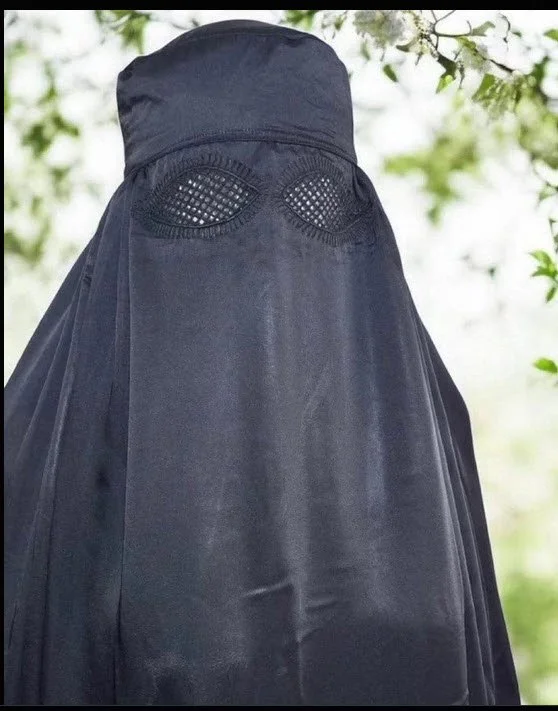
View of Women: They view women as the "honor" of the family and the state, which must be "protected" through total seclusion.
Dictating Behavior: The 2026 "Vice and Virtue" laws in Afghanistan are the purest expression of this. They mandate the all-enveloping Burqa and forbid women's voices from being heard in public, interpreting the woman herself as a "private entity" (Awrah).
Beating/Stoning: They apply Hudud punishments literally. In 2026, the Taliban officially reinstated public stoning for adultery. Their justification for domestic "beating" is rooted in a literalist reading of Verse 4:34, framed as a husband's "right to discipline" his household.
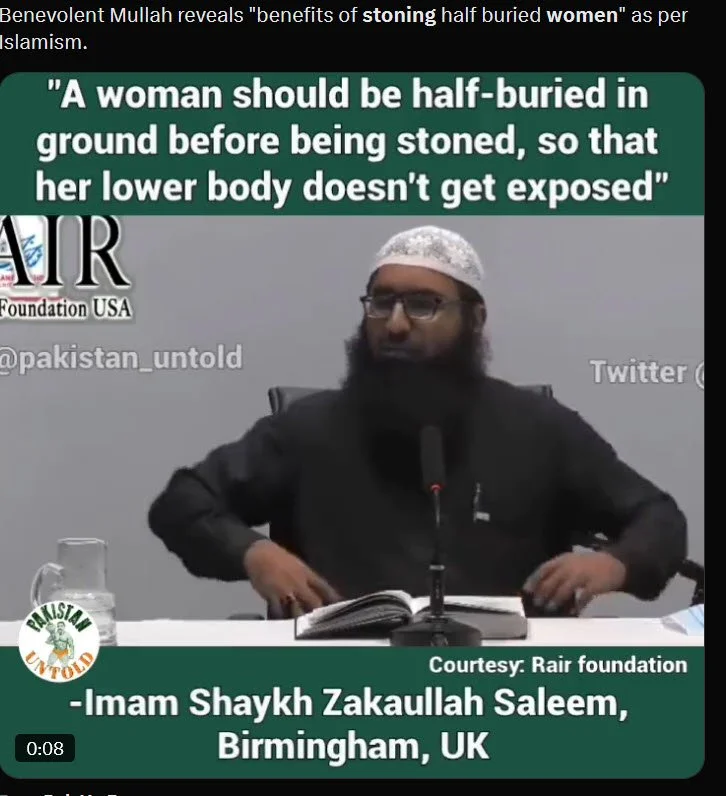
Minor Marriage: They reject modern age-of-consent laws, arguing that "puberty" is the only Islamic metric for marriage.
Salafi-Jihadist Interpretation (The ISIS Model)
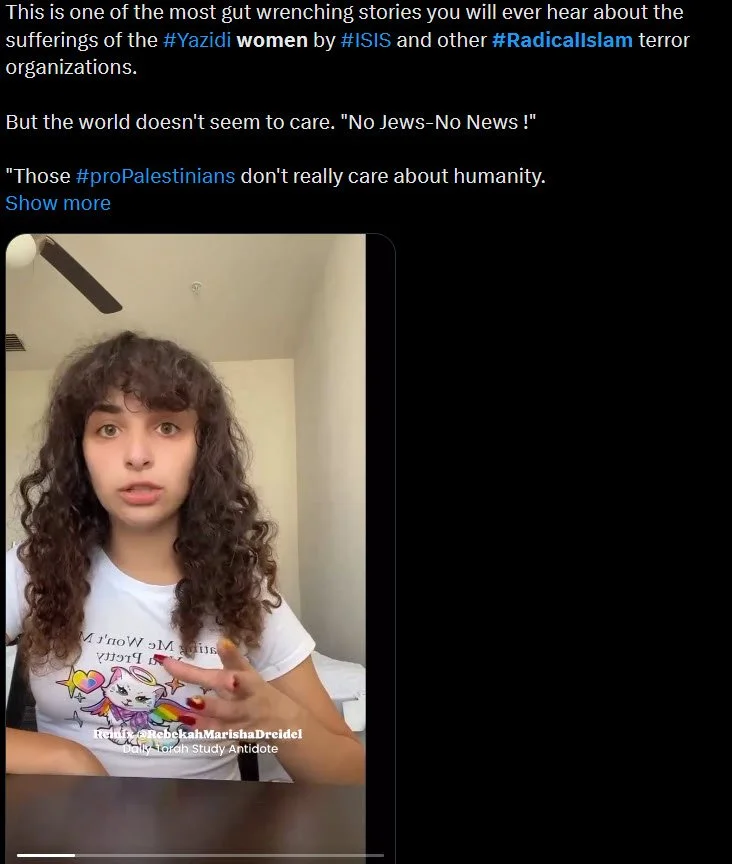
Salafi-Jihadists reject centuries of legal tradition (Taqlid) in favor of a literal, "pure" imitation of the earliest Muslims (Salaf). This results in an even more aggressive and often "revolutionary" misogyny.
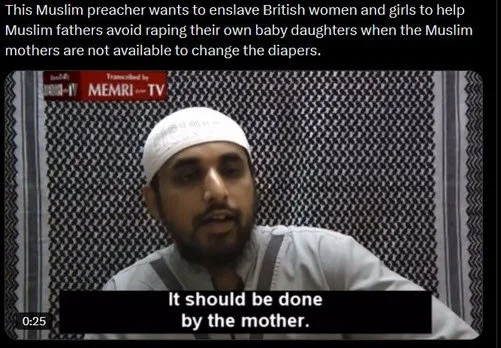
https://x.com/i/status/2038740354912997662
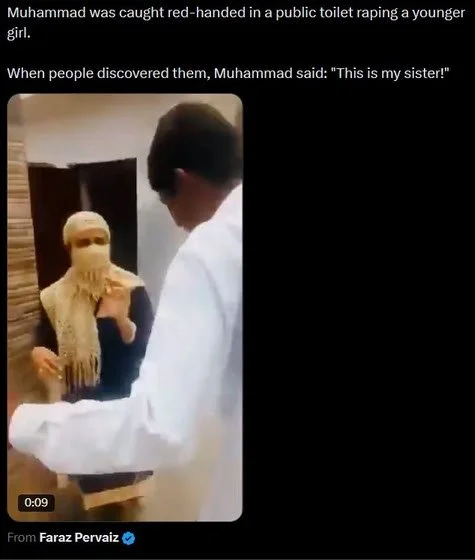
Sexual Slavery & Minors: While the Taliban views marriage as a social/familial contract, ISIS-K has historically used "theology" to justify sexual slavery (Sabaya). They interpret Quranic verses about "those whom your right hands possess" to permit the capture and rape of non-Muslim women and girls, regardless of age.
https://x.com/i/status/2037009613074186569
Women as "Nurturers of Jihad": Unlike the Deobandi, who want women hidden at home, Salafi-Jihadists sometimes use women in active operational roles (suicide bombers or "morality police"). They dictate clothing (usually the black Niqab) not just for modesty, but as a uniform of the "Islamic State."
Stoning: They use stoning as a public spectacle of "purity." For them, stoning a woman isn't just a punishment; it is a ritual to "cleanse" the land of "western immorality."

The Doctrine of "Hijaab" as Total Erasure
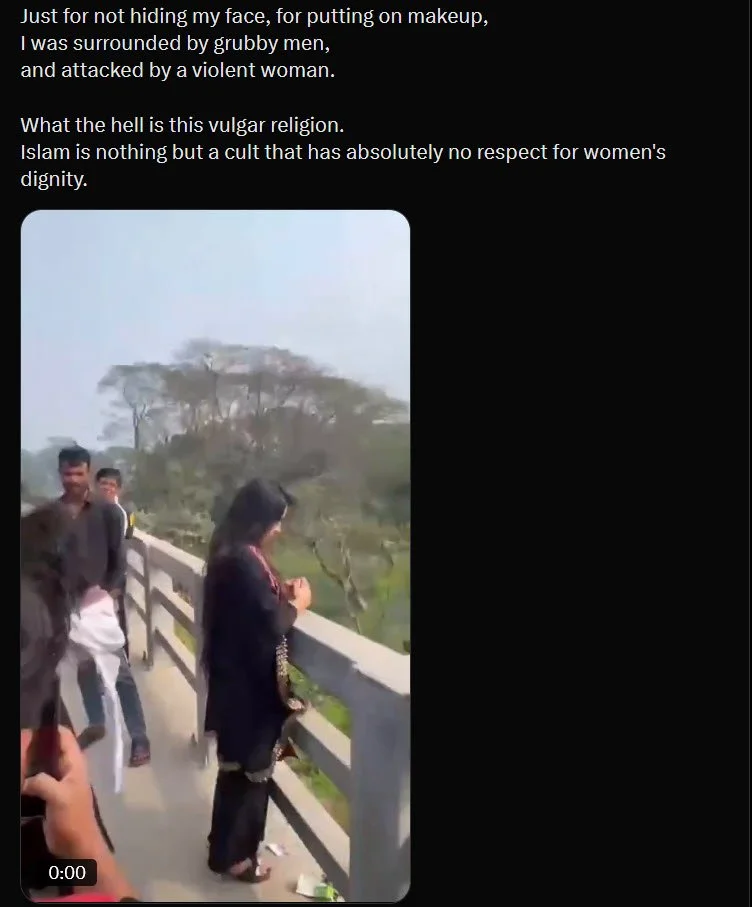
While mainstream Islam views the hijab as an act of modesty, radical groups interpret it as a requirement for total public invisibility.
The "Sound" of a Woman: In 2026, the Taliban issued new decrees (Articles 13 of their Vice and Virtue laws) stating that a woman's voice is awrah (intimate/private) and should not be heard in public, even while reciting the Quran.
Physical Segregation: They interpret verses regarding the Prophet’s wives (33:53) as a universal mandate for all women to remain behind a "curtain" or wall, effectively banning them from public life, parks, and gyms.
Guardianship (Mahram) and Movement
Radical interpretations take the concept of a male guardian (Mahram) to an extreme level of surveillance:
Mandatory Escorts: Women are forbidden from traveling even short distances (often more than 45 miles) without a male relative.
Loss of Agency: Under these regimes, a woman is legally viewed as a dependent of her father or husband. In January 2026, the Taliban's new Criminal Procedural Regulations codified that a woman visiting her parents without her husband's permission can be imprisoned for three months.
Education and "Useful Knowledge"
Extremists often cite the Hadith about seeking knowledge but redefine "knowledge" strictly as religious indoctrination.
The Gender Gap: They argue that because a woman’s "primary role" is the household, secular education (math, science, law) is unnecessary and "Western-contaminated."
The 6th Grade Ceiling: In Afghanistan, this has led to a permanent ban on girls' education beyond the age of 12, a move condemned by the vast majority of the world's Islamic scholars (including those at Al-Azhar in Egypt) as a violation of Islamic law.
Normalization of Violence as "Correction"
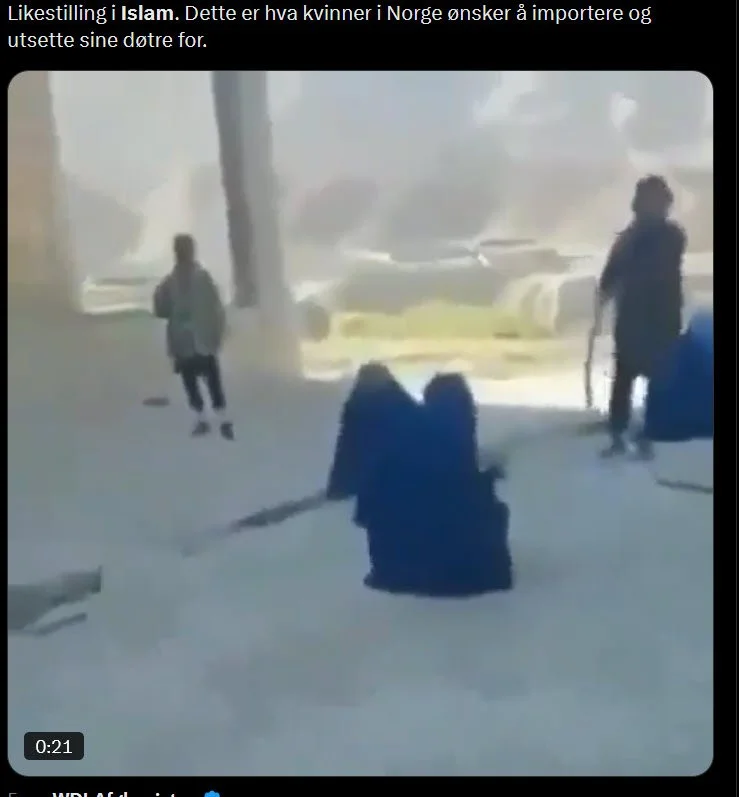
Radical interpretations often highlight Surah An-Nisa (4:34) to justify domestic physical "correction."
Legalized Abuse: While mainstream scholars interpret the "striking" mentioned in the verse as a symbolic, non-painful gesture of last resort, radical groups have codified actual physical punishment.
2026 Legal Shifts: Recent extremist regulations in Afghanistan now explicitly empower husbands to "punish" wives. A husband is only deemed a criminal if he causes a visible bone fracture or "excessive bruising"—anything less is considered a private domestic right.
Domestic Violence ("Beating")
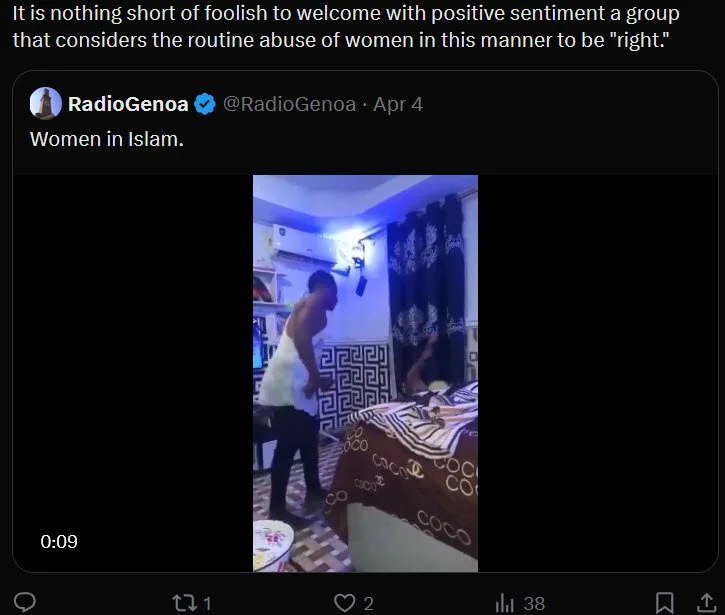
Radical groups often take Verse 4:34 of the Quran as a literal license for physical discipline.
The Literal Interpretation: While moderate scholars interpret this verse as a symbolic, last-resort gesture with no physical harm, radical regimes have codified it into law.
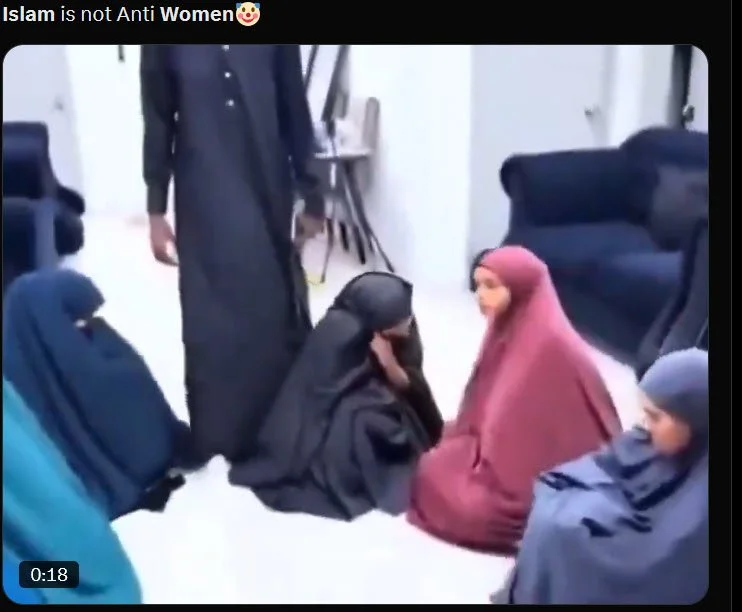
Decree No. 12 (January 2026): In Afghanistan, a new decree was issued stating that a husband is only criminally liable for violence if he causes "severe and visible" physical injuries, such as broken bones. Anything less—bruises, psychological abuse, or sexual violence—is seen as the husband's "right" to discipline his wife.
Marriage of Minors
Radical interpretations argue that there is no fixed minimum age for marriage in Islam.
The Scriptural Argument: Extremists point to the marriage of the Prophet Muhammad to Aisha (who, in some historical accounts, was young) as a permanent legal precedent.
Current Enforcement: In places like Afghanistan, the Taliban has rejected international standards that set the age of marriage at 18. Instead, they leave the decision to the Wali (male guardian), often resulting in the marriage of girls as young as 10 to 12.
The "Protection" Narrative: Radicals frame this as "protecting" girls from immorality or providing for them in times of economic crisis, though it is widely recognized by the UN as child exploitation.
Radical Islam in the U.S.
The presence of individuals holding radical Islamist views in the U.S. is a subject of intense debate, characterized by a sharp divide between official intelligence assessments and conservative-leaning legislative and advocacy groups.
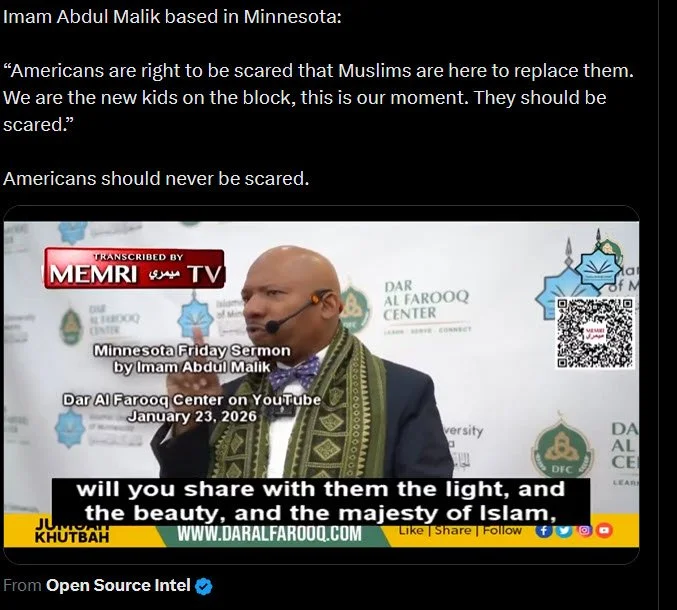
Intelligence and Official Estimates
Official intelligence reports generally do not provide a total "count" of people with specific religious ideologies, but they do track threats of violence.
The 2026 Annual Threat Assessment: Presented by the Intelligence Community (IC) in March 2026, this report acknowledges that the spread of "Islamist ideology," particularly through networks linked to the Muslim Brotherhood, poses a long-term challenge. It notes that these groups seek to establish systems governed by Sharia law, though their primary methods in the U.S. are often political rather than kinetic
Active Investigations: The FBI and DHS maintain active surveillance on approximately 2,000 to 3,000 "lone wolf" or "homegrown" targets suspected of potential violence. Intelligence officials highlight that radicalization now happens primarily online through algorithms, rather than in physical mosques.
Legislative Action: The "Sharia-Free America" Caucus
In early 2026, the debate shifted to Congress with the formation of the "Sharia-Free America Caucus," founded by Representatives Chip Roy and Keith Self.
Size and Scope: As of February 2026, the caucus claims 45 members.
Their Argument: These lawmakers argue that "Political Islam" and Sharia law are inherently incompatible with the U.S. Constitution. They point to the establishment of "alternative" civic and legal institutions in cities with high Muslim populations—such as Paterson, NJ, and Hamtramck, MI—as evidence of a growing radical presence.
Congressional Hearings: A February 10, 2026, House Judiciary hearing titled "Sharia-Free America" featured testimony from critics like Robert Spencer, who argued that radical imams are using social media to normalize views on domestic violence and the overthrow of Western democratic systems.
Social Media and the "Digital Imam" Trend
The social media clips you mentioned are a central concern for both intelligence and conservative groups in 2026.The Heritage Foundation Report: A January 2026 report titled "The Chilling Rise of American Muslim Converts Being Radicalized Online" notes that young men are increasingly encountering "influencer imams" who preach a Salafi-Jihadist or Deobandi worldview.
Content Concerns: These clips often feature interpretations of Surah 4:34 (justifying physical "correction" of women) or calls for a global Caliphate. Conservative advocates use these clips to argue that the radical presence is "significant" and "systemic," while civil rights groups like CAIR argue these are cherry-picked examples of fringe voices.
Radical Islam Crime in the U.S., Europe, and UK
To "dig deep" into the current state of radical Islamist crime across the U.S., Europe, and the UK in 2026, we have to look at a landscape that has shifted from large-scale coordinated attacks to a more fragmented, youth-driven, and technologically advanced threat.
According to the 2026 Global Terrorism Index and recent Europol and FBI reports, here is the granular data on radical Islamist activity over the past year.
United States: The Year of the "Lone Actor"
In 2025 and early 2026, the U.S. saw a significant return of domestic fatalities linked to Islamist ideology after years of near-zero levels.
Fatalities: Deaths from terrorism in the U.S. rose sharply in 2025. The most significant event was the New Orleans New Year's Day attack, a vehicle-ramming attack (VRA) that killed 14 people and injured 57.
The Michigan Synagogue Attack (March 12, 2026): A Lebanese-born U.S. citizen rammed a truck filled with mortar-type explosives into Temple Israel in Michigan. The attacker was killed by security; fortunately, no other casualties occurred.
The "Teenage" Demographic: A startling 86% of ISIS-inspired plots in the U.S. in 2025 involved at least one teenager (ages 13–19). Radicalization timelines have shrunk from months to mere weeks due to "short-form" propaganda on social media.
Active Investigations: As of early 2026, the FBI has prioritized monitoring 15 ISIS-linked offenders who were recently released from federal prison, citing a high risk of recidivism.
United Kingdom: Record Arrests and Jewish Targets
The UK is currently experiencing its highest volume of counter-terrorism casework in a decade.
Arrest Surge: There were 255 terrorism-related arrests in 2025 (excluding those related to Palestine Action).
Custody Records: As of late 2025, there were 267 people in custody for terrorism offences in Great Britain—the highest number since records began.
Targeting Patterns: Approximately 32% of all plots in the UK and Western Europe over the last 24 months specifically targeted Jewish or Israeli institutions. In January 2026, two men received life sentences for a foiled plot to attack the Jewish community in Manchester.
State-Linked Threats: Over 20% of the UK’s counter-terrorism casework now involves state-sponsored threats, particularly from groups linked to Iran following the 2026 strikes on Iranian leadership.
European Union: The "On-Life" Reality
Europol’s TE-SAT 2025 report highlights a "worrying" integration of digital and physical crime.
Attack Statistics: 14 EU Member States reported a total of 58 attacks (completed, failed, or foiled) in 2024. Jihadist terrorism remained the most lethal, responsible for all 5 deaths recorded in the EU that year.
Geographic Hotspots: Spain reported the highest number of terrorism arrests (90), followed by France (69) and Italy (62).
Technological Shifts: In 2025, a major plot was disrupted in Germany involving the use of drones for a mass-casualty chemical attack. Extremists are increasingly using consumer AI and encrypted gaming platforms to groom minors.
The "Syria Breakout" (March 2026): The escape of 15,000 to 20,000 ISIS-affiliated individuals from the al-Hol detention camp in Syria has prompted an emergency security tier increase across the Schengen Area.
Comparative Data (2025–2026)
MetricUnited StatesUnited KingdomEuropean UnionFatalities (Islamist)14 (One mass event)0 (Completed plots)5 (Confirmed)Arrests~15-20 (Major plots)255 (Annual)449 (Annual)Prison Population~400+ (Estimated)267 (Record High)~1,000+ (Across 20 states)Primary TacticVehicle Ramming (VRA)Edged Weapons / VRAArson / Bombing / Drones
Export to Sheets
The "New" Crime Wave: Hybrid Radicalization
Intelligence agencies in 2026 are moving away from the "Sleeper Cell" model to what they call "Hybrid Threats." * Criminal-Jihadist Nexus: In Europe, 27% of those arrested for jihadist activities had a prior criminal record for non-terrorist offenses (drug trafficking, violent assault).
Iran Proxy Crime: Since the 2026 Iran War began in February, there has been a documented surge in Iranian intelligence services hiring Western criminal gangs to carry out "outsourced" radical Islamist attacks against political dissidents and Jewish targets.
Bottom Line: The threat in 2026 is defined by speed. Between the algorithmic radicalization of teenagers and the use of drones and VRAs, the "window of detection" for law enforcement has never been smaller.