Segment #1010
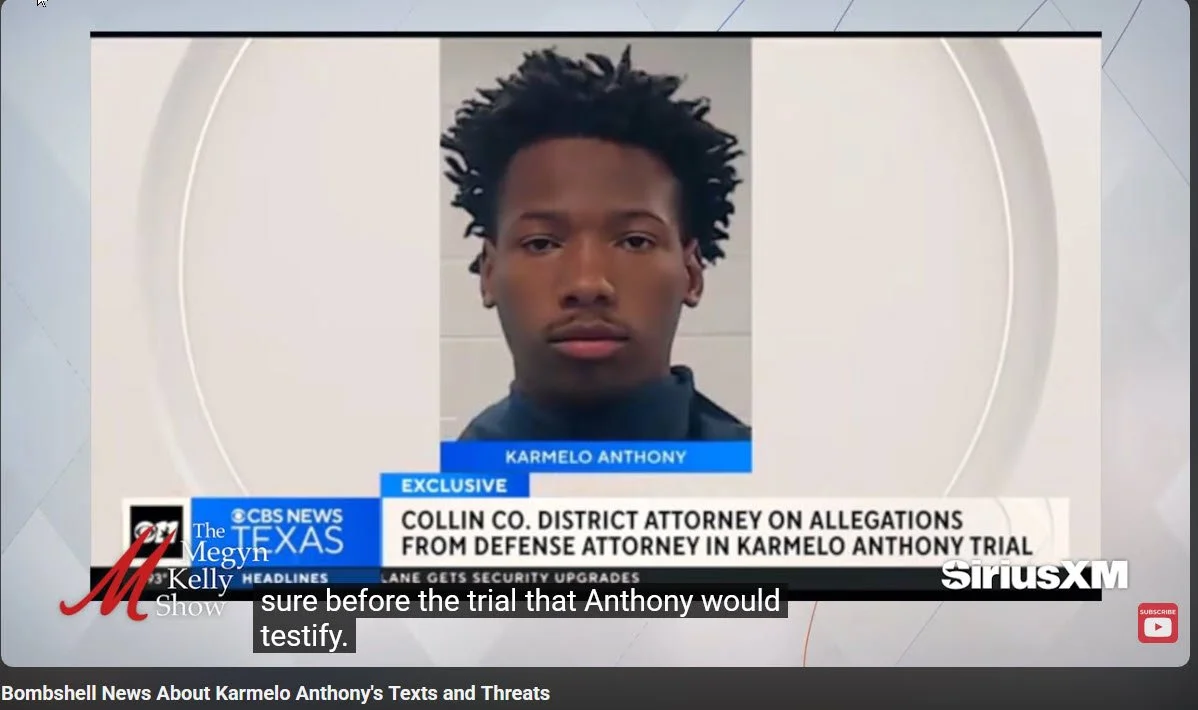
In this video, Megyn Kelly and guest commentators Arthur Aidala and Dave Aronberg discuss breaking legal developments surrounding the appeal and retrial request of Karmelo Anthony [00:00], who was convicted of murder and sentenced to 35 years in prison for the fatal stabbing of 17-year-old Austin Metcalf [00:36] at a Frisco, Texas, high school track meet.
The Legal Framework of Jury Selection
Constitutional Standard: Under U.S. law, jurors are constitutionally required to be selected based on their ability to remain fair, impartial, and objective regarding the facts of the case. The legal system prohibits overt racial discrimination in the exercise of peremptory strikes (established via Batson v. Kentucky).
Peremptory Challenges: Both defense and prosecuting attorneys are allotted a specific number of peremptory strikes to remove potential jurors without stating a reason, provided those strikes are not used systematically to exclude individuals based solely on race or gender. In Anthony's original trial, prosecutors used strikes against prospective Black jurors who were educators, a rationale that was accepted by the presiding court at the time.
Competing Perspectives on the Case
Civil Rights Concerns: Local advocacy groups, including the NAACP, have argued that the absence of Black jurors in a case involving a Black defendant and a white victim heightened community concerns about fairness and representation within the justice system. Critics of the initial outcome argue that systemic factors and the makeup of the jury pool can influence how self-defense claims are perceived by a jury.
Focus on Procedure and Evidence: Conversely, prosecutors and legal analysts maintain that the verdict was reached by a legally empaneled jury that evaluated the specific testimony, physical evidence, and witness accounts of the confrontation. The current retrial hearings are focused strictly on procedural matters—such as closed conferences, disputed evidentiary agreements between counsel, and the original judge's post-trial remarks—rather than retrying the facts of the incident itself.
Key Discussion Points
Judicial Recusal & New Judge: The original trial judge, District Judge John Roach Jr., was recused after giving a television interview stating that the jury "got it right" [04:32]. The case was reassigned to retired District Judge Michael Chitty [05:06].
The "Gentleman's Agreement" Controversy: Anthony’s defense team argued for a new trial, claiming an unwritten "gentleman's agreement" existed to exclude character evidence for both the defendant and victim [00:06]. The defense claimed this agreement and prosecutor pressure influenced Anthony’s choice not to testify [06:16].
New Prosecutor Disclosures: Collin County prosecutor Bill Wirskye revealed evidence that would have been introduced had character traits been raised in court [01:00]:
Text Messages: Text messages allegedly sent by Anthony, including one expressing a desire to stab someone and "lick the blood off the blade" [02:32], and another sent the morning of the event stating he was "lowkey on the verge" [02:16].
Prior Domestic Incident: Testimony regarding Anthony’s ex-girlfriend reporting to school officials on the morning of the stabbing that he had been stalking her and had previously threatened her [01:31].
Behavioral History: Records indicating a history of aggressive behavior, including participation in a specialized behavioral program at LSU [02:48].
Time to Decide on Testifying: The commentators address defense claims that Anthony was rushed (given only 10 minutes) to decide whether to take the stand [07:42], noting transcript records show he was granted over half an hour and consulted with his family [08:12].
Additional Context & Details
Case Summary: The incident occurred on April 2, 2025, at David Kuykendall Stadium in Frisco, Texas [01:31]. Anthony stabbed Metcalf following a dispute over seating under a team tent during a track meet [00:36].
Verdict: On June 9, 2026, a Collin County jury rejected claims of self-defense and manslaughter, convicting Anthony of murder and handing down a 35-year sentence.
Appeal Proceedings: Detailed updates on the retrial arguments can be reviewed via coverage on the Associated Press / PBS NewsHour and CBS News Texas.
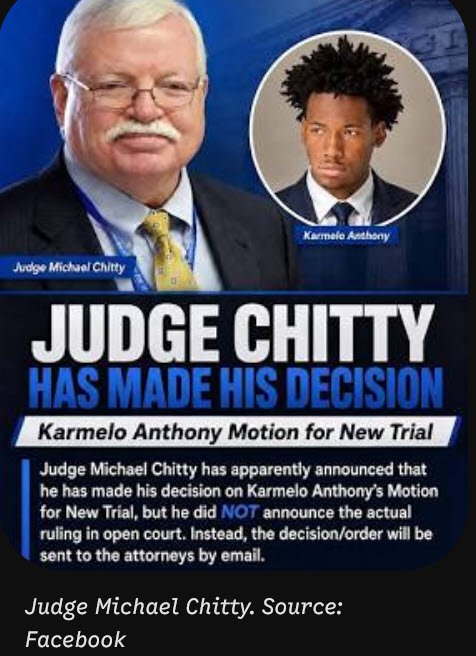
Judge Mike Chitty's Ruling: After the original trial judge (John Roach Jr.) was recused from handling post-trial motions, Senior District Judge Michael Chitty was assigned to the case. Following hearings evaluating the defense's claims, Judge Chitty denied the motion for a new trial, leaving Anthony's 35-year prison sentence intact. Anthony's defense team has stated they plan to appeal the ruling.
Retired District Judge Michael Chitty issued a brief, half-page order on August 22, 2026, denying Karmelo Anthony's motion for a new trial. Judge Chitty did not write an elaborate written opinion or detail his detailed legal reasoning, which is common for post-trial procedural motions in Texas state court.
Summary of Judge Chitty's Order
According to court records reported by the Associated Press and FOX News / 930 WFMD, the succinct text of the ruling states that the court denied the motion after having reviewed:
The defendant's motion for a new trial
The underlying court record
The evidence and arguments presented during the two-day evidentiary hearing
Submitted legal briefs and relevant Texas case law
Key Issues Addressed in the Ruling
While the formal order was short and contained no extended written commentary, it effectively rejected the three central arguments raised by Anthony's new appellate defense team:
The "Gentleman's Agreement" Dispute: The defense argued that an informal, unwritten agreement between original trial lawyers and prosecutors regarding character evidence collapsed on the trial's final day, causing Anthony not to testify in his own defense. Judge Chitty concluded that this dispute did not violate Anthony's constitutional right to a fair trial or warrant throwing out the verdict.
Courtroom Access Restrictions: Defense attorneys contended that strict trial environment rules imposed by original Judge John Roach unconstitutionally limited public access. The ruling left those administrative decisions intact.
Judicial Impartiality Concerns: Following Judge Roach's recusal from post-trial proceedings over media comments he made after the trial, Judge Chitty determined the original trial proceedings themselves remained fair and valid.
Next Legal Steps
Because the motion for a new trial was denied at the trial court level, defense attorney Russell Wilson stated that Anthony's defense will proceed with a direct appeal to the Texas Fifth Court of Appeals.
Here is a biography of Judge B. Michael "Mike" Chitty, based on his legal career and judicial background in Texas:
Judicial Career
Appointment & Service: Chitty served as the judge for the Texas 422nd Judicial District Court in Kaufman County. He was originally appointed to the bench on January 29, 2004, by then-Governor Rick Perry.
Retirement: He chose not to seek re-election in 2020 and officially retired from the bench on December 31, 2020.
Specialized Courts: During his tenure, he helped establish the 422nd District Court as a mental health and drug diversion court, and he served as a director of the Texas Association of Specialty Courts.
Education & Early Law Practice
Education: Chitty is a lifelong resident of Terrell, Texas. He earned both his undergraduate degree and his Juris Doctor (J.D., 1973) from Southern Methodist University (SMU).
Private Practice: Before his appointment to the state bench, he spent roughly 30 years as an attorney in private practice, handling civil, family, and criminal cases. His practice areas included real estate, probate, commercial, bankruptcy, tax, employment, and municipal law.
Community & Professional Involvement
Bar Associations & Affiliations: He is a member of the State Bar of Texas, the Texas Bar Foundation, the College of the State Bar of Texas, and is a past president of the Kaufman County Bar Association.
Civic & Local Boards: Over the years, Chitty has been heavily involved in his local community, participating in the Terrell Rotary Club, the Kaufman Lions Club, the Kaufman County Historical Commission, the City of Terrell’s Charter Revision Committee, and the ethics committee at Terrell State Hospital.