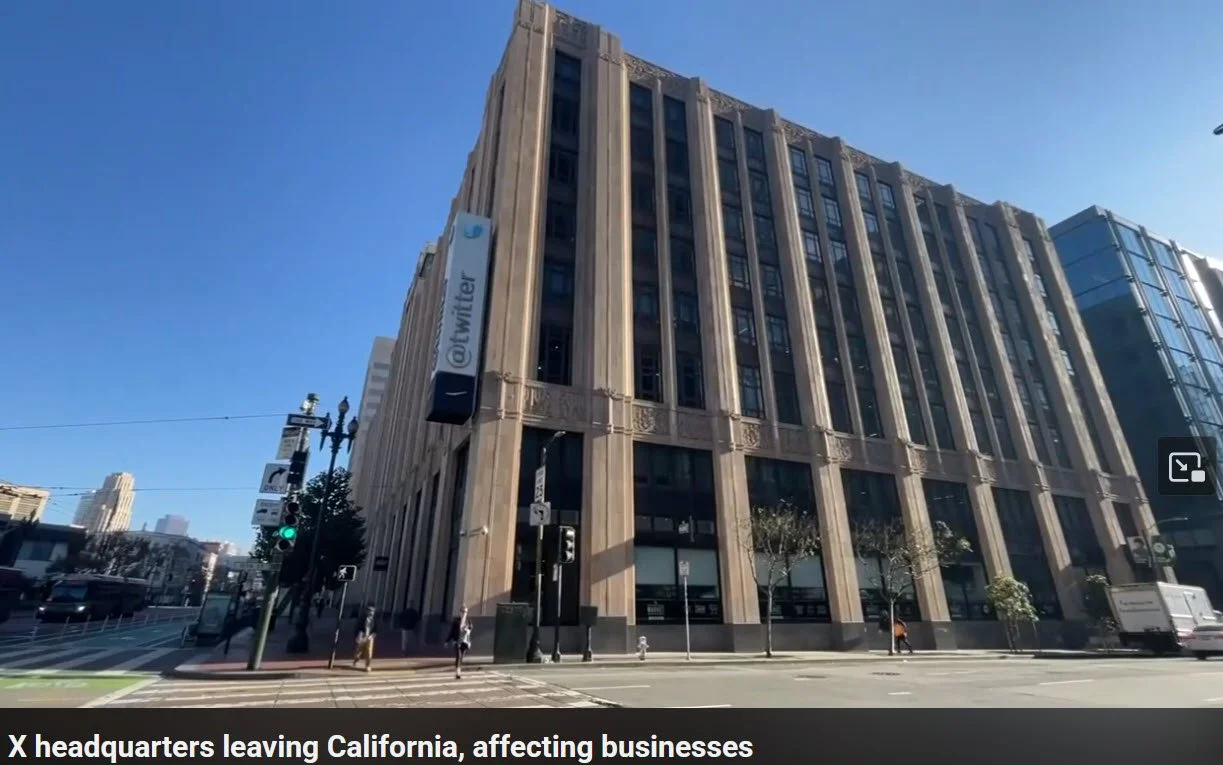
Segment #742
California’s economy is huge estimated at 4 trillion; however, so is their fourth consecutive year of multibillion-dollar deficits, following larger shortfalls addressed in prior years through cuts, reserves, and borrowing. Some economist feel California is in a spiral that with its commitments will be harder and harder to bring trust, stability, and confidence back to state government. Newsom doesn’t have a chance at higher office if the failures rightfully are dropped at his doorstep.
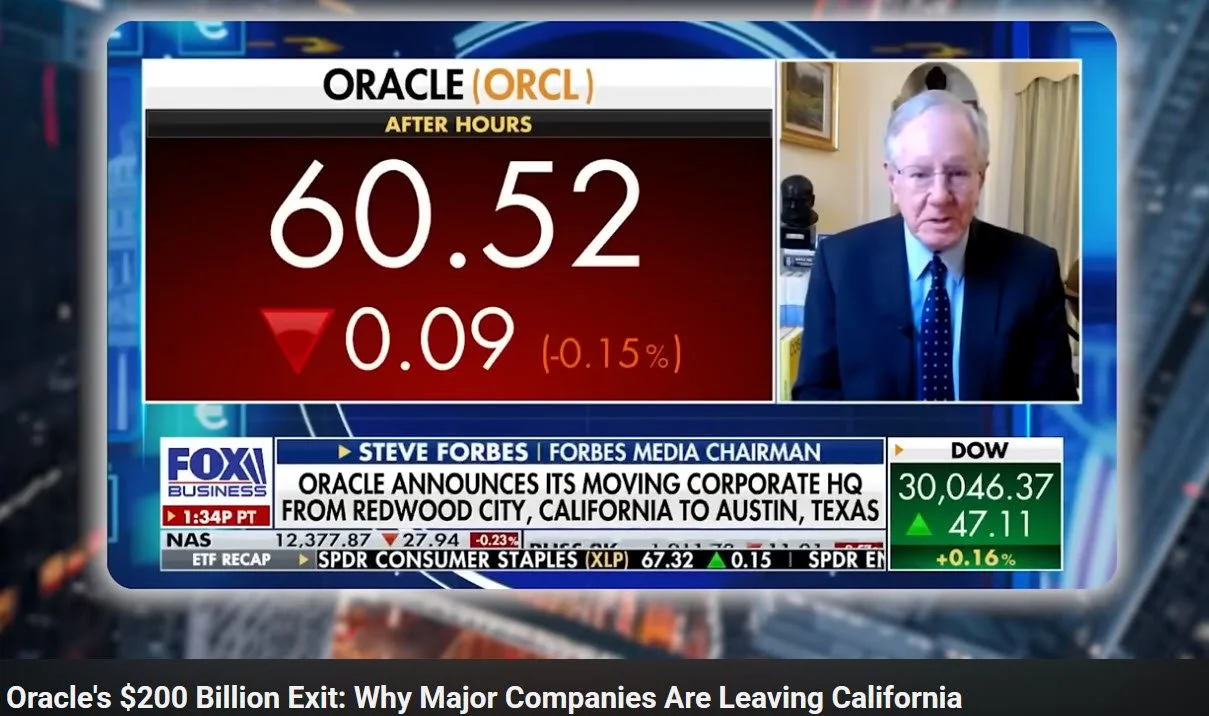
Oracle just abandoned California after 43 years. No press conference. No explanation. Just one sentence buried in an SEC filing on a Friday night. In January 2019, Oracle paid $200 million to put their name on the San Francisco Giants ballpark. A 20-year commitment. 23 months later, they announced they were leaving for Texas. But here's where it gets wild — founder Larry Ellison didn't even follow his own company. He escaped to Lanai, Hawaii, a private island he owns 98% of. No stoplights. Population 3,000. He now runs a $200 billion company over Zoom from paradise. Then Oracle moved AGAIN. Austin wasn't the final destination. Nashville was. Meanwhile, California lost $108 billion in income from the corporate exodus. Downtown San Francisco office vacancy hit 37%. Buildings are selling for 77% below what they were worth. In this video, we break down exactly what happened, why Oracle really left, and what California is losing as companies keep walking out the door.
In the past year (roughly from mid-2024 to early 2026, based on available reports as of January 2026), several notable corporations have announced or completed relocations of their headquarters or significant operations out of California. This continues a longer-term trend often attributed to factors like high taxes, regulations, business costs, and quality-of-life issues, though the overall percentage of companies leaving remains relatively small (around 3% of firms in some 2025 analyses from sources like the Public Policy Institute of California).Here are some of the key high-profile examples from recent announcements and moves:
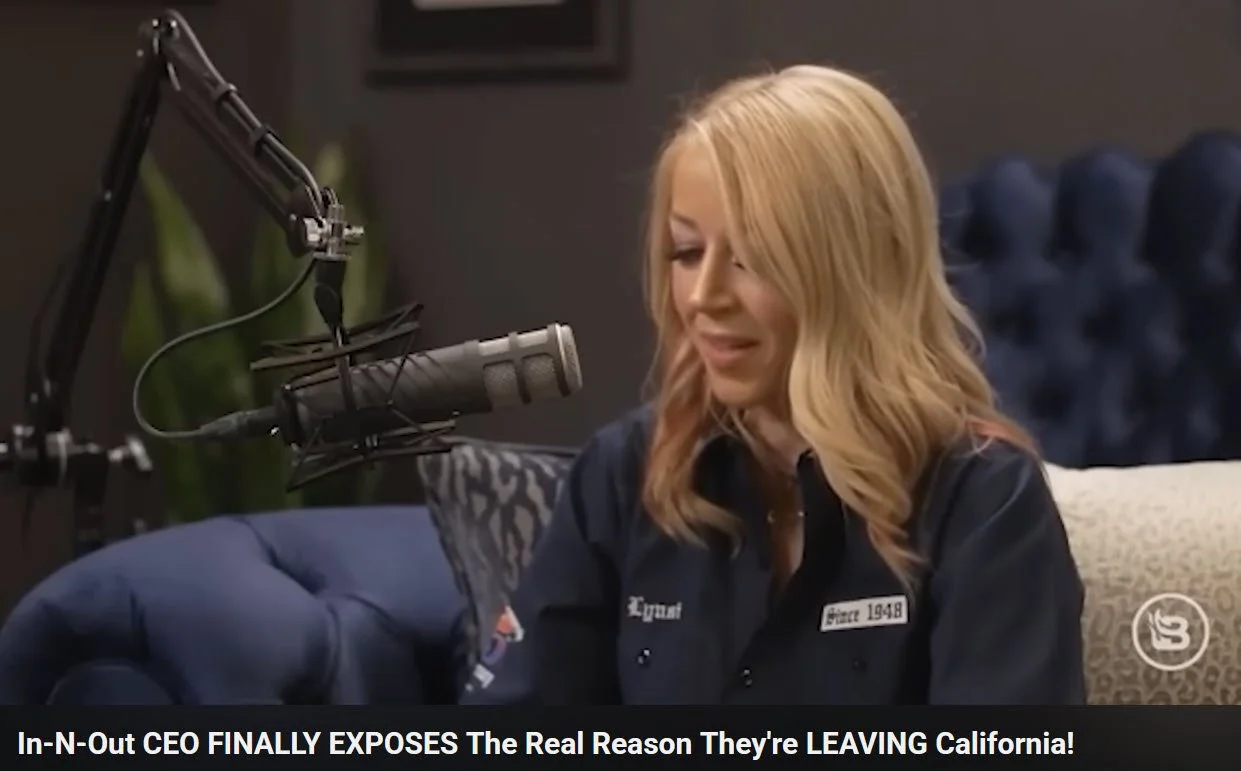
In-N-Out CEO FINALLY EXPOSES The Real Reason They're LEAVING California! California is facing a new wave of scrutiny after In-N-Out CEO Lynsi Snyder finally opens up — revealing the real reasons behind her decision to leave California while continuing to run one of the state’s most iconic home-grown brands. This video breaks down what the CEO actually said in her recent interviews and podcast appearance, the personal and economic factors influencing the move to Tennessee, and why her explanation has reignited a larger debate about California’s cost of living, taxes, regulation, business climate, and the growing relocation trend among executives and business leaders. We examine the key difference between In-N-Out’s headquarters remaining in California — and the company’s leadership choosing to live elsewhere — and how that decision reflects lifestyle pressures, operational realities, and shifting priorities for family-run businesses in today’s economy. As national attention builds and critics question what this moment really signals for California’s economic future, the question isn’t just why the In-N-Out CEO is leaving — but whether her decision exposes a deeper problem that more companies and executives are quietly responding to.
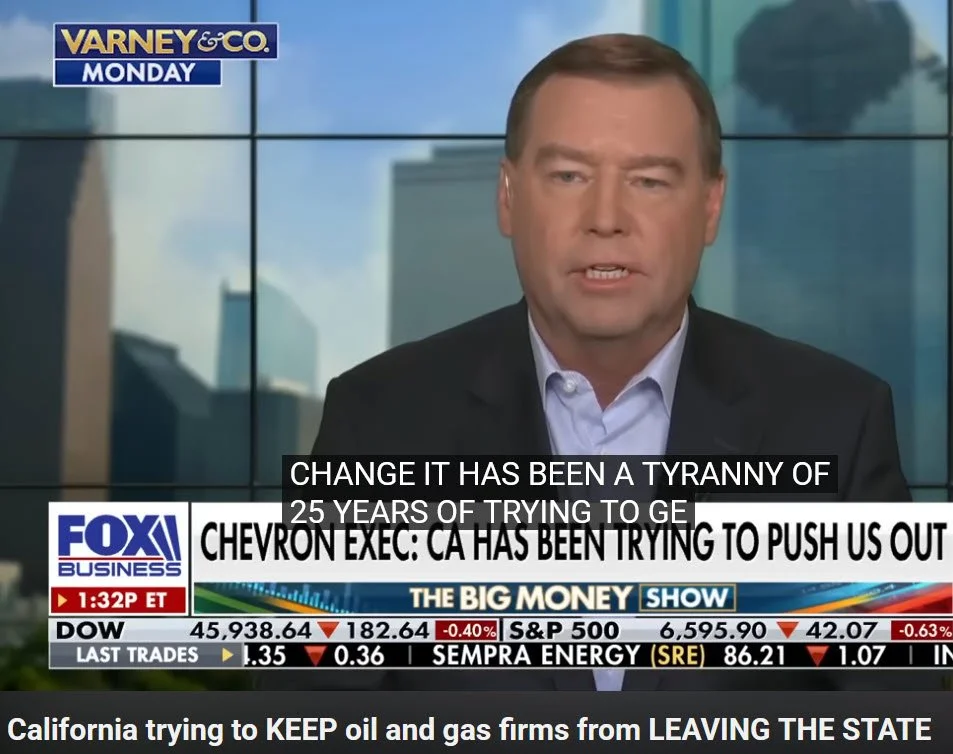
The 'Big Money Show' panel discusses Gov. Gavin Newsom, D-Calif., and his push to stop oil and gas companies from leaving — along with Democratic leadership’s broader impact on the state during the Biden administration.
Chevron — Announced relocation of its corporate headquarters from San Ramon, California, to Houston, Texas (noted in reports from late 2024 into 2025, with ongoing implementation). This has been one of the most discussed due to the company's long history in the state.
In-N-Out Burger — The company's president, Lynsi Snyder, relocated personally and announced plans to consolidate operations and open a regional headquarters in Tennessee (around mid-to-late 2025), citing challenges with family life and business operations in California. The main headquarters remains in California, but this represents a significant shift.
John Paul Mitchell Systems (haircare/beauty company) — Announced in June 2025 that it is moving to Wilmer, Texas.
Realtor.com (operated by News Corp's Move Inc.) — Relocated its headquarters from Santa Clara, California, to Austin, Texas (announced/completed around February 2025), driven by lower costs and access to talent.
California is facing a new supply-chain shock after Leprino Foods — the world’s largest mozzarella cheese producer — announces the closure of its major California plant, raising concerns over local jobs, dairy production, and potential strain on pizza and cheese supply across the state.

A billionaire backlash is brewing among California’s wealthiest residents over a proposed 5% wealth tax, with some warning they could move their businesses and their money out of the state. NewsNation's Ryan Bass has the story.

Governor is in panic mode after Realtor.com announces it's leaving California, marking yet another high-profile corporate departure from the Golden State. In this video, we break down the Governor's response to Realtor.com's exit, why the real estate tech giant is fleeing California, and what this means for the state's economy, tech sector, and housing market. From rising business costs and regulatory pressures to the ongoing corporate exodus, California continues to lose major companies at an alarming rate. If you're a California resident, real estate professional, or investor, this latest departure signals deeper problems for the state's future.
Other mentions in 2025 reports include broader references to ongoing shifts by companies like Playboy (to Miami, Florida, in August 2025) and consolidations or closures affecting brands like Neutrogena (under Kenvue, with operations moving to New Jersey around 2024-2025).Many earlier high-profile exits (e.g., Tesla to Austin in 2021, Oracle to Austin in 2020, Hewlett Packard Enterprise to Houston in 2020, Charles Schwab, Palantir, etc.) are frequently cited in 2025 discussions as part of the continuing "exodus" narrative, but they predate the most recent 12-month window.While these moves make headlines, experts note that California's economy remains massive (over $4 trillion), and many companies retain substantial operations or employees in the state even after relocating headquarters. Destinations like Texas (especially Austin and Houston) and Tennessee have been popular due to lower taxes and regulations.If you're interested in a specific industry or more details on any of these, let me know!
Governor Newsom is panicking as California's supply chain collapses from two converging crises—and 70,000 truckers being forced to flee the state reveals exactly why. This video exposes how Assembly Bill 5 is eliminating independent truckers while simultaneously 473 gas stations closed and major refineries shut down, creating a perfect storm where California can't move goods and can't fuel the trucks that remain. Discover how California's strictest-in-the-nation AB5 law forces owner-operators to become employees or leave entirely, why major carriers like Landstar are telling drivers to relocate out of state before enforcement even begins, and how 473 gas stations closing on January 1st combined with refinery shutdowns means the trucks that do stay have nowhere to fuel. We'll explore the unprecedented trucking industry exodus affecting 40% of America's shipping containers, the simultaneous fuel infrastructure collapse, and why California's well-intentioned worker protection laws have created a self-inflicted supply chain catastrophe that experts warn is only beginning.