Segment #809
Iran is widely viewed by many security analysts as an asymmetric threat, seeking to expand its influence and leverage through indirect means, including support for militant groups and proxy forces operating in different regions. Because these networks can operate across borders, Israeli intelligence gathering and international cooperation are critical for detecting and preventing potential terrorist activity.
Over the past several decades, Israel’s intelligence services have played a significant role in monitoring Iranian activities and those of affiliated militant groups, often sharing information with allies. The United States and Israel maintain close intelligence cooperation, which has contributed to disrupting plots, tracking militant organizations, and countering regional threats. The U.S. would be in serious trouble without Israel’s assistance.
Here is the pragmatic case alone for maintaining close ties with Israel. We need the Middle East. With Iran and without Israel this region will never be stable which ultimately means economic problems for the world. This is the basis of the Trump rationale for taking action.
Threat to the World
Major Terrorist or Militant Groups Funded by Iran
1. Hezbollah (Lebanon)
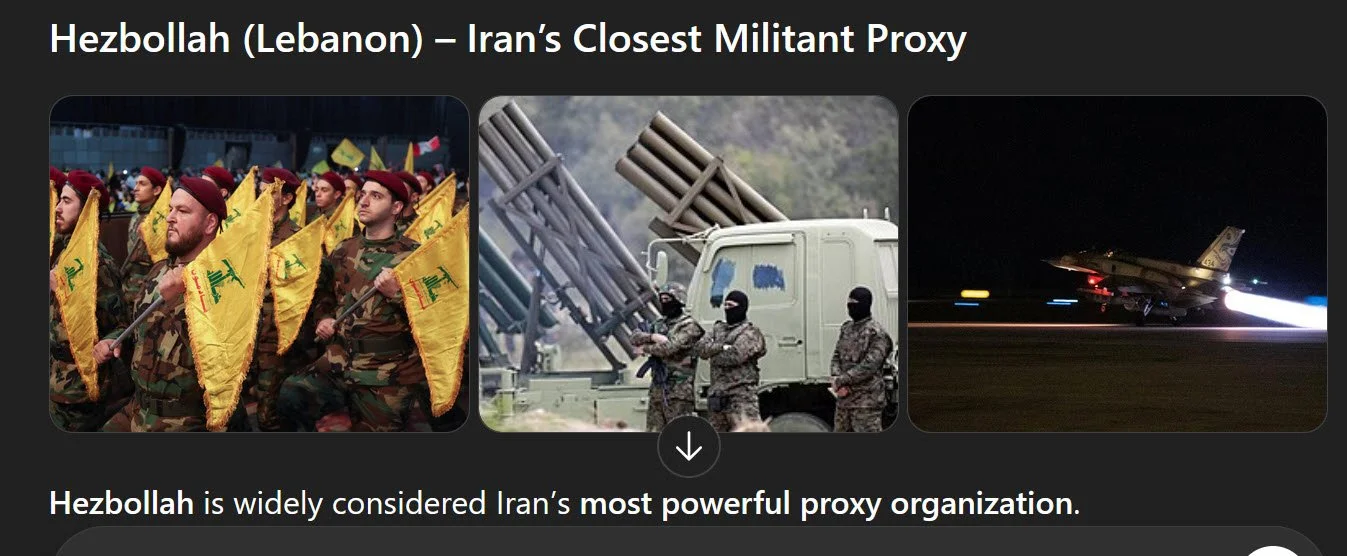
Founded in the 1980s with help from Iran’s Islamic Revolutionary Guard Corps (IRGC).
Receives hundreds of millions of dollars annually from Iran.
Responsible for numerous attacks including the 1994 AMIA bombing in Argentina and rocket attacks on Israel. (IRGC Act)
Designated as a terrorist organization by the U.S., U.K., Canada, and others.
Role: Iran’s most powerful proxy; operates in Lebanon, Syria, Iraq, and internationally.
2. Hamas (Gaza / Palestinian Territories)
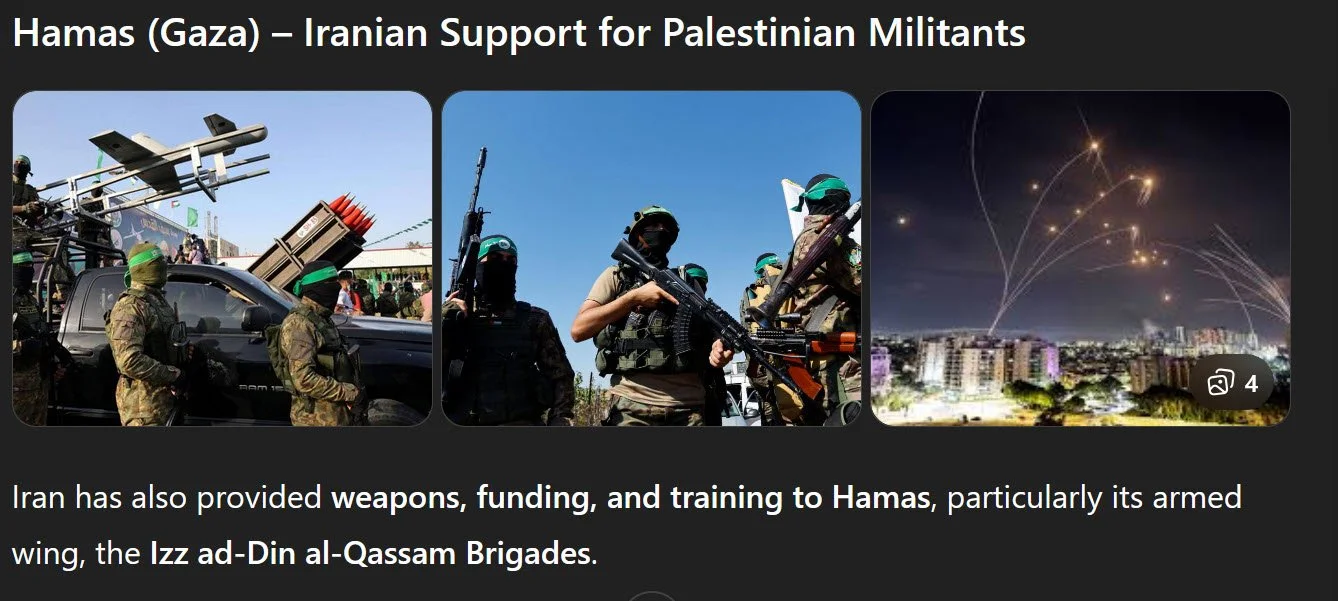
Iran has funded and armed Hamas since the early 1990s.
Support has included weapons, money, and training for militants. (IRGC Act)
Role: Palestinian Islamist militant organization fighting Israel.
3. Palestinian Islamic Jihad (PIJ)
Iran has funded and armed PIJ since the late 1980s.
The group carries out attacks against Israel and is designated as a terrorist organization by the U.S. and others. (Wilson Center)
Role: Militant organization operating mainly in Gaza.
4. Houthi Movement (Ansar Allah) – Yemen
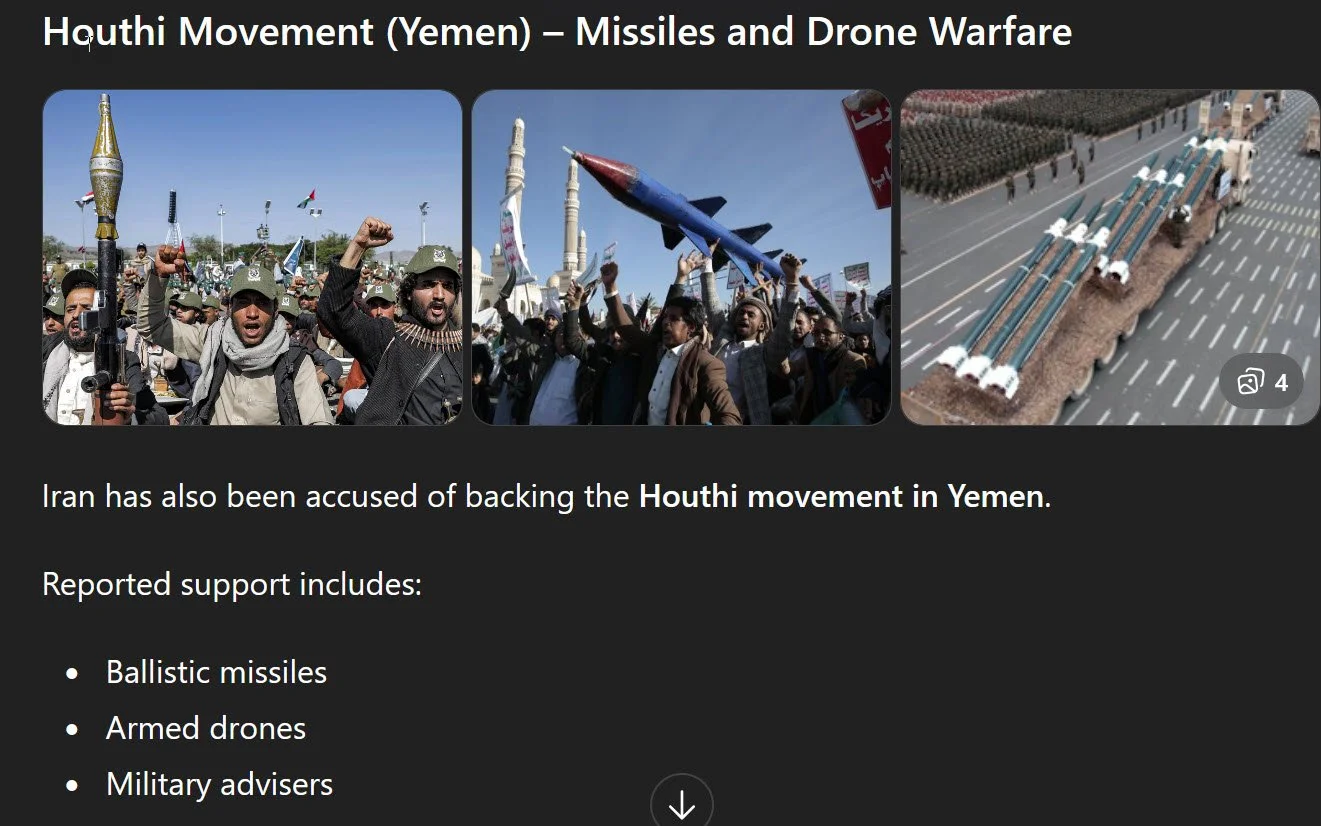
Iran supplies weapons, drones, and missiles to the Houthis.
The group has attacked Saudi Arabia and shipping in the Red Sea. (IRGC Act)
Role: Iranian-aligned militia in Yemen’s civil war.
Iran-Backed Militias in Iraq
These groups have attacked U.S. forces and regional targets and are widely described as Iran-backed proxies.
5. Kata'ib Hezbollah
Responsible for attacks on U.S. and coalition forces in Iraq.
Receives funding, training, and weapons from Iran’s Quds Force. (Wikipedia)
6. Asa'ib Ahl al-Haq
Conducted thousands of attacks against U.S. forces in Iraq.
Supported and trained by Iran’s IRGC. (Wikipedia)
7. Harakat al-Nujaba
Iraqi militia aligned with Iran and active in Iraq and Syria.
Designated as a terrorist organization by the United States. (Reuters)
8. Kata’ib Sayyid al-Shuhada
9. Harakat Ansar Allah al-Awfiya
10. Kata’ib al-Imam Ali
Iran-aligned Iraqi militias also designated as terrorist organizations by the U.S. in 2025. (Reuters)
Other Smaller Iran-Linked Terror Groups
11. Al-Ashtar Brigades (Bahrain)
Shia militant group tied to Iran’s IRGC.
Designated terrorist organization by several governments including the U.S. and U.K. (Wikipedia)
12. Waad Allah Brigades (Bahrain)
Pro-Iran militant group that has claimed attacks in Bahrain. (Wikipedia)
Iran’s Own Organization Involved in Supporting Them
Islamic Revolutionary Guard Corps – Quds Force
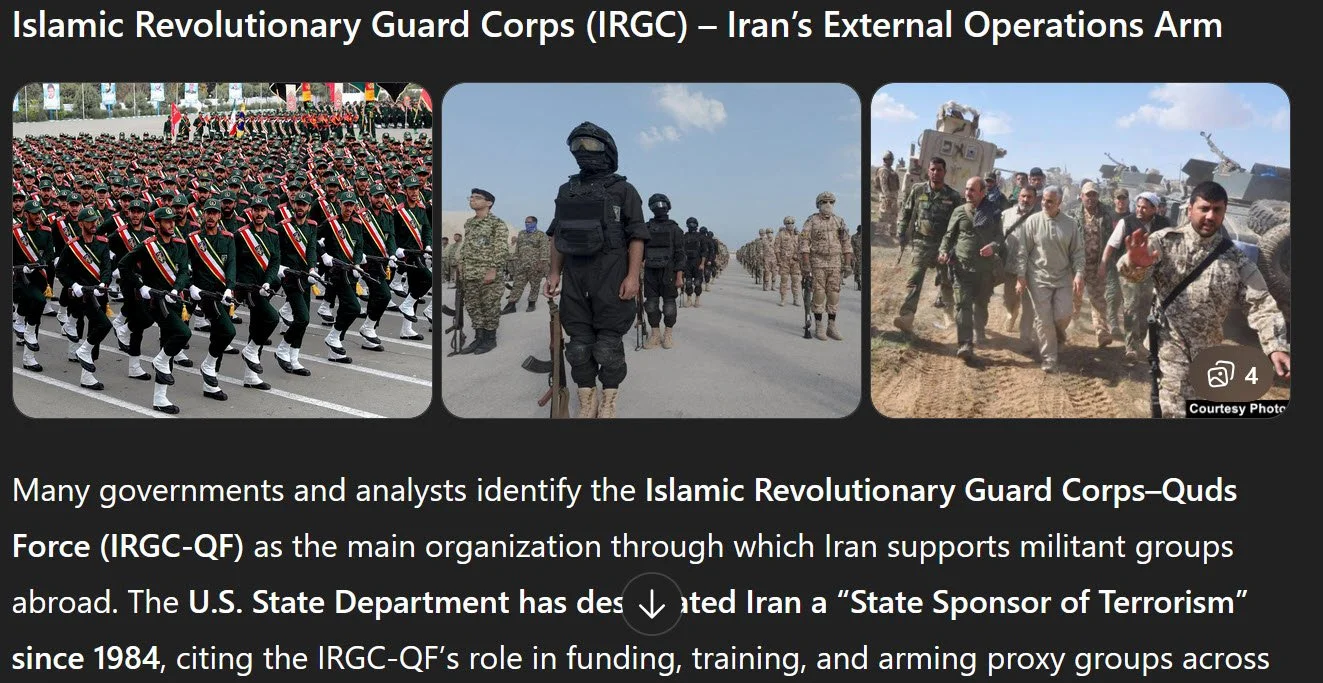
Iran’s military branch responsible for training, funding, and coordinating foreign militant groups.
Designated as a terrorist organization by the United States and some other countries.
✅ Summary:
The groups most commonly cited by governments and researchers as being funded or supported by Iran include:
Hezbollah
Hamas
Palestinian Islamic Jihad
Houthis (Ansar Allah)
Kata'ib Hezbollah
Asa'ib Ahl al-Haq
Harakat al-Nujaba
Kata’ib Sayyid al-Shuhada
Kata’ib al-Imam Ali
Harakat Ansar Allah al-Awfiya
Al-Ashtar Brigades
Waad Allah Brigades
✔️ Important context:
Iran denies sponsoring terrorism and says it supports “resistance movements.”
Western governments—especially the U.S.—consider Iran the world’s leading state sponsor of terrorism because of its financial and military backing for these groups.
Many governments and intelligence agencies say Iran is the leading sponsor
The U.S. State Department has consistently labeled Iran “the world’s leading state sponsor of terrorism” since 1984 in its annual Country Reports on Terrorism.
These reports cite Iran’s support for groups such as:
Hezbollah
Hamas
Palestinian Islamic Jihad
Iraqi Shiite militias
the Houthis in Yemen
and describe the support as financial aid, weapons, training, and operational guidance.
Because of the scale and longevity of this network, many analysts consider Iran the most active state sponsor of militant groups worldwide.
2. Estimates of Iran’s funding are very large
Exact numbers vary, but widely cited estimates include:
~$700 million per year to Hezbollah alone.
Up to ~$350 million per year to Hamas in some years.
Hundreds of millions annually to several Palestinian groups combined.
Around $1 billion per year total for supporting militant groups according to some U.S. estimates.
These figures do not include broader spending on the Iranian Quds Force, which coordinates and trains proxy forces across the region.
Specific terrorist attacks sponsored by Iran
Several terrorist attacks around the world have been attributed by investigators, courts, or intelligence agencies to Iranian-backed groups—most often linked to the Islamic Revolutionary Guard Corps – Quds Force or its proxies such as Hezbollah. Evidence ranges from criminal convictions and international arrest warrants to intelligence assessments. Below are some of the most widely documented cases.
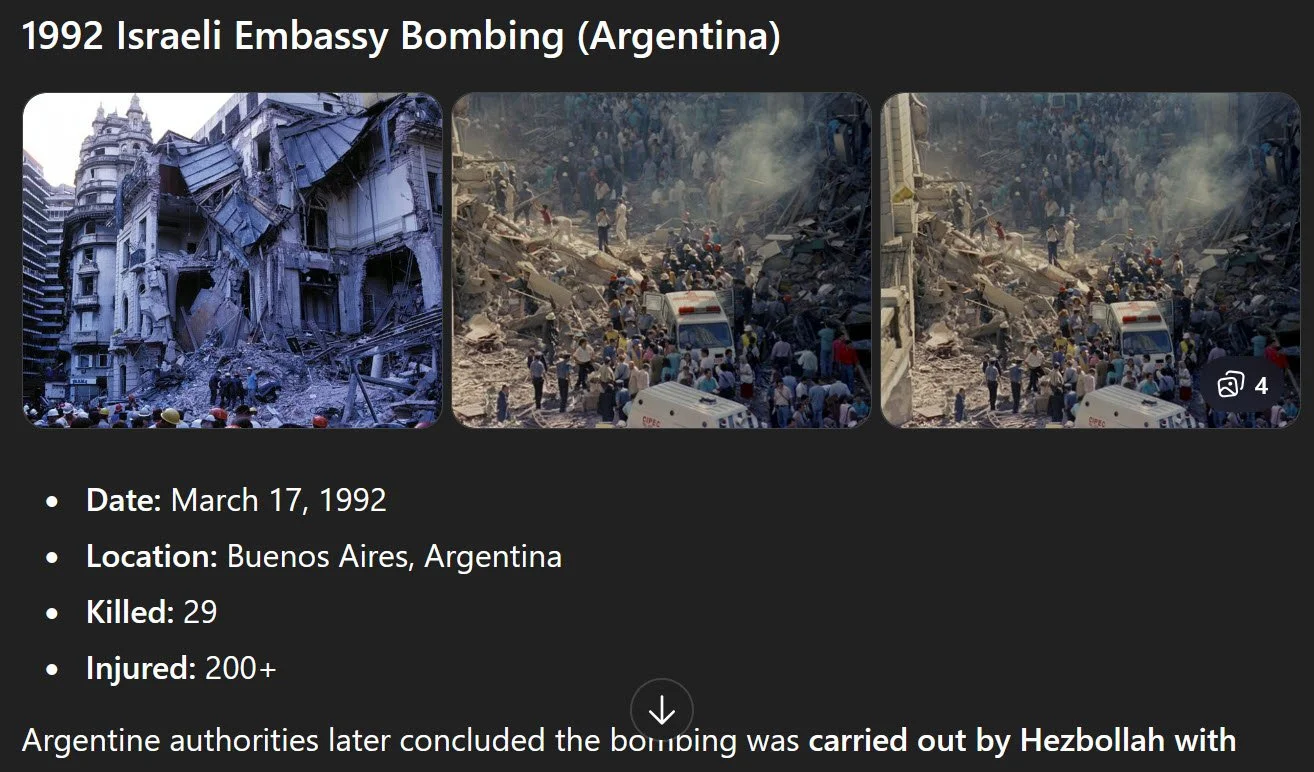
1992 Israeli Embassy Bombing – Buenos Aires
Location: Buenos Aires, Argentina
Date: March 17, 1992
Deaths: 29
Injured: 200+
Findings:
Argentine and Israeli investigators concluded the bombing was carried out by Hezbollah with support from Iranian officials.
Argentina later issued arrest warrants for several Iranian figures tied to the planning of the attack.
1994 AMIA Jewish Community Center Bombing
Location: Buenos Aires, Argentina
Date: July 18, 1994
Deaths: 85
Injured: 300+
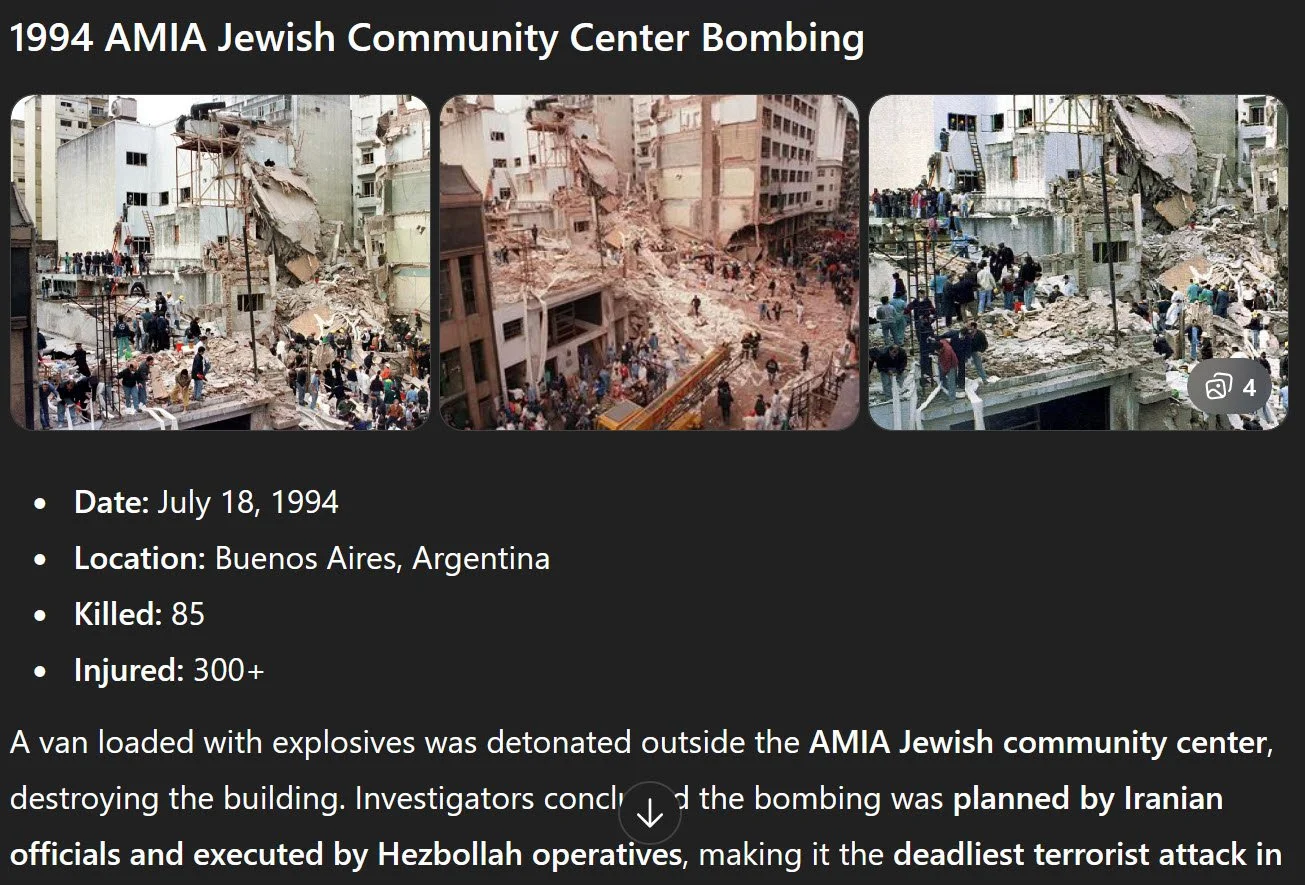
Findings:
Argentine prosecutors concluded the attack was organized by senior Iranian officials and carried out by Hezbollah.
In 2007, Interpol issued “red notices” for several Iranian suspects.
2012 Burgas Bus Bombing
Location: Burgas, Bulgaria
Date: July 18, 2012
Deaths: 6 (including the bomber)
Findings:
Bulgarian investigators concluded the bombing was carried out by operatives of Hezbollah.
The attack led the European Union to designate Hezbollah’s military wing as a terrorist organization.
1983 Beirut Barracks Bombings
Location: Beirut, Lebanon
Date: October 23, 1983
Deaths: 299 (241 U.S. Marines and 58 French soldiers)
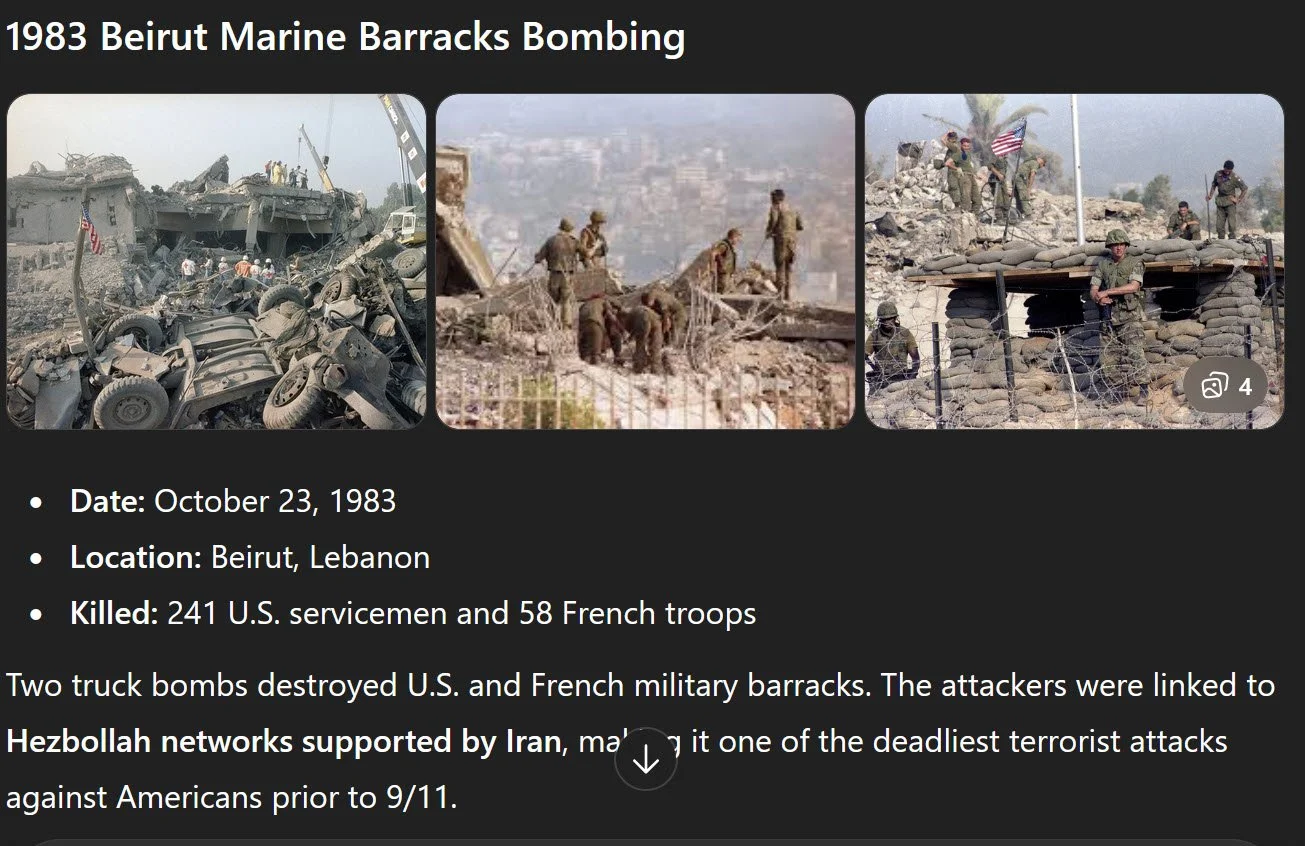
Findings:
U.S. courts later ruled Iran and Hezbollah responsible, concluding that Iran helped plan and support the operation.
1996 Khobar Towers Bombing
Location: Dhahran, Saudi Arabia
Date: June 25, 1996
Deaths: 19 U.S. service members
Findings:
The Federal Bureau of Investigation concluded the bombing was carried out by Hezbollah Al-Hejaz, a Saudi militant group linked to Iran.
Attacks by Iran-backed militias in Iraq
Several Iran-aligned groups—including Kata'ib Hezbollah and Asa'ib Ahl al-Haq—have conducted rocket, missile, and drone attacks on U.S. and coalition forces since the Iraq War.
These attacks have killed dozens of soldiers and contractors over the years.
✅ Key takeaway:
Investigations, court rulings, and intelligence findings have linked multiple major terrorist attacks on four continents to Iranian-backed groups—especially Hezbollah and militias coordinated by the Islamic Revolutionary Guard Corps – Quds Force.
However, Iran denies direct involvement, saying it supports legitimate “resistance movements.”
If you'd like, I can also show you how Iran built the largest proxy militia network in the world across about 7 countries—and why intelligence analysts often compare it to a “shadow alliance” rather than isolated terrorist groups.
Specific Threat to the U.S.
Analysts and intelligence agencies usually compare threats to the United States along two dimensions:
Existential threat – ability to destroy or fundamentally defeat the U.S. (nuclear war, global war).
Operational threat – how often the actor actually attacks U.S. forces, citizens, or interests.
When viewed over the last ~50 years, the countries and groups you mentioned fall into very different categories of threat.
Iran has funded, armed, or trained a network of militant groups—often called its “proxy network” or “Axis of Resistance.” Not every group is designated as a terrorist organization everywhere, but many are listed as terrorist groups by the United States, the EU, or other governments. Below are some of the most widely documented groups Iran has funded or materially supported. Over the past 45–50 years, the threat Iran has posed to the United States has included:
hostage-taking
terrorist attacks by proxies
attacks on U.S. troops and bases
naval confrontations
missile strikes
assassination plots
How Iran’s Threat Compares With Other Major Adversaries
A Simplified Comparison (Analysts’ Typical View)
China
Global strategic rival Long-term systemic threat
Russia
Nuclear superpower Highest military escalation risk
Iran
Proxy warfare Most frequent attacks on U.S. forces
North Korea
Nuclear rogue state Regional nuclear threat
ISIS
Terrorist organization Highest terrorism threat
Intel Against Iran
Israel has carried out numerous covert intelligence operations (“coups,” sabotage campaigns, assassinations, and cyberattacks) against Iran over the past two decades as part of the long-running Israel–Iran shadow war. Many of these operations are attributed to Israel’s intelligence agency Mossad and sometimes involved cooperation with the Central Intelligence Agency or the Israeli military. Many historians and intelligence analysts consider Mossad one of the most effective intelligence agencies in the world. That reputation comes from a combination of high-risk operations, global reach, rapid decision-making, and a record of successful missions since the founding of the state of Israel in 1948.
Below are some of the most widely documented operations confirmed or strongly reported by investigators, journalists, or officials.
Major Documented Israeli Intelligence Operations Against Iran
1. The Stuxnet Cyberattack (Operation Olympic Games) – 2006–2010
Conducted by the U.S. and Israel against Iran’s nuclear program.
A cyberweapon called Stuxnet infected industrial control systems at Iran’s Natanz uranium enrichment facility.
The malware caused centrifuges to spin out of control while reporting normal readings to operators.
Impact:
Destroyed roughly 1,000 centrifuges and significantly slowed Iran’s nuclear program.
This operation is widely considered the first major cyberweapon used against physical infrastructure.
2. Assassinations of 4 Iranian Nuclear Scientists – 2010–2012
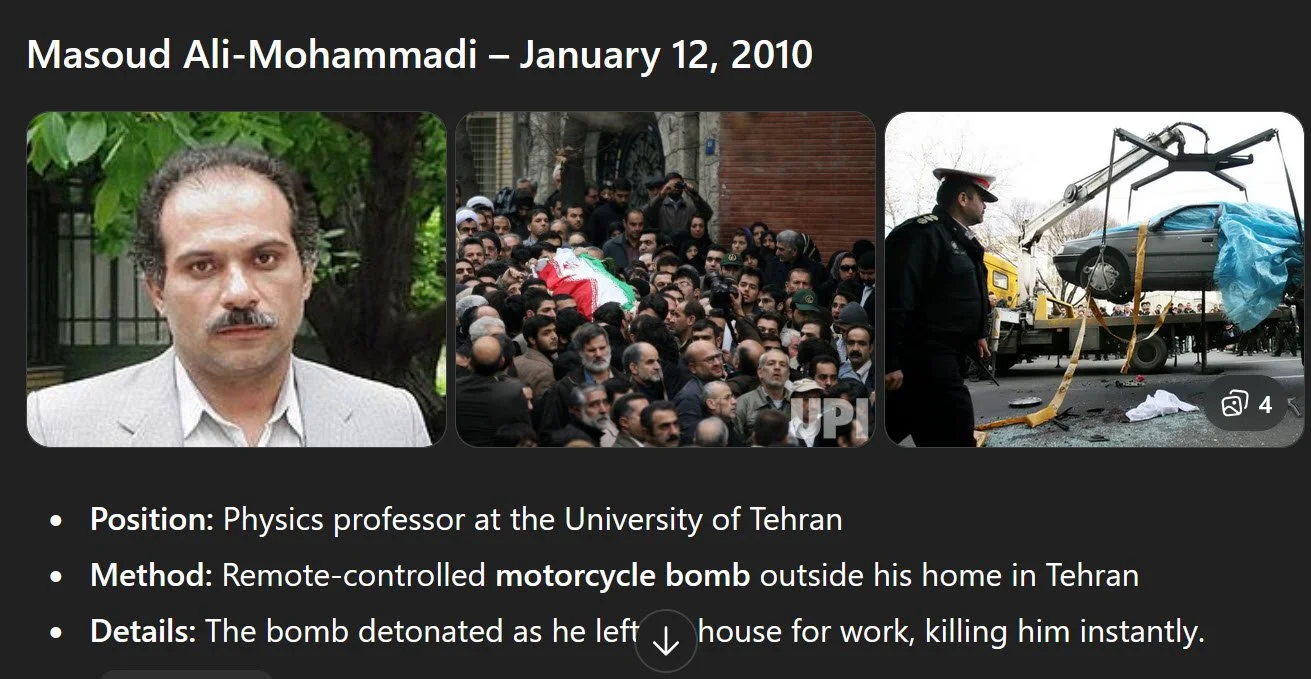
Several Iranian nuclear scientists were assassinated in Tehran in operations widely attributed to Mossad.
Scientists killed included:
Masoud Alimohammadi (2010) – bomb outside his home
Majid Shahriari (2010) – car bomb
Mostafa Ahmadi Roshan (2012) – motorcycle-mounted magnet bomb
Tactics often involved:
Motorcyclists attaching magnetic bombs to vehicles
Remote detonations in Tehran traffic
Purpose:
Slow Iran’s nuclear weapons research and intimidate scientists working on it.
3. Mossad Theft of Iran’s Nuclear Archive – 2018
4
One of the boldest intelligence heists in modern history.
What happened:
Mossad agents infiltrated a secret warehouse in Tehran’s Shorabad district.
They broke into safes using cutting torches and removed 100,000 documents and files.
The materials allegedly revealed details of Iran’s earlier nuclear weapons program (Project AMAD).
The intelligence was later presented publicly by Benjamin Netanyahu and shared with Western governments.
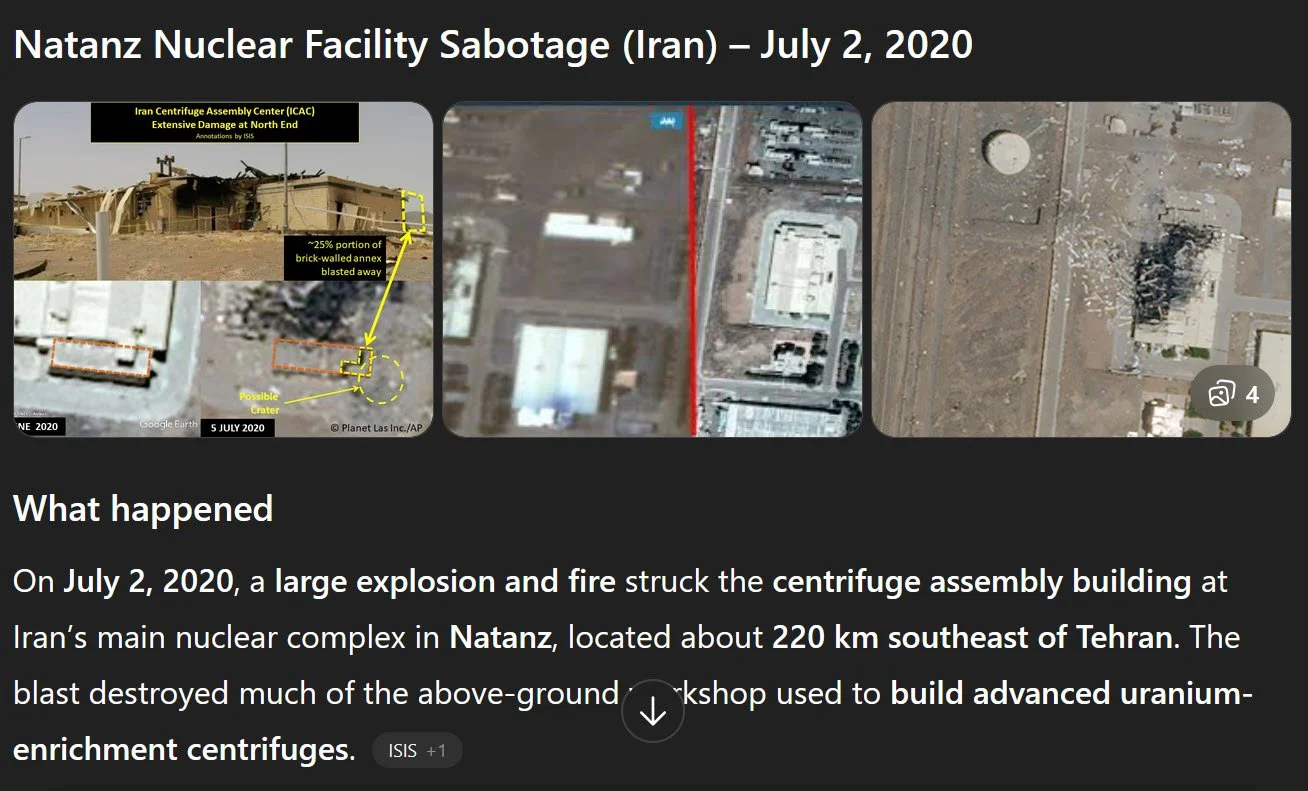
4. Sabotage of Iranian Nuclear Facilities (Natanz) – 2020–2021
A series of explosions and sabotage operations damaged Iran’s nuclear infrastructure.
Key events:
July 2020 explosion destroyed a centrifuge assembly facility at Natanz.
April 2021 sabotage damaged power systems at the enrichment plant.
Western intelligence sources widely attributed these incidents to Israeli covert action, reportedly involving explosives smuggled into the facility.
Impact:
Iran said thousands of centrifuges were affected or destroyed.
5. Assassination of Nuclear Program Chief Mohsen Fakhrizadeh – 2020
4
Mohsen Fakhrizadeh, widely considered the architect of Iran’s nuclear weapons research, was assassinated near Tehran.
Details reported by investigators:
Attack involved remote-controlled or AI-assisted weapon systems mounted on a vehicle.
Iranian authorities blamed Israel and said the attack was highly sophisticated.
The killing significantly disrupted leadership of Iran’s nuclear program.
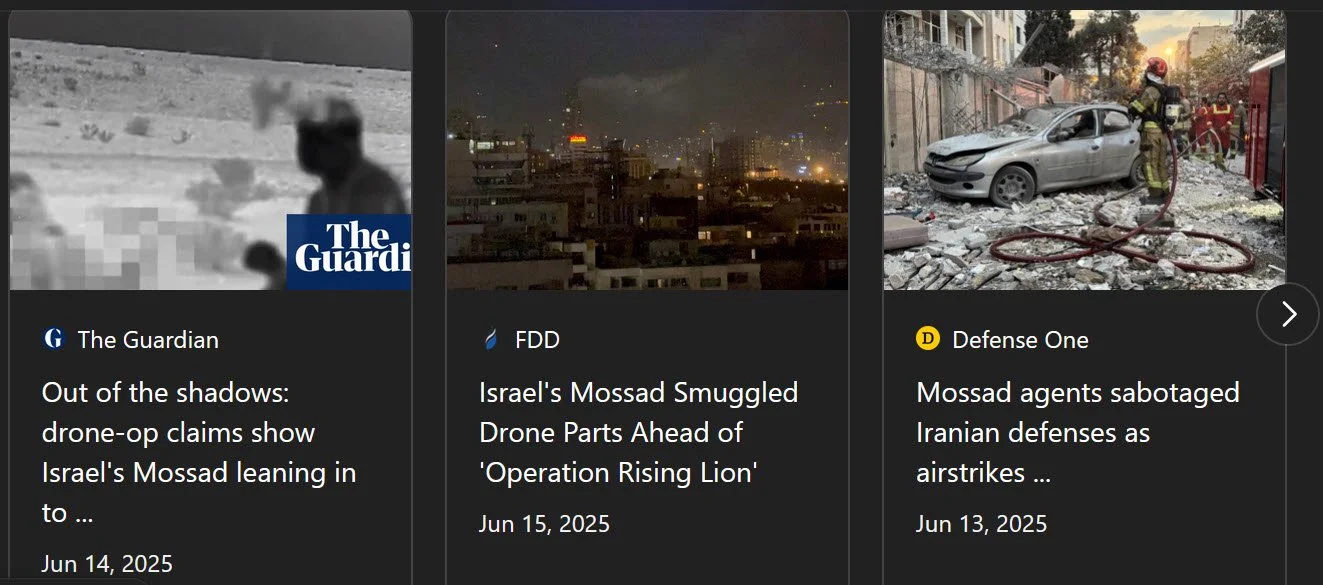
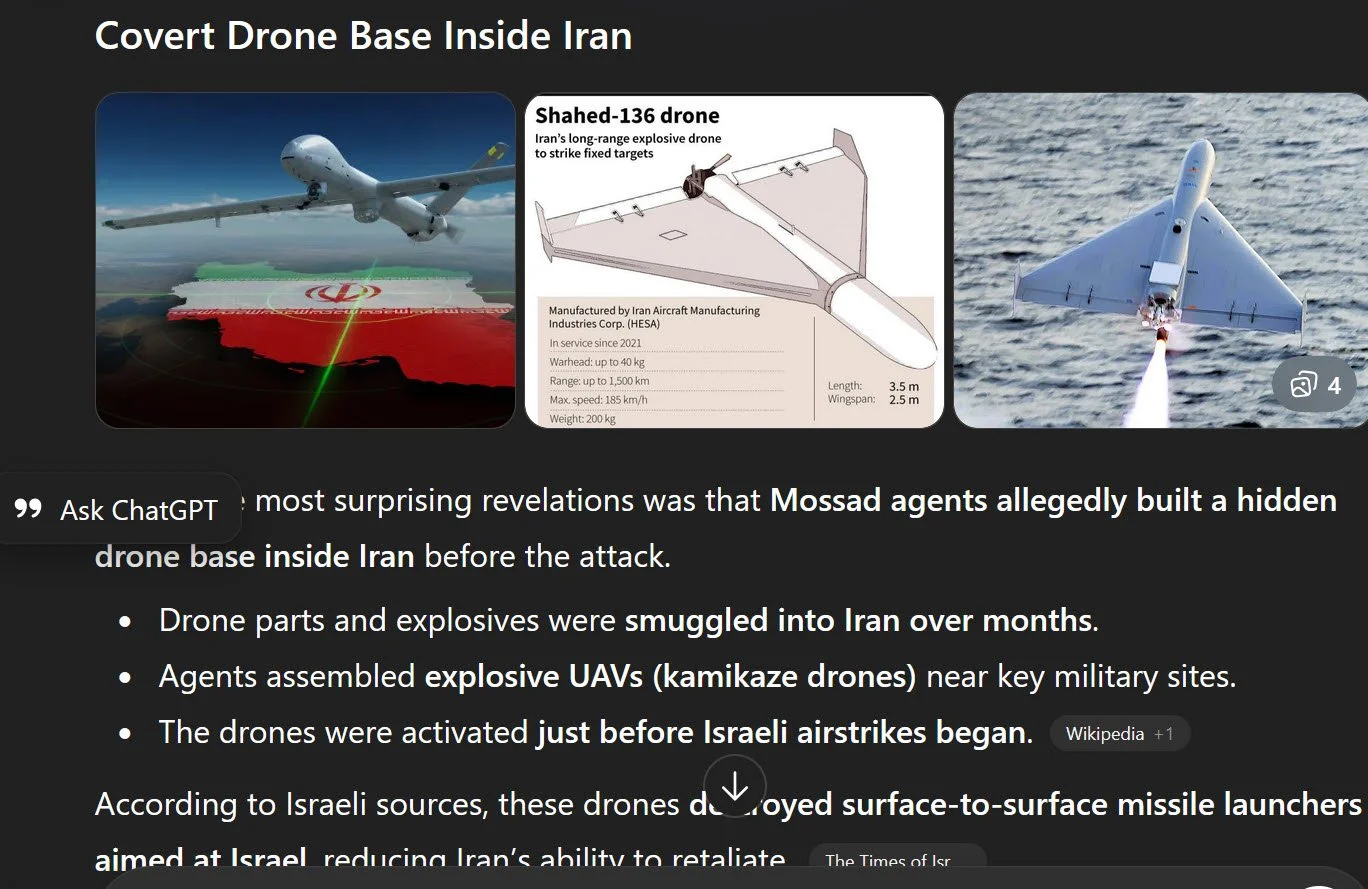
6. Mossad Drone and Sabotage Operations Inside Iran – 2025
In June 2025, Israel carried out one of the most complex covert operations ever attributed to the Mossad. The campaign—often associated with Operation Rising Lion—combined covert sabotage inside Iran, drone strikes, and large-scale Israeli air attacks on nuclear and missile infrastructure.