
Illegal Migration is Destroying the West
Segment #992
The West Cannot Survive Illegal Immigration
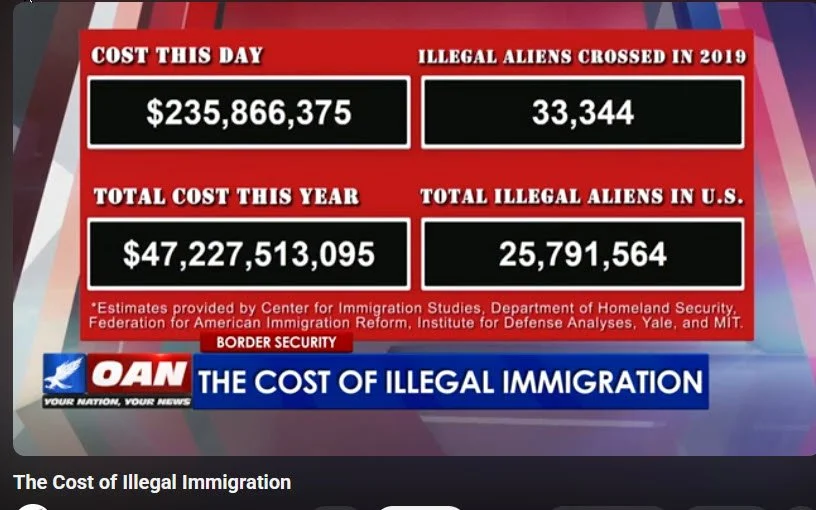
2019 - As Democrats in Congress refuse to secure the US southern border, the cost of illegal immigration continues to mount. The United States spends over $268 billion dollars a year supporting illegal aliens. That money covers expenses such as healthcare, education, childcare, the justice system, and welfare—forcing US taxpayers to shell out $734 million dollars every single day. President Trump is requesting $5.7 billion dollars to build a border wall. Meanwhile, since January first, we’ve already spent far more than that paying for aliens who are here illegally. These numbers are based off estimates from the Center for Immigration Studies, Federation for Immigration Reform, Institute for Defense Analyses, and the Department for Homeland Security. These are the most exact estimates from official Border Patrol reports, as well as crime stats and census reports. One America News will continue share these numbers daily to show just how much illegal immigration costs American citizens every second.
The Border Crisis at Ceuta
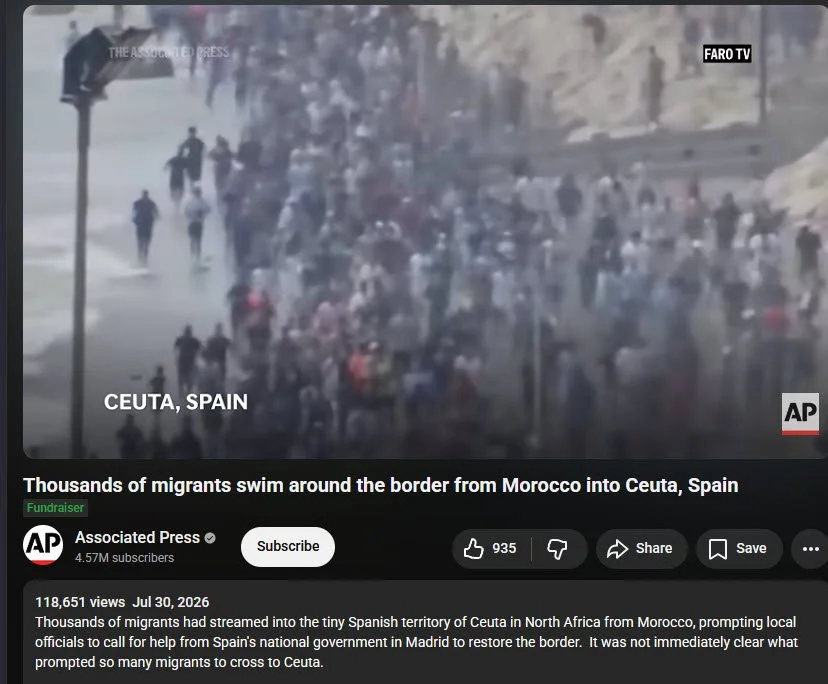
In late July 2026, Spain experienced a massive border incident at Ceuta, a Spanish autonomous city and European Union enclave located on the North African coast bordering Morocco. Tens of thousands of migrants attempted to cross into Spanish territory—primarily by swimming around coastal breakwaters or scaling border barriers.
Spanish authorities deployed armed forces alongside the Civil Guard and national police to secure the border, assist in maritime rescues, and execute pushbacks and returns under bilateral agreements with Morocco.
The EU Response and Schengen Status
Expulsion from the EU: The European Union is not considering "kicking Spain out of the EU". The EU treaties contain no legal mechanism to expel a member state from the union.
Schengen Area Debates: Following the influx, politicians from several EU member states (including Italy, Denmark, and Finland) called for temporary measures, such as suspending Spain from the border-free Schengen Area or re-imposing internal EU border checks. Critics have pointed to concerns over external border security and domestic policies, such as Spain's proposed migrant regularization initiatives. However, legal experts note that outright suspension of a member state from Schengen is not provided for under current EU treaties.
Comparison to Eagle Pass, Texas
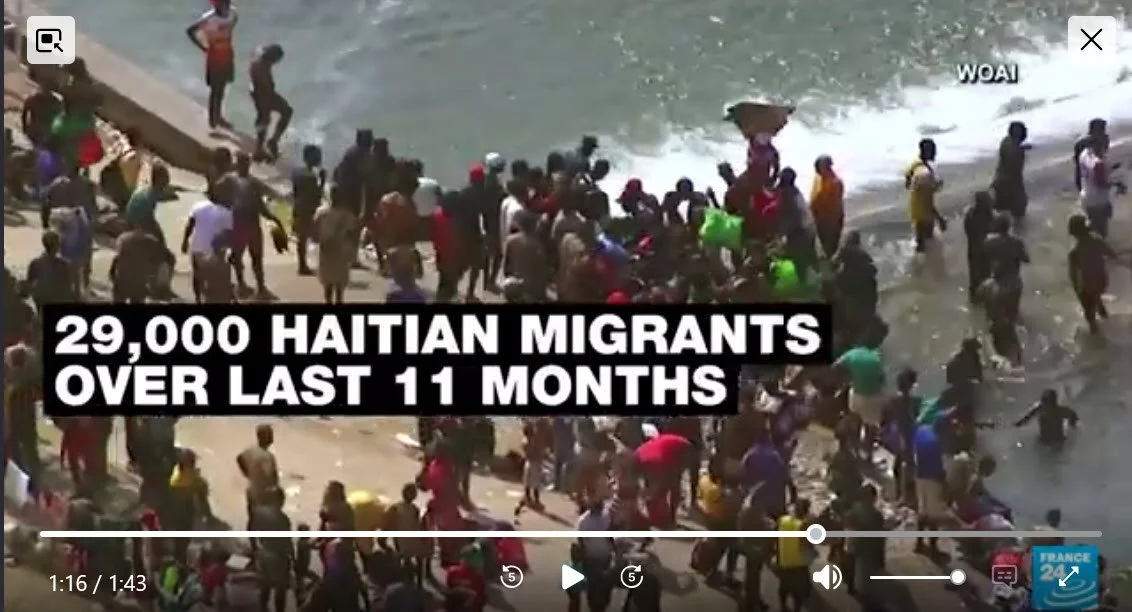
The visual dynamics—dense crowds at perimeter fences, mass river or ocean crossings, and military troop deployments—share strong visual similarities with high-profile border surges seen along the U.S.–Mexico border (such as Eagle Pass, Texas).
However, the geographic and operational contexts differ:
Ceuta is a small, 7-square-mile European enclave surrounded by Morocco and the Mediterranean Sea.
Eagle PassEagle Pass (Del Rio Sector): Eagle Pass became the central epicenter of the surge. In December 2023 alone, the Del Rio sector recorded over 71,000 encounters—with single-day crossings in Eagle Pass topping 4,000 to 5,000 migrants, temporarily overwhelming local processing infrastructure and causing the suspension of international railway bridge operations.
Impact of Illegal Migration
Here is the text revised with direct, active phrasing, removing bureaucratic soft-pedaling and focusing strictly on the direct financial, institutional, and structural strain:
Direct Fiscal and Societal Breakdown (U.S. & EU)
Unchecked, high-volume illegal migration inflicts immediate, compounding operational and financial strain on public infrastructure across the United States and the European Union.
If the Dems return to power in 2026 and 2028 - the misery of an open border will return and your way of life is over
Municipal Budgets & Social Welfare Siphon
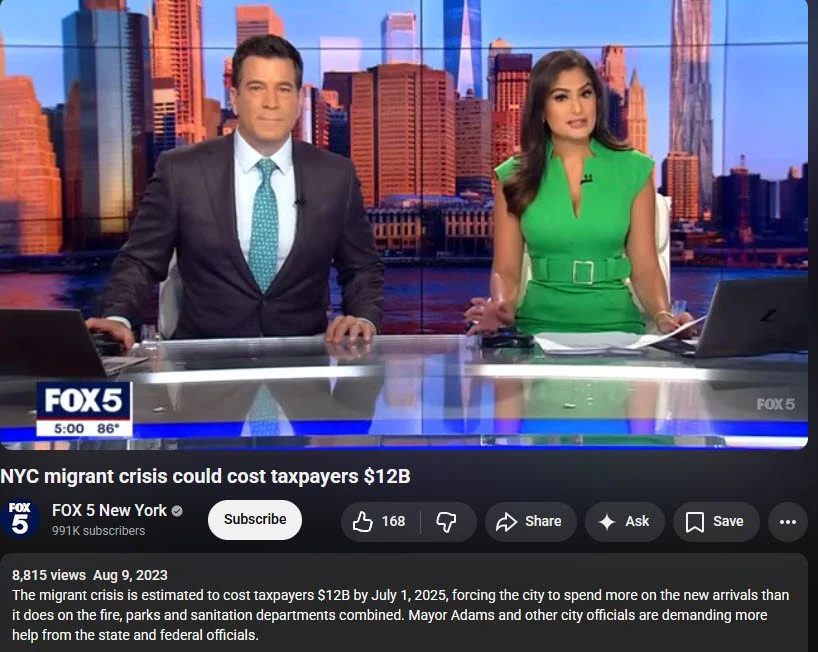
City Budget Solvency: Major U.S. destination cities (New York, Chicago, Denver) were forced to divert billions in municipal funds away from taxpaying residents to pay for emergency migrant shelter, food, prepaid debit cards, and legal services. New York City alone spent over $8 billion across several fiscal years on the migrant response, triggering forced budget cuts across critical public safety, sanitation, and parks departments.
EU Safety Net Depletion: EU frontline and destination countries (Germany, Italy, Spain) repeatedly stretched national emergency relief funds to capacity, burning through billions in social welfare budgets to provide long-term stipends, housing, and intake processing.
Healthcare System Overload
Uncompensated Emergency ER Costs: Under federal law (EMTALA), U.S. safety-net hospitals are legally obligated to provide free emergency medical care to anyone regardless of legal status. Major public health networks (such as Parkland in Dallas and Denver Health) absorbed tens of millions of dollars in uncompensated care, forcing immediate cuts to elective surgeries, non-emergency care, and local community health programs.
EU Medical Bottlenecks: Universal public healthcare systems across Southern and Central Europe faced severe backlogs, pushing public emergency rooms and community clinics past physical capacity for routine care and intake screenings.
Education System Disruption
Unfunded District Costs: Local school districts faced severe operational strain from mid-year surges of non-English-speaking students. School systems were forced to scramble local funds to hire specialized ESL teachers, translators, and remedial aides without receiving timely state or federal revenue adjustments.
Classroom Overcrowding: Rapid influxes forced cities to expand class sizes, overburden existing teaching staff, and reallocate critical funding away from standard academic programs and local student resources.
Housing Scarcity & Neighborhood Quality of Life
Entry-Level Housing Compression: Mass arrivals directly intensified competition for limited low-income rental units, driving up entry-level rents and pricing out working-class residents.
Public Encampments & Safety: Delays and capacity limits in local shelter networks resulted in widespread encampments taking over public parks, sidewalk corridors, airports, and police station lobbies in major cities, compromising local public safety and sanitation.
Labor Distortion & Wage Suppression
Sub-Market Wage Undercutting: Millions of unauthorized workers entering the shadow economy created immediate downward pressure on entry-level wages in construction, hospitality, agriculture, and services. This unmonitored labor pool undercuts wage standards for entry-level citizen workers while draining state and federal tax revenues through off-the-books employment.
Public Safety & Criminal Network Expansion
Cartel & Gang Proliferation: Transnational criminal enterprises—including Mexican drug cartels and international gangs like Venezuela's Tren de Aragua—directly exploited mass border surges to scale human trafficking networks, flood urban centers with illicit drugs like fentanyl, and set up organized crime rings in major cities.
Law Enforcement Diversion: Border states and municipalities were forced to divert billions of dollars and thousands of local police officers away from routine neighborhood patrols to execute specialized border interdiction operations (e.g., Texas's multi-billion-dollar Operation Lone Star).
To see a direct broadcast detailing how municipal budgets and city services were forced to adjust to these costs, check out this report on the NYC migrant crisis budget impact. It covers the financial strain placed on local infrastructure and city agencies when emergency shelter costs escalated.