Hey, I’m an Expert
Segment #792
We are constantly bombarded by self-appointed experts eager to lecture us on everything from politics to public health. It doesn't take long to realize their 'expertise' is a thin veneer for a lack of substance. Today’s 'standard of care' isn't about excellence; it’s a biased, defensive system designed to protect institutions from the accountability they owe the public. We have a name for this phenomena with the understanding that some experts are just evil and possess both the intelligence and the commitment to literally do anything for money and power. It would be unfair to this latter group to credit most of the “fake experts” to actually have talent.
Dunning-Kruger effect
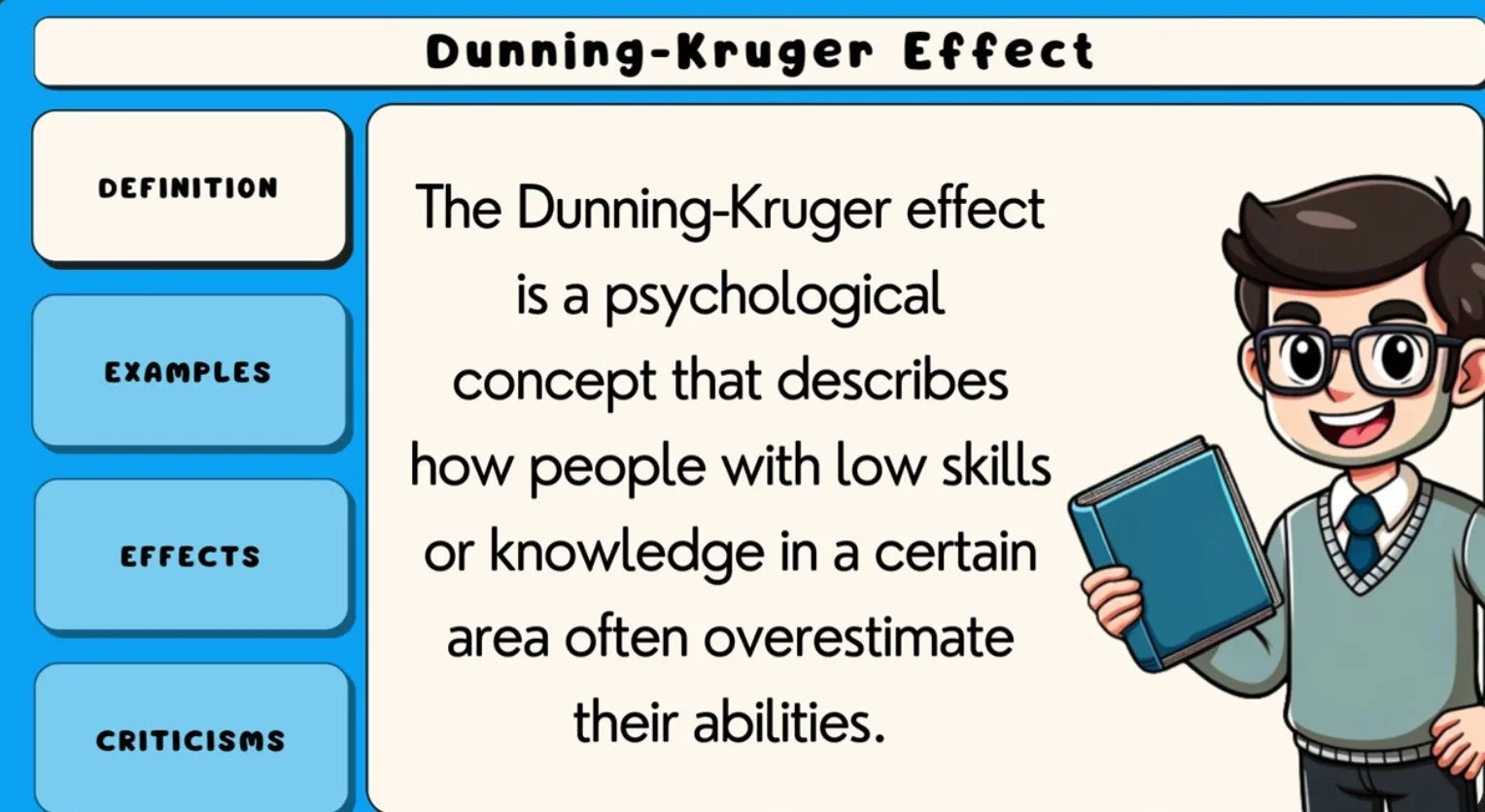
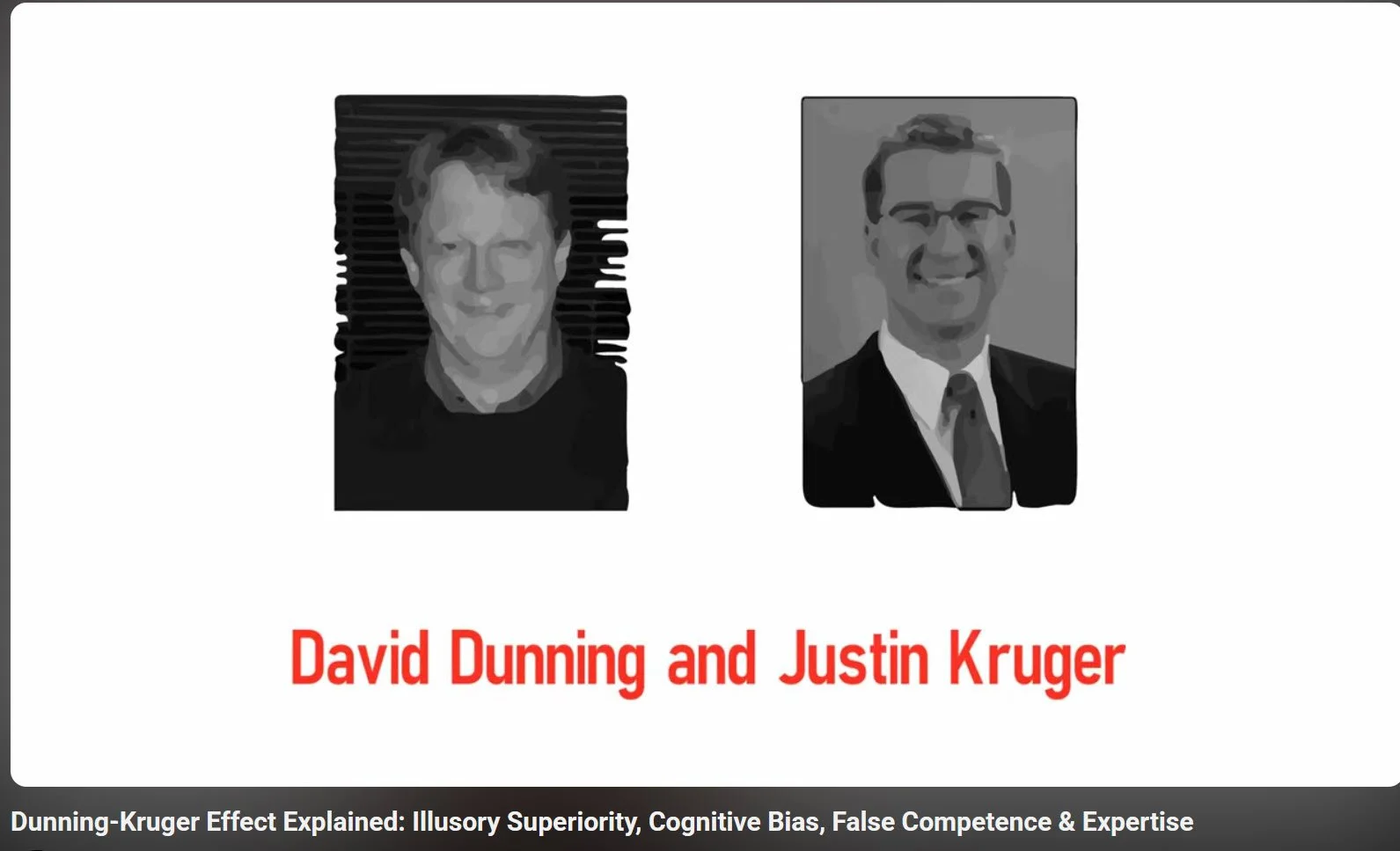
The Dunning-Kruger effect is a well-known cognitive bias first described in 1999 by psychologists David Dunning and Justin Kruger (from Cornell University at the time).
What It Is
It describes how people with low ability, skill, or knowledge in a specific area tend to overestimate their own competence dramatically. At the same time, people with high ability often underestimate theirs slightly (because they assume others are similarly capable and are more aware of the complexities involved).
The effect stems from a lack of metacognition — the ability to accurately evaluate one's own performance or understanding.
The Central Proposition
In their original 1999 paper ("Unskilled and Unaware of It: How Difficulties in Recognizing One's Own Incompetence Lead to Inflated Self-Assessments"), Dunning and Kruger stated the key proposition as:
"The central proposition in our argument is that incompetent individuals lack the metacognitive skills that enable them to tell how poorly they are performing, and as a result, they come to hold inflated views of their performance and ability."
In simpler terms:
If you're bad at something, you often don't know enough to realize how bad you are.
This creates a "dual burden": poor performance + inability to recognize the poor performance → massive overconfidence.
Experts, by contrast, know how much there is to know, so they can be more humble or even doubt themselves.
Classic Example from the Research
In studies, participants took tests on topics like grammar, logical reasoning, or humor sense:
Those scoring in the bottom 25% (e.g., real performance around the 10–12th percentile) often rated themselves in the 60–70th percentile or higher.
Top performers (e.g., 90th+ percentile) rated themselves more accurately — sometimes even a bit lower than reality.
This has been replicated across many domains (e.g., driving, medicine, politics, sports, etc.), though some later research has refined or debated the exact shape/strength of the curve (e.g., everyone tends to think they're above average to some degree, but the effect is strongest at low skill levels).
Why It Matters
The Dunning-Kruger effect explains phenomena like:
Overconfident beginners who think they're experts after minimal exposure.
Resistance to feedback or learning (because people don't see the need).
Why true experts sometimes seem hesitant or modest.
The best antidote? Gain more knowledge/skill — as competence increases, self-assessment usually becomes more accurate.
If this isn't quite what you meant by "prooosition" (perhaps a specific quote, meme, or variation?), feel free to clarify!
Your get the drift -
Our DK nominees - Kamala Harris, Joe Biden, EricSwalwell, Tim Walz, Hakeem Jeffries, Gavin Newsome, Zorhan Mamdani, AOC, and many more
Truly Evil: George Soros, Barack Obama, HIllary Clinton, Nancy Peosi, Anthony Fauci,