Globalism is Free Speech Killer in the UK and EU
Segment #749
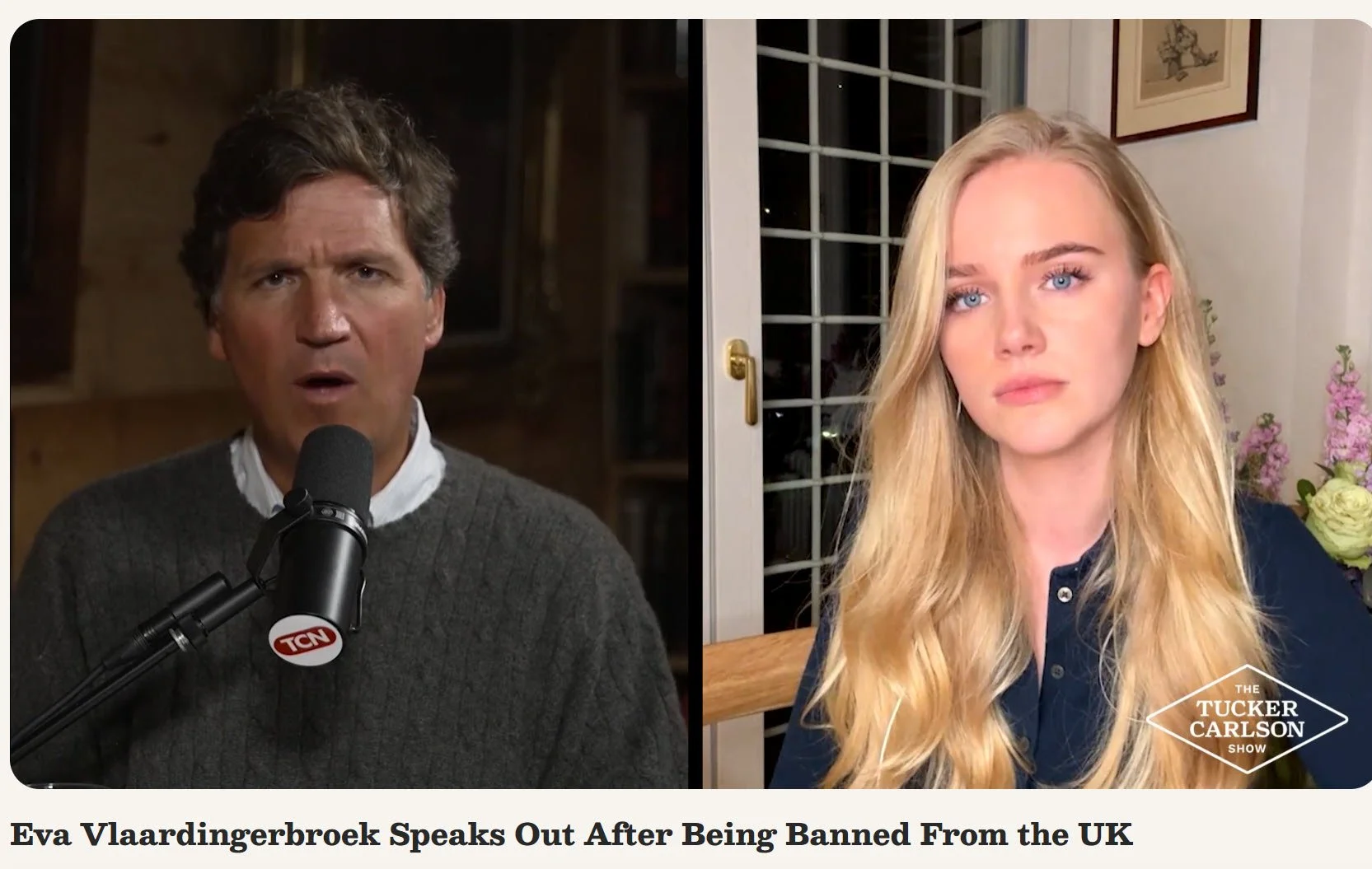
Eva Vlaardingerbroek Speaks Out After Being Banned From the UK
As of mid-January 2026, free speech in the European Union and United Kingdom remains legally recognized but increasingly constrained by regulations aimed at combating "harmful" or illegal online content. Critics argue these measures amount to heavy-handed censorship, while supporters frame them as essential for safety and accountability. Tensions have escalated significantly in recent months, with transatlantic friction involving the U.S. (under the Trump administration) viewing EU/UK rules as overreach.European Union (Digital Services Act - DSA)The DSA, fully operational for large platforms since 2024–2025, requires Very Large Online Platforms (VLOPs like X, Meta, Google) to swiftly remove illegal content (e.g., hate speech, incitement, child exploitation), conduct risk assessments for disinformation/systemic harms, and ensure transparency. Enforcement ramped up dramatically at the end of 2025 into 2026.Key recent developments:
In late December 2025, the European Commission issued its first major fine under the DSA: €120 million against X for breaches related to transparency obligations (e.g., deceptive verification processes and ad transparency). This signals accelerating enforcement in 2026, with experts calling it a pivotal year for broader penalties and investigations.
Broader criticisms focus on "collateral censorship": Platforms over-remove content to avoid fines (up to 6% of global revenue), affecting political debate, satire, or immigration-related discussions. U.S. figures (e.g., former officials) have sanctioned EU personnel involved (like ex-Commissioner Thierry Breton in December 2025) over perceived coercion of U.S. platforms.
Ongoing issues include pressures for global application of EU rules, expanded "hate speech" definitions varying by member state, and proposals like digital ID/age verification that erode anonymity. Some see this as building toward de-anonymized speech, with platforms potentially required to link accounts to real identities.
Free speech advocates (including on X) describe it as a "Digital Stasi" or Orwellian system, equating unrestricted expression to a "virus" needing a "vaccine" (a phrase attributed to Ursula von der Leyen in late 2025 commentary). Defenders argue it targets only provable harms, not legitimate criticism.United Kingdom (Online Safety Act - OSA)The OSA, with phased enforcement ongoing into 2026, mandates platforms tackle illegal content and "harmful" material (especially for children), enforced by Ofcom with fines up to 10% of global revenue or site blocks.Recent updates (as of January 2026):
Implementation continues: Age assurance rules strengthened in late 2025, with further duties (e.g., transparency reporting, risk mitigation for larger platforms) rolling out through 2026. The categorisation register (determining stricter obligations) delayed to July 2026 after legal challenges.
High-profile scrutiny: Ofcom investigating X/Grok over AI-generated deepfakes (e.g., non-consensual erotic images), sparking threats of bans or restrictions. Elon Musk accused the UK government of suppressing free speech and called actions "fascist" in early January 2026.
Broader concerns: Reports of thousands of annual arrests for "offensive" online posts (e.g., ~12,000 cited in 2025 figures), "non-crime hate incidents" logging, and cases involving silent prayer or political expression. U.S. State Department and groups like ADF International highlighted a "censorship crisis" in 2025 reports, including comparisons to authoritarian practices.
International coordination: Discussions (reported in early 2026) involving UK, Australia, and Canada on pressuring X for compliance, with potential multi-country restrictions or bans over content moderation.
The UK lacks a U.S.-style absolute free speech guarantee (protected via ECHR Article 10, qualified for public order/safety). Critics say "safety" pretexts enable viewpoint suppression; Ofcom emphasizes procedural focus and child protection.Overall Landscape in January 2026
Pro-censorship side: Rules target real harms (e.g., child abuse material, deepfakes, incitement), with platforms like X facing scrutiny for lax moderation.
Anti-censorship side: Seen as chilling effects on discourse, overreach (e.g., fines driving global compliance), and geopolitical tools. Musk and U.S. voices frame it as authoritarian, with X posts highlighting arrests, fines, and platform threats.
No major platform bans yet in EU/UK, but 2026 enforcement is intensifying, with potential for escalated fines, blocks, or further anonymity erosion.
The divide is stark: Europe/UK prioritize regulated "safe" spaces; many (especially in the U.S.) see it as eroding core liberties. If you're tracking specific cases or want deeper dives into recent events, let me know!
Free Speech Arrests in the UK and EU
There is no official, centralized figure for "arrests for free speech violations" in the UK or EU, as the term is subjective and not a formal legal category. Arrests typically fall under laws addressing hate speech, malicious communications, incitement, grossly offensive messages, or similar offenses—often criticized by civil liberties groups as overbroad or chilling to free expression, while supporters argue they target harmful content like threats or incitement.United KingdomThe UK (post-Brexit, not in the EU) has seen significant reporting on arrests related to online speech under laws like Section 127 of the Communications Act 2003 and Section 1 of the Malicious Communications Act 1988, which cover sending messages that are grossly offensive, indecent, obscene, menacing, or cause distress/anxiety.
Recent figures (from freedom of information requests analyzed by media like The Times in April 2025) indicate over 12,000 arrests in 2023 for such offenses, averaging over 30 per day. This includes social media posts.
For 2024, partial data from 39 of 45 police forces showed at least 9,700 arrests for "offensive" social media posts (likely higher with missing data from forces like Police Scotland). Some reports cite figures topping 13,000 in 2024.
Convictions are much lower (e.g., around 1,000–1,100 in some years), meaning many arrests do not lead to charges or guilty verdicts.
During the 2024 summer riots (sparked by misinformation after the Southport stabbings), dozens (over 30 reported by BBC) were arrested specifically for social media posts inciting violence or spreading hate, as part of broader ~1,200–1,300 arrests tied to the disorder.
These numbers are often highlighted in debates about free speech erosion, with critics pointing to cases involving "offensive" opinions, memes, or silent prayer near buffer zones.European UnionNo unified EU-wide statistic exists for arrests under hate speech or related laws, as enforcement is national (member states handle policing and prosecution). The EU sets minimum standards via framework decisions on racism/xenophobia and is pushing to expand "EU crimes" to include broader hate speech/hate crime (proposal since 2021), but data is fragmented.
Individual countries (e.g., Germany) have strict laws against hate speech, incitement, Holocaust denial, etc., with thousands of investigations/prosecutions annually (e.g., reports of over 3,500 for online comments in some older claims, though not always arrests).
Broader EU reports (e.g., from FRA or OSCE) track hate crime incidents and some prosecutions, but not comprehensive arrest totals for speech offenses.
High-profile cases occur (e.g., in Germany, Finland, Sweden for online posts deemed incitement or hateful), but no aggregate EU number matches the UK's reported scale.
Comparisons often note the UK's rate appears higher than many EU states due to its broad communications laws, though direct apples-to-apples data is lacking because definitions and reporting vary.