Segment #758
UNESCO and WHO membership create significant problems for the US as it commits to loss of sovereignty, dealing with corruption and mismanagement all while assuming a significant portion of funding these organizations. Not participating in UNESCO or WHO does not in any way hinder our ability to work with the rest of the world. In fact a very god argument exists that eliminating the negative control of these these organizations better positions the US acting in our best interest to do more and have greater impact.
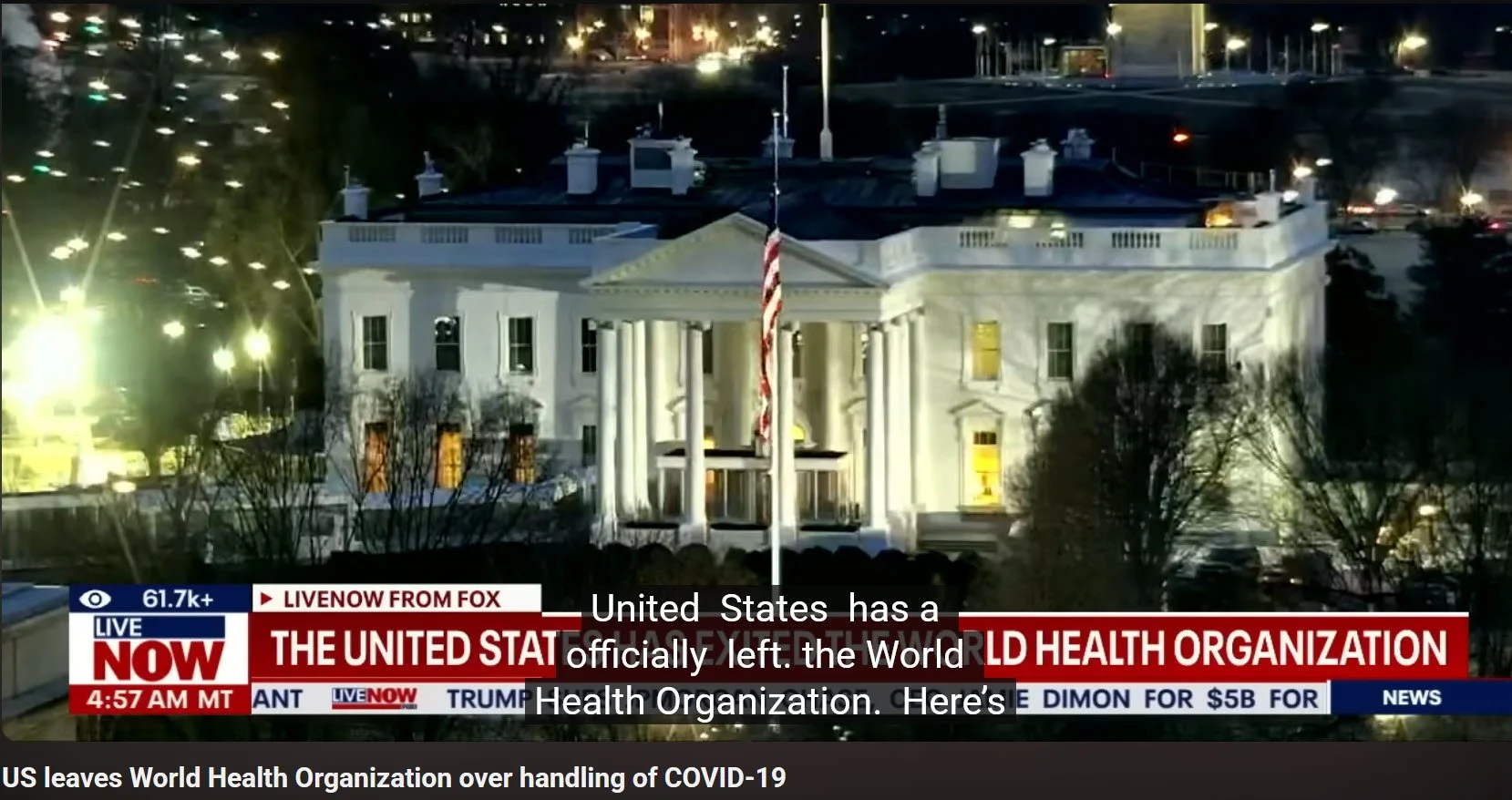
Effective today, the United states has officially exited the World Health Organization . The White House says the move fulfills President Trump's commitment under an executive order signed one year ago citing the mishandling of COVID-19 and its ongoing lack of reform, accountability & transparency.
History of U.S. Involvement in the World Health OrganizationThe United States played a pivotal role in founding the World Health Organization (WHO) in 1948 as a specialized agency of the United Nations focused on global health issues. As a key architect, the U.S. viewed the WHO as essential for coordinating international responses to health threats, building on post-World War II efforts to promote stability and prevent disease outbreaks. Over the decades, the U.S. became the organization's largest financial contributor, providing assessed and voluntary funds that often accounted for 15-20% of the WHO's budget, far exceeding contributions from other nations relative to population or economic size. This support enabled U.S. influence in WHO governance, including seats on the Executive Board and participation in the World Health Assembly, where American officials helped shape policies on issues like smallpox eradication (achieved in 1980) and polio control.Throughout the Cold War and into the 21st century, U.S. engagement emphasized technical assistance, funding for disease surveillance, and emergency responses, such as during the Ebola outbreaks in Africa. However, tensions arose over perceived inefficiencies, politicization, and the WHO's handling of global crises. Conservative critiques often highlighted the organization's bureaucracy, lack of accountability, and vulnerability to influence from authoritarian regimes.The Path to WithdrawalThe U.S. relationship with the WHO deteriorated sharply during the COVID-19 pandemic. In 2020, President Donald Trump halted U.S. funding and notified the United Nations of intent to withdraw, citing the WHO's "inept response" to the virus, including its failure to independently investigate origins in China and echoing Beijing's early denials of human-to-human transmission despite evidence from Taiwan and elsewhere.
Trump argued the organization had "failed its basic duty" by not holding China accountable, allowing the pandemic to spread unchecked, and prioritizing politics over science. Additional grievances included unfair funding burdens—the U.S. contributed hundreds of millions annually while China, with a much larger population, paid far less—and the WHO's resistance to reforms demanded by the U.S. This move was reversed by President Joe Biden in January 2021, who rejoined the WHO without securing significant reforms, a decision criticized as hasty and driven by opposition to Trump rather than strategic gains. Biden restored funding and U.S. participation, emphasizing the WHO's role in global health security, but this did not address underlying issues like China's influence or the organization's pandemic mishandling.Upon returning to office, President Trump signed an executive order on January 20, 2025, revoking Biden's reversal and initiating withdrawal again.
The order cited the WHO's continued "mishandling of the COVID-19 pandemic," failure to adopt needed reforms, "inappropriate political influence" from member states like China, and "unfairly onerous payments" from the U.S. compared to others. Under WHO rules and U.S. law, withdrawal requires one year's notice, making it effective January 23, 2026. The executive order also paused all U.S. funding, recalled personnel, and directed resources toward alternative partners for health initiatives.Reasons for Final WithdrawalConservative viewpoints frame the withdrawal as a necessary rejection of a "corrupt institution" that protects China's interests over global health.
Rationale for Leaving WHO
Botched COVID-19 Response: The WHO is accused of covering for China's opacity, delaying critical warnings, and excluding Taiwan, which exacerbated the global death toll and economic damage.
Lack of Independence and Reforms: Despite U.S. demands, the WHO has not addressed its susceptibility to political pressure from authoritarian regimes or improved transparency, as seen in its resistance to independent probes.
Unfair Financial Burden: The U.S. disproportionately funds the organization while nations like China contribute minimally, allowing Beijing undue sway without accountability.
Broader UN Inefficiencies: Withdrawal aligns with critiques of UN bodies as bloated and biased, echoing U.S. exits from entities like UNESCO, and redirects resources to bilateral or reformed alternatives that better serve American interests.
This decision is seen as reclaiming U.S. sovereignty and prioritizing effective, accountable health partnerships over a flawed multilateral system.
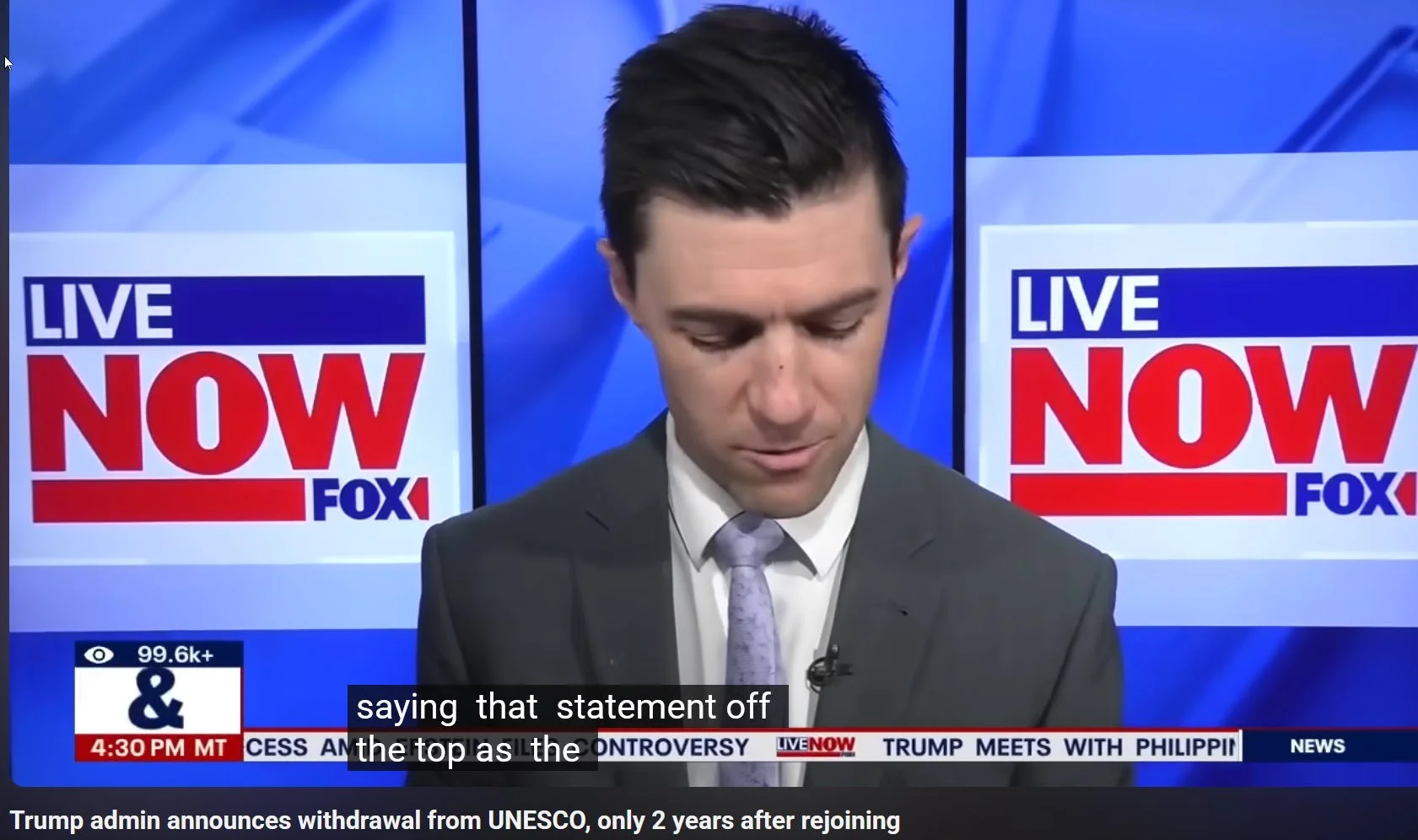
The Trump administration on Tuesday announced that it will again be withdrawing from the U.N. cultural agency UNESCO. This is an expected move that sees the U.S. further retreating from international organizations. State Department spokesperson Tammy Bruce said in a statement that the withdrawal was linked to UNESCO’s perceived agenda to “advance divisive social and cultural causes.” She added that UNESCO’s decision in 2011 “to admit the ‘State of Palestine’ as a Member State is highly problematic, contrary to U.S. policy, and contributed to the proliferation of anti-Israel rhetoric within the organization.”
UNESCO Departure
The United States has a long and turbulent history with the United Nations Educational, Scientific and Cultural Organization (UNESCO), marked by repeated withdrawals driven by concerns over politicization, anti-Israel bias, financial mismanagement, and promotion of agendas misaligned with American values.
Founding and Early Involvement
The U.S. was a founding member of UNESCO in 1945–1946, helping establish it as a specialized UN agency to promote international cooperation in education, science, culture, and communication. The organization was seen as advancing democratic values, free exchange of ideas, and post-World War II reconstruction. For decades, the U.S. provided significant funding and leadership, viewing UNESCO as a tool to counter Soviet influence during the Cold War.First Withdrawal (1984)Under President Ronald Reagan, the U.S. withdrew from UNESCO in 1984, effective at the end of that year. Conservative critiques, including from the Heritage Foundation, highlighted the organization's growing politicization, anti-Western bias, hostility toward free markets and a free press, rampant budgetary mismanagement, and advocacy for a "new world information order" that sought greater government control over media to counter perceived pro-Western bias in global news. The U.S. argued UNESCO had become extraneous in politicizing issues and unrestrained in spending, with disproportionate U.S. contributions relative to influence.The U.S. remained out for nearly two decades.Rejoining Under George W. Bush (2003)The U.S. rejoined UNESCO in 2003 under President George W. Bush, influenced by claims of internal reforms and the organization's post-9/11 role in promoting education and cultural dialogue. However, conservative observers noted persistent issues, and tensions resurfaced.
Key Grievances Leading to Later Withdrawals
Anti-Israel Bias: Repeated resolutions denying or downplaying Jewish historical connections to sites like the Temple Mount (referred to primarily by its Muslim name), designating Hebron and the Tomb of the Patriarchs as Palestinian heritage sites with minimal acknowledgment of Jewish ties, and other actions seen as erasing Jewish history in the Holy Land.
Admission of Palestine (2011): UNESCO granted full membership to the "State of Palestine," bypassing negotiated statehood processes under the Oslo Accords and prompting U.S. funding cuts under existing law.
Promotion of "Woke" and Globalist Agendas: In recent years, UNESCO has been accused of advancing divisive social and cultural causes, including diversity, equity, and inclusion (DEI) policies, an outsized emphasis on UN Sustainable Development Goals (viewed as ideological and contrary to America First priorities), and susceptibility to influence from authoritarian regimes like China.
Financial and Structural Issues: Mounting U.S. arrears (over $500 million at times), failure to reform bureaucracy, and unfair burden-sharing where the U.S. paid disproportionately while lacking commensurate control.
Second Withdrawal (2017–2018, Effective 2019
)Under President Donald Trump, the U.S. announced withdrawal in 2017 (effective December 31, 2018, with formal exit in 2019), citing continuing anti-Israel bias, the need for fundamental reform, and mounting arrears. Israel followed suit. This aligned with broader conservative skepticism of UN bodies seen as biased or ineffective.Rejoining Under Biden and Third Withdrawal (2025)The Biden administration rejoined UNESCO in 2023 without securing major reforms or congressional approval in some views, a move criticized as reversing Trump-era policy without addressing core problems.In Trump's second term, an executive order in February 2025 (EO 14199) initiated reviews of U.S. participation in various UN entities, including UNESCO, emphasizing America First priorities and scrutiny of organizations demonstrating anti-Israel sentiment, failure to reform, and promotion of agendas contrary to U.S. interests.On July 22, 2025, the U.S. formally notified UNESCO of withdrawal, effective December 31, 2026 (per UNESCO rules requiring one year's notice).
The decision cited UNESCO's support for "woke, divisive cultural and social causes" out of step with American commonsense policies, an outsized focus on globalist UN Sustainable Development Goals, anti-Israel bias, and lack of alignment with national interests. This is the third withdrawal, reinforcing a pattern of rejecting multilateral bodies perceived as politicized, inefficient, or hostile to U.S. values and allies.Why the Final Withdrawal Now?From conservative perspectives (e.g., Heritage Foundation, Fox News reporting), this step reclaims sovereignty, stops funding biased or wasteful entities, and redirects resources toward bilateral partnerships or reformed alternatives. UNESCO's ongoing issues—erasure of Jewish history, promotion of ideological agendas, Chinese influence, and resistance to accountability—make continued membership untenable. It parallels withdrawals from other UN bodies (e.g., WHO, UNHRC) as part of prioritizing effective, America-centric foreign policy over flawed international bureaucracies.As of January 23, 2026, the U.S. remains a full member until the end of 2026 but has ceased new engagements and funding in line with the decision.
United Nations Corruption
The World Health Organization (WHO) and UNESCO have faced longstanding criticism for corruption, mismanagement, undue political influence (particularly from China), and prioritization of agendas over accountability and American interests. Below is an outline of key issues, drawn exclusively from conservative-leaning sources such as The Heritage Foundation, Fox News, AEI, and related perspectives.Corruption and Issues in the World Health Organization (WHO)Conservative analyses portray the WHO as deeply compromised, especially under Director-General Tedros Adhanom Ghebreyesus, whom critics describe as Beijing's handpicked leader with a history of covering up outbreaks. Key points include:
Chinese Communist Party (CCP) Influence and Corruption: The WHO is accused of being "captured" by the CCP, prioritizing Chinese interests over global public health. During the COVID-19 pandemic, the organization accommodated Beijing by spreading disinformation, delaying warnings about human-to-human transmission, and excluding Taiwan (which had early evidence). This is seen as enabling the virus's spread while protecting China's image. Tedros promised to exclude Taiwan and aligned WHO support with China's Belt and Road economic expansion. Critics argue this reflects deep-seated corruption, where the WHO acts as a "puppet" for the CCP rather than an independent health body.
Failure to Reform and Lack of Accountability: Despite U.S. demands, the WHO resisted meaningful reforms, maintaining susceptibility to authoritarian influence and opacity. This includes unfair funding burdens (U.S. disproportionately pays while China exerts sway with minimal contributions) and mishandling crises for political reasons.
Broader Mismanagement: Conservative voices highlight the organization's bureaucracy, inefficiency, and prioritization of politics over science, contributing to calls for U.S. withdrawal as a rejection of a "corrupt institution" that fails basic duties.
These issues fueled repeated U.S. withdrawal decisions under President Trump, viewed as reclaiming sovereignty from a flawed, China-influenced entity.Corruption and Issues in UNESCOUNESCO has been repeatedly condemned by conservative sources for rampant mismanagement, politicization, anti-Western/anti-Israel bias, and vulnerability to external influence, including from China.
Rampant Budgetary Mismanagement and Corruption: From the 1980s onward, UNESCO faced criticism for unrestrained spending, bloated bureaucracy (e.g., high personnel costs eating 60% of budgets), lack of transparency, and inefficiency. The U.S. withdrew in 1984 citing these problems, along with advocacy for government media control ("new world information order") and anti-free market policies. Even after partial reforms, issues persisted, including secrecy, unaccountability, and patronage.
Politicization and Anti-Israel Bias: UNESCO is accused of erasing Jewish historical ties (e.g., resolutions on Temple Mount sites using primarily Muslim names, designating Hebron and other sites as Palestinian heritage with minimal Jewish acknowledgment). Granting full membership to "Palestine" in 2011 bypassed peace processes, triggering U.S. funding cuts under law.
Chinese Influence and Broader UN Problems: As with other UN bodies, China's growing sway fills voids left by U.S. absence, exploiting UNESCO for influence. Conservative critiques frame it as part of a pattern where authoritarian regimes corrupt multilateral organizations, promoting ideological agendas (e.g., "woke" causes, UN Sustainable Development Goals seen as globalist) over neutral cooperation.
These longstanding grievances—politicization, bias, mismanagement, and external capture—led to multiple U.S. withdrawals (1984, 2017/2019, and 2025/2026), seen as necessary to avoid funding biased, wasteful entities and to prioritize America First policies.In both cases, conservative sources argue these organizations exemplify UN flaws: inefficiency, corruption via influence-peddling or opacity, and subversion by adversaries like China, justifying disengagement to protect U.S. sovereignty and resources.
Loss of Sovereignty
The issue of loss of sovereignty through U.S. participation in the World Health Organization (WHO) and UNESCO is a longstanding conservative concern, rooted in the belief that these UN-affiliated bodies erode America's ability to independently govern its domestic policies, resources, and decisions. From conservative perspectives (primarily Heritage Foundation analyses and aligned critiques), membership subjects the U.S. to external pressures, ideological agendas, and influence from adversaries like China, subordinating national priorities to multilateral bureaucracies. This is seen as incompatible with America's founding emphasis on sovereign independence, where the nation-state retains ultimate authority over its internal affairs and foreign policy.Loss of Sovereignty in the World Health Organization (WHO)Conservative sources frame WHO involvement as a direct threat to U.S. sovereignty, particularly through mechanisms that could override or pressure American decision-making on health policy:
Potential for Binding Authority and External Control: Proposals like the WHO pandemic treaty (or amendments to International Health Regulations) risk granting the organization supranational powers, such as mandating responses to health crises without U.S. consent. This could infringe on America's right to set its own public health standards, border controls, and emergency measures—core sovereign functions. Heritage Foundation reports emphasize that without strict safeguards, such agreements devolve into ideological tools that cost taxpayers heavily while diminishing U.S. autonomy, allowing unelected bureaucrats to dictate terms.
Chinese Influence and Politicization: The WHO is criticized as "captured" by the Chinese Communist Party (CCP), with Director-General Tedros accused of prioritizing Beijing's interests. This external sway means U.S. participation indirectly legitimizes and funds a body susceptible to authoritarian manipulation, undermining American independence in global health coordination.
Unfair Burdens and Resource Drain: Disproportionate U.S. funding (historically the largest contributor) without commensurate control funnels American taxpayer dollars into an unaccountable entity, effectively ceding fiscal sovereignty to an organization resistant to reform. Withdrawal decisions under Trump are portrayed as reclaiming sovereignty by halting this subsidy to a flawed, politically compromised institution.
WHO membership risks transforming health policy—a domestic sovereign domain—into a globalist framework where U.S. actions are constrained by international consensus or pressure, especially from regimes hostile to American values.Loss of Sovereignty in UNESCO
UNESCO's structure and actions are viewed as even more insidious in eroding sovereignty, as they extend into cultural, educational, and normative domains traditionally reserved for national or local control:
Imposition of Ideological Agendas: UNESCO promotes "globalist" initiatives like the UN Sustainable Development Goals, seen as advancing divisive "woke" cultural and social causes (e.g., emphasis on DEI, gender ideology, or climate-related education mandates). Participation requires aligning U.S. policies with these priorities, potentially overriding domestic democratic processes and parental rights in education. This represents a subtle transfer of sovereignty over cultural and educational matters to an international body.
Anti-American and Anti-Israel Bias: Repeated resolutions and designations (e.g., downplaying Jewish ties to holy sites or granting "Palestine" membership) politicize the organization, forcing the U.S. to associate with biased outcomes. Funding such actions indirectly endorses them, diluting America's independent stance on allies and historical truths.
Broader UN Pattern of Supranational Overreach: As part of the UN system, UNESCO exemplifies how international organizations can undermine sovereignty by treating all states equally (even autocracies) while pressuring democracies like the U.S. to conform. Heritage critiques highlight how such bodies fill voids with authoritarian influence (e.g., Chinese sway) when U.S. engagement wanes, but full participation risks entangling America in inefficient, biased structures that constrain its freedom of action.
UNESCO's bureaucracy and focus on "progressive" norms erode the nation-state's role as the primary guarantor of rights and policies, pushing toward a diluted sovereignty where global standards trump American self-determination.
Broader RationaleIn both cases, participation is seen as ceding elements of sovereignty to unaccountable multilateral entities prone to mismanagement, corruption, and capture by adversaries. This contradicts the Founders' vision of sovereign independence—where America governs itself without external dictation—and aligns with a pattern of rejecting flawed UN bodies to prioritize "America First" policies. Withdrawals (e.g., repeated under Trump) are framed as essential acts of reclaiming control over domestic priorities, taxpayer resources, and national decision-making from institutions that advance agendas contrary to U.S. interests and values.