
Comey Might want to Worry a Bit
Segment #1007
Critics and political opponents point directly to James Comey’s tenure leading the FBI—particularly the launch and handling of the 2016 Russia investigation, known as Crossfire Hurricane—as a profound abuse of institutional power. Former FBI Director James Comey rose through the Justice Department to lead the bureau under President Obama. His decisions during the 2016 election and the Russia investigation thrust him into the center of national controversy. Comey now faces multiple federal indictments including charges of making false statements to Congress and threatening the President of the United States. The story traces Comey’s handling of the Clinton email probe, his public statements that drew criticism from both parties, his firing by President Trump in 2017, and the subsequent leaks of memos. Recent indictments center on alleged false testimony and a 2025 Instagram post of seashells arranged as “86 47” interpreted by prosecutors as a threat against President Trump. Court documents and public records frame the central conflict between institutional independence and accusations of politicization. These events raise enduring questions about accountability at the highest levels of federal law enforcement and their lasting impact on public trust in American institutions. The case continues to unfold with significant implications for how future leaders navigate power and oversight.

The 2016 Investigation: Actions taken under Comey’s leadership, such as utilizing the unverified Steele dossier to secure FISA warrants against campaign associates, represented an unprecedented and politically motivated effort by federal law enforcement to target a presidential candidate and undermine a sitting administration.
Double Standards: Critics contend that high-ranking intelligence and law enforcement officials operated with impunity, shielding themselves behind institutional authority while aggressively pursuing political adversaries.
Accountability: From this perspective, the current legal battles and scrutiny facing former officials are viewed not as unwarranted targeting, but as long-overdue accountability for individuals who allegedly weaponized the intelligence community for partisan ends.
Former FBI Director James Comey is currently facing criminal charges related to an incident involving a post on social media that included the phrase "8647." His legal team is attempting to have the case dismissed or evidence suppressed, filing multiple motions arguing that the investigation was vindictive and selective.
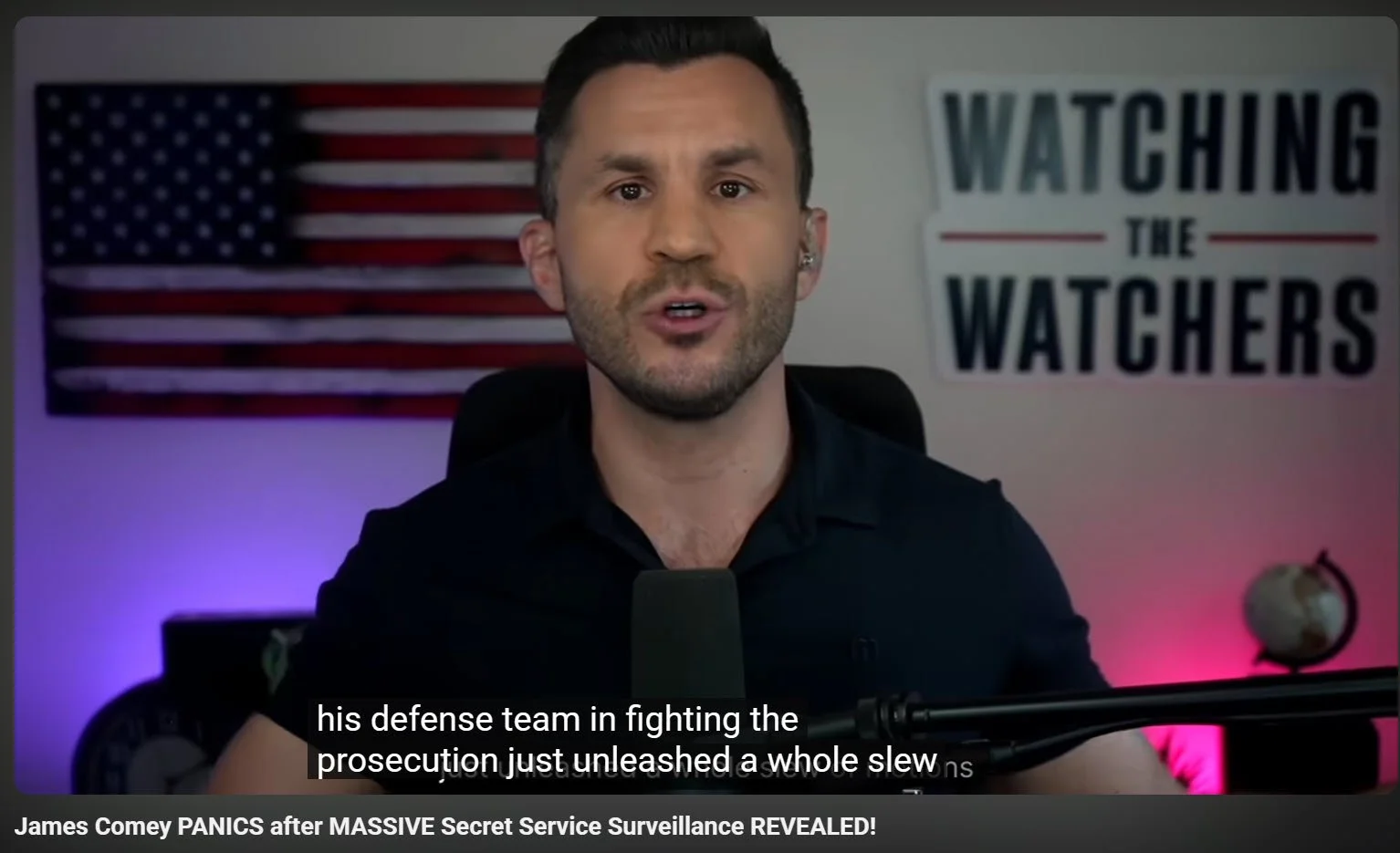
According to the legal filings and discovery materials, federal law enforcement agencies, including the Secret Service, initiated an investigation after the post was interpreted by some as a threat against the President. Authorities tracked Comey’s cellphone location, conducted physical surveillance, and interviewed both him and his wife, Patrice Comey. The defense claims that Comey was unaware of a violent connotation for the term "86" at the time, stating he and his wife believed it meant to discard or remove an item, similar to restaurant slang.
The documents indicate that law enforcement officials researched the origin and meaning of "8647" to determine if it constituted a threat. While some individuals and experts consulted during the investigation characterized it as a call for violence or assassination, others, including former law enforcement personnel, reportedly disputed that "86" was standard code for killing.
The defense's motions also highlight concerns regarding the government's access to attorney-client communications during the investigation. Additionally, the filings suggest that the prosecution of the case has involved a specific team, which the defense is scrutinizing for potential procedural irregularities. The Department of Justice is expected to respond to these motions in the near future.
The video also references past investigations involving high-ranking officials and the FBI, with arguments presented that the agency has historically operated in a manner that favors certain political interests or protects its own personnel.
In legal documents and motions filed by his defense team, the concern is that the Secret Service and other federal agencies used exigent circumstances to obtain warrants and track James Comey’s cellphone location without initial court-ordered warrants. The defense argues that this surveillance, which included real-time tracking of his movements, was invasive and aimed at gathering information related to the "8647" social media post incident.
Regarding what authorities aimed to find—and what the defense fears may have been uncovered—the surveillance records and search requests suggest the government sought to obtain:
Location and Movement Data: Real-time location updates of his cellphone, including his travel history, were captured.
Communication Records: The government requested subscriber information, incoming and outgoing call details, and SMS (text message) contents.
Unique Device Identifiers: Information such as the IMSI, which uniquely identifies a cellular device, was requested.
Additional Correspondence: By accessing these records, authorities potentially obtained other text message exchanges or communications between James Comey, his wife Patrice Comey, and potentially other third parties, which the defense is now attempting to suppress as part of their motions.
The defense highlights that these materials were extremely voluminous and they are concerned that this access—obtained under an "exigency exemption" that the defense challenges as legally questionable—has provided the government with a wide range of private communications and metadata that they are now trying to use in the prosecution